
 Free Estimate
 Request Service
 Locations

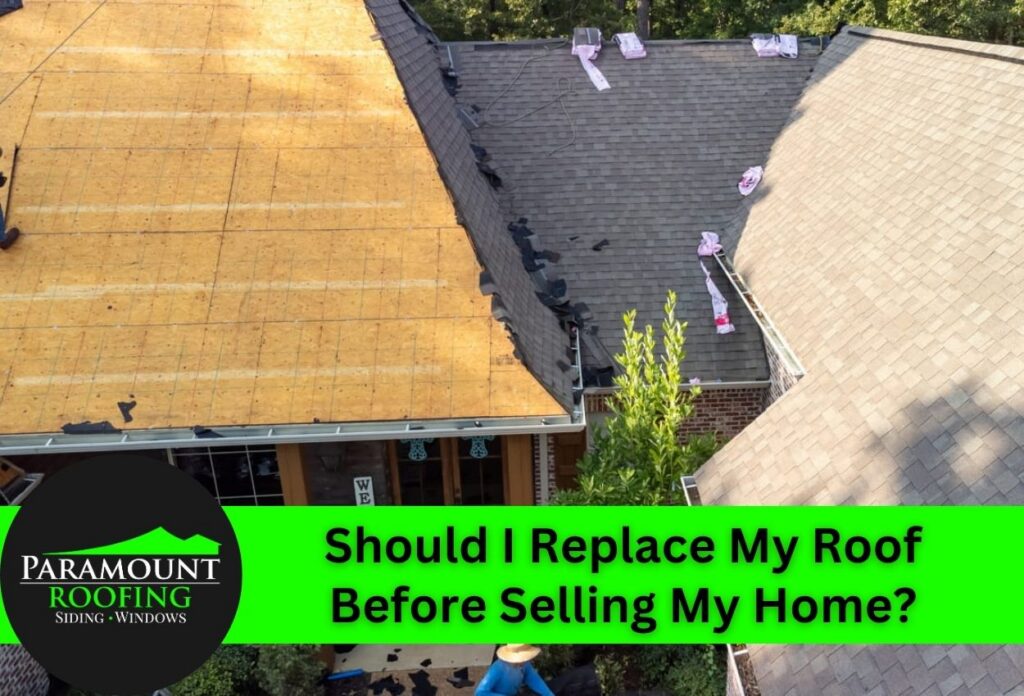

Homeowners typically recover about 57% of roof replacement costs at resale nationally, but whether replacement makes sense depends on your roof’s age, its visible condition, and what buyers in your local market expect. A worn or aging roof is one of the most common red flags found during home inspections across Macomb, Oakland, and Wayne counties, and it can stop a sale in its tracks or cost you more in price cuts than a new roof would have.
Southeast Michigan’s harsh winters make this issue more pressing than in warmer markets. Repeated temperature changes, heavy snowfall, and ice dam damage accelerate shingle wear faster than the manufacturer’s rated lifespan might suggest. Buyers and their inspectors know this, and a roof showing curling shingles, missing granules, or a soft roof deck rarely goes unquestioned.
How Does a Roof’s Condition Affect Buyer Negotiations and Mortgage Approvals When Selling?
A roof that fails inspection can stop a sale before it closes. The Federal Housing Administration (FHA) requires a roof to have at least 2 years of remaining useful life under the U.S. Department of Housing and Urban Development’s (HUD) official appraisal standards. Lenders won’t approve financing on a home with a roof flagged as structurally deficient or at the end of its life. That’s not a negotiating point; it’s a hard requirement.
Even when financing isn’t the issue, a damaged roof almost always affects the final sale price. Buyers commonly request concessions or price reductions, often in the range of the estimated repair cost, when an inspection report flags problems like curling shingles, missing granules, a soft roof deck, or ice dam damage. Choosing not to address repairs in hopes that buyers won’t notice often backfires, forcing sellers to make concessions that exceed the original cost of fixing the problem.
In addition to financial and market factors, Michigan state law introduces specific legal obligations regarding a roof’s condition during a home sale. Under Public Act 92 of 1993, sellers must disclose known roof defects, active leaks, and water damage on the required seller disclosure form. While the Act’s own remedy for non-disclosure is limited to the buyer’s right to cancel before closing, concealing a known defect can still expose a seller to separate legal claims, such as fraud or fraudulent concealment, under Michigan common law after the sale is complete. Honest disclosure, paired with a residential roof repair or adjusted sale price, is both the legally correct and financially smarter path.
What Does a Roof Replacement Actually Cost Compared to a Repair in the Detroit Area?
A full roof replacement on a 1,500 to 2,500-square-foot Detroit-area home typically runs $8,500 to $22,000, significantly more than the cost of a minor repair, so it’s worth thinking carefully about the right option before listing.
| Repair Type | Typical Cost Range | Average Time to Complete |
|---|---|---|
| Minor Repair | $300 to $900 | 2 to 4 hours |
| Partial Repair | $1,000 to $3,500 | 1 to 2 days |
| Full Replacement (architectural shingles) | $8,500 to $22,000 | 1 to 3 days |
For a full tear-off, Michigan building departments typically require a permit. Permit fees are typically a small percentage of the total project cost, though the exact amount depends on the municipality; larger cities like Detroit tend to charge more than smaller towns. On a full replacement, materials for architectural asphalt shingles represent roughly 40% of the total project cost, with labor making up the remaining 60%. An ice-and-water shield installed along the eaves usually runs between $200 and $600 for labor and materials. However, in Michigan’s climate, it’s an essential, code-relevant improvement. By offering direct protection against ice dams, these shields eliminate a major concern for home inspectors and buyers throughout the Detroit area. Addressing minor repairs early almost always costs significantly less than the concessions buyers request when a roof is flagged during inspection.
Will a New Roof Help Sell Your House Faster, or Are Repairs and Disclosure Enough?
Replace an architectural shingle roof when it is 20 or more years old, has widespread damage, or will fail an FHA or Department of Veterans Affairs (VA) inspection. In those cases, a replacement is the clearer financial choice, not a judgment call.
- Roof age exceeding 20 years: An architectural shingle roof past the 20-year mark has a limited amount of life remaining. Home inspectors and buyers will identify this right away, and lenders frequently view it as a financial liability.
- More than 30% of the surface showing curling or missing shingles: Damage at that scale is too widespread for partial repairs to satisfy buyers or pass an inspection. A full replacement is the more defensible path.
- Active leaks or confirmed roof deck damage: A soft or rotted roof deck is a structural concern. This almost always requires a full tear-off, not just new shingles over compromised wood.
- Your home’s price point attracts first-time or budget-conscious buyers: These buyers more often use FHA or VA financing, both of which are common in the Detroit market and require an appraiser to sign off on the roof’s condition before the loan can close.
- Competing listings nearby with newer roofs: In Southeast Michigan neighborhoods where buyers have options, a worn roof puts your listing at a disadvantage, especially when comparable homes are move-in ready.
For roofs with isolated damage, documented repairs paired with a transparent disclosure often prevent a full replacement. Isolated minor repairs ranging from $300 to $900 or partial repairs ranging from $1,000 to $3,500 that are clearly disclosed typically create less friction with buyers than leaving known problems unaddressed. Paramount Roofing can assess which path fits your roof’s actual condition before you list.
What Is the Real Financial Return and Value Added by Installing a New Roof Before Selling?
A new asphalt shingle roof returns around 57% of its cost at resale nationally. On a $12,000 replacement, that means recovering roughly $6,840 at closing. Those numbers alone may not seem like a strong case for replacement, but they only tell part of the story.
| Scenario | Buyer Concession or Price Impact | Net Seller Position After Costs |
|---|---|---|
| Aging roof listed as-is | Reduction or concession, typically near the estimated repair cost | Loses negotiating leverage with no offsetting asset |
| New roof installed ($12,000 cost) | No roof-related concession expected | Recovers roughly $6,840 at closing; avoids giving up ground on repair costs |
While the direct boost to your home’s appraised value may be modest, looking strictly at the dollar-for-dollar return misses the true strategic value of replacing a roof before listing. A new roof’s strongest financial benefit is deal protection. It removes a major inspection red flag, eliminates buyer leverage for price cuts, and can help homes sell faster in competitive suburban Detroit neighborhoods. Sellers who replace a failing roof often don’t earn more per appraisal; they simply stop losing money in negotiation. Paramount Roofing can help you determine whether your roof’s condition puts you at that risk before you list.
When Is the Best Time of Year to Replace a Roof Before Listing in Southeast Michigan?
The best time for installation in Southeast Michigan runs from late April through late September. Asphalt shingles require a minimum temperature of 40 degrees Fahrenheit to seal properly, and temperatures in the Detroit area don’t reliably stay above that mark outside those months. Installing at temperatures below 40 degrees Fahrenheit increases the risk of poor adhesion and can void the manufacturer’s warranty entirely.
Sellers planning a spring listing should schedule a new roof installation no earlier than late April, and should contact contractors several weeks in advance. Demand peaks heavily in May through July across Macomb, Oakland, and Wayne counties, and contractor schedules fill fast during that stretch. Waiting until peak season to start the conversation almost always means longer lead times and tighter pre-listing timelines.
Fall installation in September is a solid option and often comes with shorter wait times than the summer rush. Sellers going this route should avoid scheduling a replacement within 30 days of the first expected frost, which can arrive in the Detroit area as early as the first week of October; shingles need time to fully seal before temperatures drop, and a roof installed too close to that window may not be fully seated before conditions work against it.
Ready to Decide? Get a Roof Inspection Before You List Your Home.
Knowing your roof’s condition before listing could be the difference between keeping thousands of dollars in your pocket or handing it back to the buyer at closing. A pre-listing roof inspection tells you exactly where you stand, whether that means a repair, a full replacement, or documented disclosure, before buyers and their inspectors take control of the conversation.
Paramount Roofing serves homeowners across the greater Detroit area. Getting your roof assessed early gives you enough time to complete any work before listing your home for sale. Contact our team today to schedule your professional roof inspection.
Not ready to schedule? Learn more about roof replacement options.