 Free Estimate
 Request Service
 Locations
Everything You Need to Know About Residential Roofing in Detroit: A Complete Homeowner’s Guide
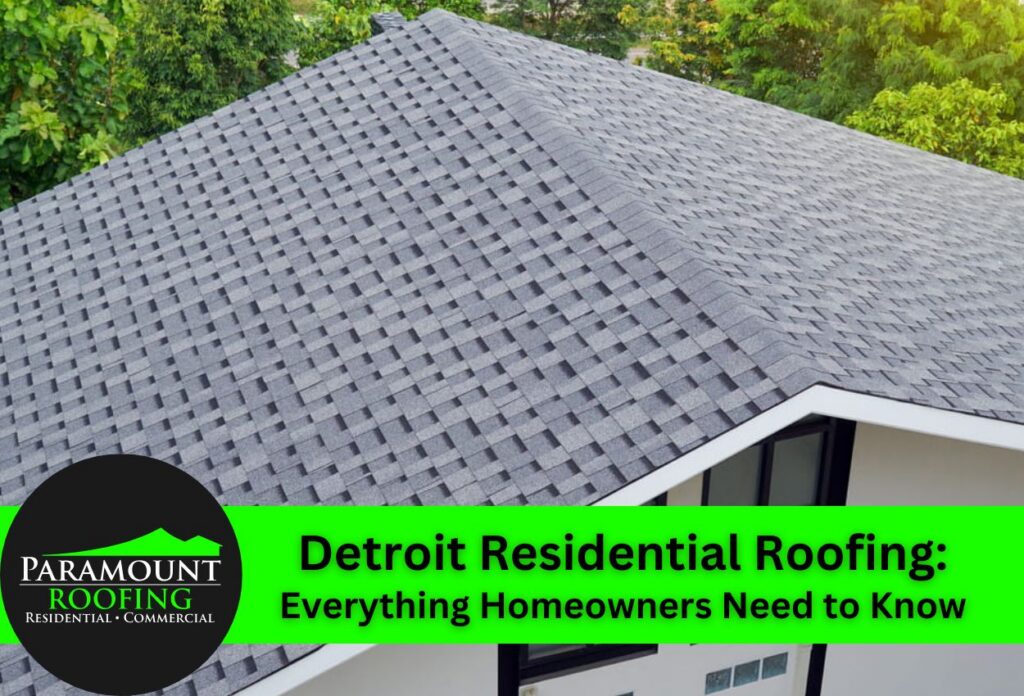

Detroit homeowners deal with one of the harder roofing environments in the Midwest: temperature swings of 50+ degrees Fahrenheit between seasons, heavy snow loads averaging 40 to 50 inches per year, lake-effect moisture, and a housing market where many homes are 70 to 100+ years old. Those conditions combine to create real roofing problems: ice dams, flashing failures, worn shingles, and leaks that spread fast if ignored.
This guide covers everything a Detroit-area homeowner needs to make a smart roofing decision. That includes common materials and how they hold up locally, what a full replacement or repair should cost, how Wayne County’s competitive contractor market works, what permits the City of Detroit requires, and when to schedule work given Michigan’s cold-weather limitations.
Whether your home is a pre-WWII Craftsman bungalow, a brick two-flat, or a mid-century ranch with a low-slope roof, the roofing decisions you face are shaped by local conditions that a general roofing guide won’t address. This resource is built for Detroit specifically: bookmark it for early research, use it during contractor selection, and return to it whenever questions come up.
Why Does Detroit’s Climate Make Residential Roofing So Demanding?
Detroit’s temperature range, with January averages of 20 degrees to 30 degrees Fahrenheit and July highs of 70 degrees to 85 degrees, creates a 50+ degree swing that puts more stress on roofing materials than most U.S. climates. Add 40 to 50 inches of annual snowfall, 30 to 35 inches of precipitation, and Great Lakes lake-effect moisture, and the result is one of the more punishing roofing environments in the Midwest. Every one of those conditions maps directly to a specific way a roof can fail.
Understanding the failure mechanisms helps homeowners spot problems early and understand why material selection and installation details matter more here than in milder markets.
| Detroit Climate Condition | Primary Roofing Impact |
|---|---|
| Freeze-thaw temperature changes | Shingles crack and flashing separates as materials expand and contract repeatedly through winter |
| Ice dam formation | Heat escaping into the attic melts snow across the roof deck. Runoff refreezes upon reaching unheated eaves, backing up under shingles and causing leaks |
| Snow weight (40 to 50 inches/year) | Accumulated weight stresses roof decking and structural components, especially on older homes with lower-slope or flat roofs |
| Hail and high winds | Granule loss accelerates on asphalt shingles, shortening lifespan and exposing the mat layer to UV damage |
| Lake-effect humidity (warm season) | Moderate-to-high moisture levels promote mold growth in attic spaces and speed up wooden roof deck deterioration where ventilation is poor. |
These conditions make certain installation details non-negotiable in the Detroit market, specifically ice and water shield underlayment at the eaves, proper attic ventilation to reduce heat buildup at the roof deck, and durable underlayment across the full field of the roof. The next section covers which materials hold up best against these local demands.
What Are the Best Residential Roofing Materials for Detroit Weather?
Architectural asphalt shingles with ice and water shield underlayment dominate the Detroit market because they offer the best balance of cost, lifespan, and cold-climate performance for most residential roofs. The table below compares the five materials most relevant to Detroit homeowners based on how each one holds up against local climate demands, not just upfront costs.
| Material | Average Lifespan | Detroit Climate Suitability | Relative Cost | Key Advantage |
|---|---|---|---|---|
| Architectural asphalt shingles | 20 to 30 years | High: widely tested in cold, snowy climates | $8,000 to $13,000 (average home) | Broad availability, compatible with ice and water shield, and easy to repair |
| Impact-resistant asphalt shingles | 25 to 35 years | Very high: built to handle hail and wind stress | $9,500 to $14,500 | Class 4 impact resistance reduces granule loss from hail and high winds |
| Metal roofing (standing seam or steel panels) | 40 to 70 years | Very high: sheds snow well, resists temperature changes | $10,000 to $20,000+ | Low maintenance, excellent snow shedding, long service life |
| EPDM or TPO membrane (flat/low-slope) | 15 to 30 years | High: for low-slope roofs, flexible in cold temperatures | $6,000 to $12,000 | Purpose-built for flat and low-slope roofs common on older Detroit housing |
| Wood shake or synthetic alternatives | 20 to 40 years (synthetic): 15 to 25 years (natural shake) | Moderate: natural shake struggles with moisture; synthetics perform better | $8,000 to $18,000 | Strong curb appeal: synthetic versions handle moisture and temperature changes far better than natural wood |
Architectural asphalt shingles are the go-to choice because they work with ice and water shield at the eaves, a detail that directly addresses ice dam risk on Detroit homes. Homeowners with older roofs, a history of ice dam damage, or frequent hail exposure should seriously consider upgrading to impact-resistant shingles or metal roofing, where the longer lifespan can offset the higher upfront cost over time. For brick two-flats, bungalow additions, and other older Detroit structures with flat or low-slope sections, EPDM and TPO membranes are the appropriate system standard. Shingles are not designed for those roof geometries and will fail faster without the right membrane underneath.
How Do You Know When to Replace Your Roof in Detroit?
Detroit’s climate accelerates roofing wear, so the standard age thresholds used in milder climates should be applied more conservatively here. A 20-year-old asphalt roof in Detroit has typically endured far more stress than the same roof in a warmer, drier region. Because many Detroit-area homes are 70 to 100+ years old, a significant number of roofs are already at or past their service life without the homeowner knowing it.
- Shingle age exceeding 20 to 25 years: Architectural asphalt shingles are rated for 20 to 30 years under normal conditions, but repeated temperature changes and lake-effect moisture in Detroit often push deterioration toward the lower end of that range.
- Widespread granule loss visible in gutters: Finding consistent granule buildup in downspouts after rain, not just a few granules, means the protective layer is gone, and the shingle mat is exposed to UV damage.
- Multiple areas of cracked or curling shingles: Isolated curling on one or two shingles may be repairable, but cracking or curling across several roof sections points to material-wide failure that a patch won’t fix.
- Recurrent ice dam damage causing interior leaks: If ice dams have caused water to back up under shingles and leak into the home more than once, the roofing system, including underlayment and ventilation, is no longer performing as it should.
- Sagging roof deck: Any visible dip or sag in the roofline suggests structural deterioration in the roof decking or framing below, which requires immediate professional evaluation.
- Daylight visible through the attic: Light coming through the roof deck means gaps large enough for water and cold air to enter; replacement, not repair, is the appropriate response.
- Failed or deteriorating flashing at chimneys or valleys: Flashing failures are one of the most common leak sources on older Detroit homes: widespread flashing deterioration across multiple locations often makes full replacement more cost-effective than repeated repairs.
- Moss or algae growth across large roof areas: Surface growth signals that moisture is being retained in the shingles rather than shedding properly, a sign of material breakdown that shortens remaining lifespan.
- Rising energy bills without another explanation: A roofing system that has lost ventilation efficiency allows heat to escape in winter and build up in summer, which shows up directly in heating and cooling costs.
Isolated damage, such as one section of missing shingles after a windstorm or a single flashing failure at a chimney, generally supports targeted repair. When damage is widespread, age-related, or showing up in multiple systems at once, replacement delivers better long-term value than stacking repairs on a roof that is already past its best performance window. A professional roof inspection is the definitive way to tell the difference, and it’s the recommended next step for any Detroit homeowner whose roof is approaching 20 years old or showing more than one of the signs above.
What Does a Roof Replacement Actually Involve? The Detroit Reroofing Process Explained
A typical residential roof replacement in Detroit takes 1 to 3 days for the physical work, but the full project timeline from first contact to completion often spans 2 to 6 weeks depending on contractor scheduling, permit processing, and material lead times. Most Detroit homeowners are surprised by how many steps happen before and after that physical installation window. Understanding the full sequence helps set realistic expectations and avoids confusion when scheduling stalls.
- Initial inspection and damage assessment: A contractor evaluates the roof’s condition, identifies damage, and determines whether repair or full replacement is the right call.
- Material selection: Homeowner and contractor agree on roofing system, shingle type or membrane, and related components such as underlayment and ice and water shield.
- Contractor estimate and contract signing: A written contract sets the job scale, materials, cost, and timeline before any work begins.
- Permit application and approval: Most residential roof replacements in Detroit require a building permit; processing timelines vary and can affect scheduling.
- Material delivery and staging: Shingles, underlayment, and supplies are delivered and staged at the property before installation day.
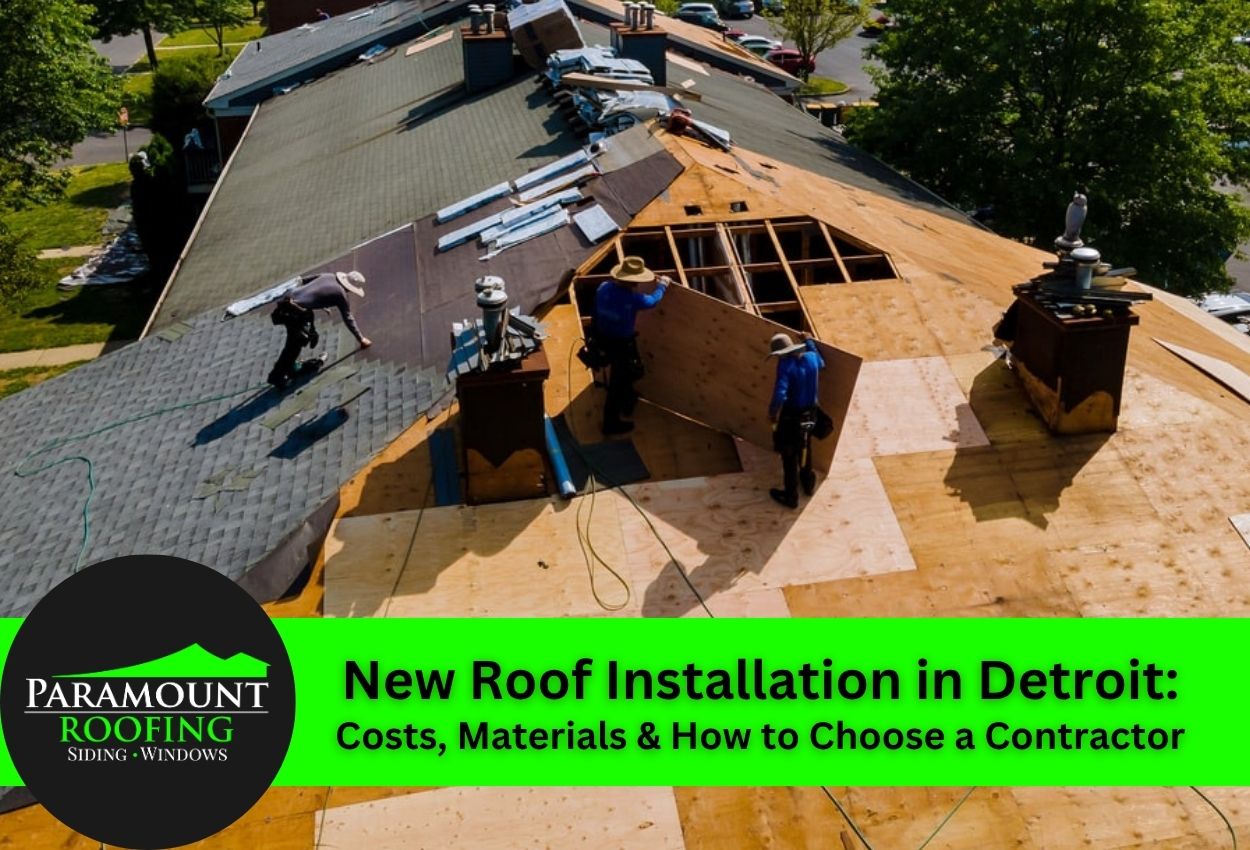
- Tear-off of existing roofing: Old roofing is removed down to the roof deck. A reroof overlay adding new shingles over old ones skips this step but also skips roof deck inspection, which creates risk.
- Roof deck inspection and repair: With the roof deck exposed, damaged, soft, or rotted sheathing is identified and replaced before new materials go down.
- Underlayment and ice and water shield installation: Ice and water shield goes at the eaves and valleys. Felt or synthetic underlayment covers the full field of the roof.
- New roofing system installation: Shingles, metal panels, or membrane roofing is installed per manufacturer specs.
- Flashing and gap sealing: Step flashing, counter flashing, and pipe boot seals are installed at chimneys, valleys, vents, and all roof gaps.
- Cleanup and final inspection: Debris and old materials are hauled away; the contractor walks the completed roof and checks for missed details.
- Permit close-out: A city inspection closes out the open permit, confirming the work meets local code.
Full tear-offs are standard best practice in Detroit because they expose the roof deck, allowing contractors to find hidden rot, soft spots, or water damage that a reroof overlay would simply bury. Given that a large share of Detroit-area homes are 70 to 100+ years old, hidden roof deck damage is far more common here than in newer housing markets. Skipping the tear-off to save money upfront often leads to larger repairs down the road. Permit processing timelines in Detroit can extend the overall project schedule, so factoring that into planning early helps avoid delays, a point covered in detail in the permits and regulations section ahead.
What Are Detroit’s Residential Roofing Permit Requirements and Regulations?
The City of Detroit requires a permit before any roof recovery or replacement work begins; skipping this step can result in fines, failed inspections at resale, and potential liability for the homeowner. This is not a technicality. Unpermitted roofing work creates a documented gap in a home’s records that shows up during buyer inspections and can delay or kill a sale.
At the state level, Michigan regulates who can legally perform residential roofing work. Contractors must hold either a Residential Builder license or a Maintenance and Alteration Contractor license with the Roofing classification, both issued and overseen by the Michigan Department of Licensing and Regulatory Affairs (LARA). These are two distinct license types, and either one is acceptable for residential roofing work. Homeowners should verify a contractor’s license status directly through LARA before signing anything. A contractor who cannot provide a valid Michigan license number before work starts is a contractor to walk away from.
Who Pulls the Permit and What Happens Without One
In nearly all cases, the licensed contractor pulls the permit, not the homeowner. The contractor submits the application to the City of Detroit, and work should not begin until the permit is approved. Documentation requirements typically include the contractor’s license number, project scope, and property information. Once work is complete, a city inspection closes out the permit and confirms the installation meets local code.
If work proceeds without a permit, the consequences go beyond the job itself. Resale home inspections routinely flag unpermitted roofing work, and lenders or buyers may require the work to be redone or inspected before closing. In some cases, a homeowner may carry liability for work done by an unlicensed contractor on their property.
Ask any contractor directly: “Will you pull the permit for this job?” A contractor who discourages permitting, suggests the homeowner pull it instead, or claims it is unnecessary for a “simple” replacement is showing a clear red flag. Permitting is a normal part of a legitimate roofing project in Detroit, and reputable contractors treat it that way.
How Much Does a Roof Replacement Cost in Detroit, Michigan?
Residential roof replacement in Detroit typically ranges from about $6,000 to $18,000 or more, depending on roof size, pitch, material, and the scale of the work, and several Detroit-specific factors can push that number toward the higher end faster than homeowners expect.
| Cost Variable | Estimated Cost Impact |
|---|---|
| Roof size: 1,000 to 1,500 sq ft | $6,000 to $10,000 |
| Roof size: 1,500 to 2,500 sq ft | $9,000 to $15,000 |
| Roof size: 2,500+ sq ft | $13,000 to $18,000+ |
| Full tear-off vs. overlay (tear-off adds) | $1,000 to $2,500 additional |
| Roof deck board replacement (per sheet of plywood) | $75 to $150 per sheet |
| Steep or complex pitch surcharge | $500 to $2,000 additional |
| City of Detroit building permit | $150 to $400 typical range |
| Material upgrade: impact-resistant shingles vs. standard | $500 to $1,500 additional |
| Material Type | Estimated Total Cost (1,500 to 2,000 sq ft roof area) |
|---|---|
| Architectural asphalt shingles | $8,000 to $13,000 |
| Impact-resistant asphalt shingles | $9,500 to $14,500 |
| Standing seam metal | $14,000 to $22,000+ |
| EPDM or TPO flat roofing | $6,000 to $12,000 |
Detroit’s older housing pushes replacement costs higher in ways that estimates based on square footage alone won’t capture. Homes that are 70 to 100+ years old frequently have rotted or damaged deck boards that only become visible after tear-off, and those boards add up fast at $75 to $150 per sheet. Steep or complex rooflines, common on historic Craftsman bungalows and Dutch Colonials, add labor time and difficulty surcharges. Ice and water shield installation along eaves and valleys is not optional in this climate; it’s a code-supported best practice that adds material cost but protects against the ice dam damage that is one of the most common causes of interior water damage in Detroit homes. Getting an itemized written estimate before work starts is the only way to understand exactly where the project costs will land.
What Factors Affect Roofing Costs and Timelines in the Detroit Market?
Beyond square footage and material choice, five market-specific variables routinely shift Detroit roofing costs by hundreds to several thousand dollars and can push project timelines out by days or weeks. Most homeowners focus on material costs alone, but these less-obvious factors often separate a realistic bid from one that falls apart mid-project. Understanding them helps when comparing proposals side by side.
| Factor | How It Affects Cost or Timeline |
|---|---|
| Roof accessibility in dense neighborhoods | Tight lots, narrow alleys, or limited staging space may require special equipment or add labor time, raising costs by $300 to $800 or more |
| HOA or historic district restrictions | Certain Detroit neighborhoods limit material colors, profiles, or types: non-compliant choices can require expensive rework after installation |
| Post-storm contractor demand surges in Wayne County | Following hail or wind storms, local contractor schedules fill quickly. Lead times can stretch from days to 4 to 8 weeks, and short-term pricing pressure increases |
| Insurance claim involvement | Claims add adjuster visits, documentation steps, and approval waiting periods, adding 1 to 3 weeks to a typical project timeline before work even begins |
| Older home complexity: dormers, chimneys, varied pitches | Craftsman bungalows and Dutch Colonials often have multiple gaps and steep or broken pitches: labor surcharges of $500 to $2,000 are common on these roof styles |
Contractor pricing in Detroit’s competitive market also varies more than most homeowners expect. Two bids on the same roof can differ by $2,000 or more, and the lower number does not always mean a better deal. A low bid that excludes permit fees, roof deck inspection, or ice and water shield may cost more in the end than a higher bid that covers the full scale of work. Bids should be itemized so each line item can be compared directly, not just the bottom-line totals.
Knowing these variables makes it much easier to evaluate contractor proposals critically, which is exactly why choosing the right contractor matters as much as choosing the right material.
How Do You Choose a Top-Rated Residential Roofing Contractor in Detroit?
Choosing the right roofing contractor in Detroit affects project quality, warranty coverage, permit compliance, and how well the roof holds up through years of harsh Michigan winters, making it one of the most important decisions a homeowner will make before any work begins. Wayne County’s large, competitive market gives homeowners real choice, and getting three comparable written estimates before committing is strongly recommended.
- Verify a valid Michigan LARA license. Contractors must hold either a Residential Builder license or a Maintenance and Alteration Contractor license with the Roofing classification. Check license status directly through LARA before signing anything.
- Confirm active general liability and workers’ compensation insurance. Ask for certificates of insurance. If a worker is injured on your property and the contractor carries no workers’ compensation, the liability can fall on you.
- Confirm they pull required Detroit building permits. A contractor who says a permit is unnecessary for a “simple” replacement, or who suggests you pull it yourself, is showing a clear red flag.
- Review Google and BBB ratings, then read how complaints were resolved. A contractor with a handful of complaints but clear, professional responses tells you more than one with no reviews at all.
- Request itemized written estimates, never verbal quotes. Two bids on the same roof in Detroit can differ by $2,000 or more. An itemized estimate lets you compare each line item, not just the bottom-line total.
- Ask about both workmanship and manufacturer warranty terms. Workmanship warranties vary widely. Some contractors offer 1 year, while others offer 10 years or more. Manufacturer warranties are separate and depend on installation standards being met.
- Confirm they perform full tear-offs when the job scale calls for it. Skipping a tear-off to reduce costs can mask damaged roof deck boards and void manufacturer warranty coverage.
- Ask for local Detroit-area references from jobs completed in the past 12 to 24 months. Recent, local references reflect current crew quality and materials, not work done years ago under different conditions.
- Assess how quickly they respond to your calls and questions. A contractor who takes 3 days to return a call during the estimate phase will likely communicate the same way once your money is on the table.
Detroit’s roofing market also attracts storm-chaser contractors after major hail or wind storms, out-of-town crews offering unusually low costs, asking for large cash deposits upfront, or actively discouraging the permit process. Any contractor who pushes back on pulling a permit, demands full payment before work begins, or asks for more than a standard 30% to 33% material deposit upfront should be removed from consideration immediately. Reputable local contractors treat permits, insurance, and written estimates as standard, not as optional extras.
When Is the Best Time of Year to Schedule a Roof Replacement in Detroit?
Late April through October is the most reliable window for roof replacement in Detroit, with late spring and early fall standing out as the best stretch for both weather consistency and material performance. Asphalt shingles seal properly in moderate temperatures. Most manufacturers recommend installation at or above 40 degrees for the adhesive strips to bond correctly. Detroit winters regularly drop well below that threshold, which is why full replacements in January or February are rarely practical.
Why Winter Work Is Mostly Limited to Emergencies
When temperatures fall below 40 degrees, shingle sealing slows down or fails to bond at all, leaving the roof vulnerable until warmer weather arrives. Snow and ice on the roof deck also create real safety hazards for installation crews. That said, experienced local contractors handle emergency repairs and urgent leak response year-round. A storm or sudden failure does not wait for spring, and contractors who know Detroit winters are equipped to manage short-notice emergency work even in cold conditions.
Plan Around Peak Season and Book Early
Summer is peak season in Detroit, and contractors often book out weeks or even months in advance during June, July, and August. Homeowners who spot a roofing problem in spring should contact contractors right away: waiting until the issue gets worse means competing with a full scheduling queue and potentially sitting with a compromised roof through a season of afternoon thunderstorms and hail.
Scheduling in the shoulder seasons April to May or September to October often means better contractor availability and, in some cases, more competitive costs than mid-summer scheduling. Those two windows hit the sweet spot of reliable weather, proper installation temperatures, and lighter demand on contractor calendars.
Does a New Roof Increase Home Value in Detroit?
A new roof in Detroit typically recoups 60% to 70% of the project cost at resale, and in a market where so many homes are 60, 80, or even 100+ years old, it often does more than add dollars to a listing price. It keeps the sale from falling apart entirely. Buyers and their lenders pay close attention to roof condition during inspections, and an aging or visibly worn roof is one of the most common reasons a purchase offer falls through or gets renegotiated after inspection findings come back.
Detroit’s housing is older on average than most U.S. metros, which means roof condition shows up early in the buying process. A documented new roof with permits pulled, materials specified, and a workmanship warranty in place removes a major objection before it becomes a negotiating problem. In Detroit’s market of Craftsman bungalows, Dutch Colonials, and brick two-flats, a new roof often determines whether a home passes or fails a buyer’s inspection, which carries more weight than the resale percentage alone suggests.
Insurance and Energy Costs Also Factor In
Resale value is only part of the financial picture. Homeowners insurance is the other. An older or damaged roof in Detroit can trigger non-renewal notices or premium surcharges from insurers, a real and immediate cost beyond what a future buyer might think. Replacing the roof removes that risk and can lower ongoing insurance costs starting the year the new roof goes on.
A quality reroofing project also typically includes improved ventilation and modern underlayment systems. Both directly affect how well a home holds heat in winter and sheds it in summer. Given Detroit’s temperature range well below freezing in January and climbing into the mid-80s Fahrenheit in July, those efficiency gains translate into measurable reductions in heating and cooling costs year after year, not just at the point of sale.
How Can Detroit Homeowners Save Money on Residential Roofing?
Getting three itemized written estimates before committing to any contractor is the single fastest way to benchmark fair pricing and avoid overpaying on a Detroit roofing project.
- Get multiple itemized estimates. Two bids on the same Detroit roof can differ by $2,000 or more. Itemized breakdowns let you compare materials, labor, and disposal costs line by line, not just bottom-line totals.
- Schedule in shoulder seasons. Booking in April to May or September to October often means better contractor availability and more competitive costs than peak summer scheduling in June, July, or August.
- Fix small problems fast. In Detroit’s temperature changes, small leaks left unaddressed routinely escalate into roof deck rot, mold, and structural damage that costs multiples of what a fast repair would have. A $300 to $500 repair today can prevent a full replacement costing thousands more.
- Check your homeowners insurance before signing anything. Storm and hail damage is often covered. Understand the claims process and what documentation is required before a contractor starts work. Some contractors specialize in insurance claims and can walk you through the process.
- Ask about manufacturer rebate programs and financing. Some manufacturers offer seasonal rebates or low-interest financing through certified contractors. These programs are not always advertised upfront, so ask directly.
- Consider whether a full tear-off now prevents higher costs later. Skipping a tear-off to cut costs can hide damaged roof deck boards and lead to structural repairs that cost far more than the savings.
- Research local assistance programs. Some Detroit homeowners may qualify for home improvement assistance through the City of Detroit or Wayne County. Program availability changes, so check current offerings directly through city and county websites.
- Avoid choosing the cheapest bid without vetting credentials. A low bid that excludes permit fees, proper underlayment, or ice and water shield often ends up costing more. The most expensive roofing mistake is deferred maintenance, not the cost of doing the job right the first time.
Saving money on a roof replacement is about making informed decisions early, not cutting corners that lead to bigger repair bills later.
Detroit Residential Roofing: Quick-Reference Summary
Asphalt shingles are the most widely recommended material for Detroit’s climate, and a full replacement typically runs $6,000 to $18,000 for an average-sized home, but the right decision depends on several variables; this table consolidates at a glance.
| Decision Factor | Quick-Reference Answer |
|---|---|
| Best Material for Detroit Climate | Architectural asphalt shingles: impact-resistant shingles for hail-prone areas |
| Typical Replacement Cost Range | $6,000 to $18,000 for an average-sized home ($8,000 to $13,000 for typical architectural shingles) |
| When to Replace vs. Repair | Replace at 20+ years or if damage covers more than 30% of the surface of the roof: repair for isolated leaks or minor storm damage |
| Best Time to Schedule | Late April through October: shoulder seasons (April to May or September to October) offer best availability and costs |
| Permit Required | Yes, required for full replacements in Detroit: verify before work begins |
| Contractor License to Verify | Michigan Residential Builder or M&A Roofing License: confirm active status via LARA before signing |
| Estimated Project Timeline | 1 to 3 days for most residential replacements: add time for roof deck repairs or complex rooflines |
Detroit’s older housing, wide temperature swings, and strict permit requirements make local experience non-negotiable: a contractor unfamiliar with the city’s regulatory environment or climate conditions adds real risk to your project. Proper permitting and a verified Michigan license are the two fastest ways to separate reputable contractors from those best avoided.
Ready to Start Your Detroit Roofing Project? Here’s Your Next Step
At this point, you have the full picture: materials, costs from $6,000 to $18,000, permit requirements, contractor vetting, and the best times to schedule. The only step left is getting a licensed, local professional on your roof.
Paramount Roofing serves the Detroit metro area with licensed, insured crews who pull proper permits and know what Michigan winters do to a roof. Whether you need a full replacement or a repair, a free, no-obligation estimate is the right starting point. Getting an itemized estimate costs nothing, and it gives you a clear, documented baseline before committing to any project.
Schedule your free roof inspection.
Not ready to schedule? Learn more about residential roofing services.