
 Free Estimate
 Request Service
 Locations

Will Rust Harm Your Metal Roof And How Quickly Does It Become a Serious Problem in Detroit?
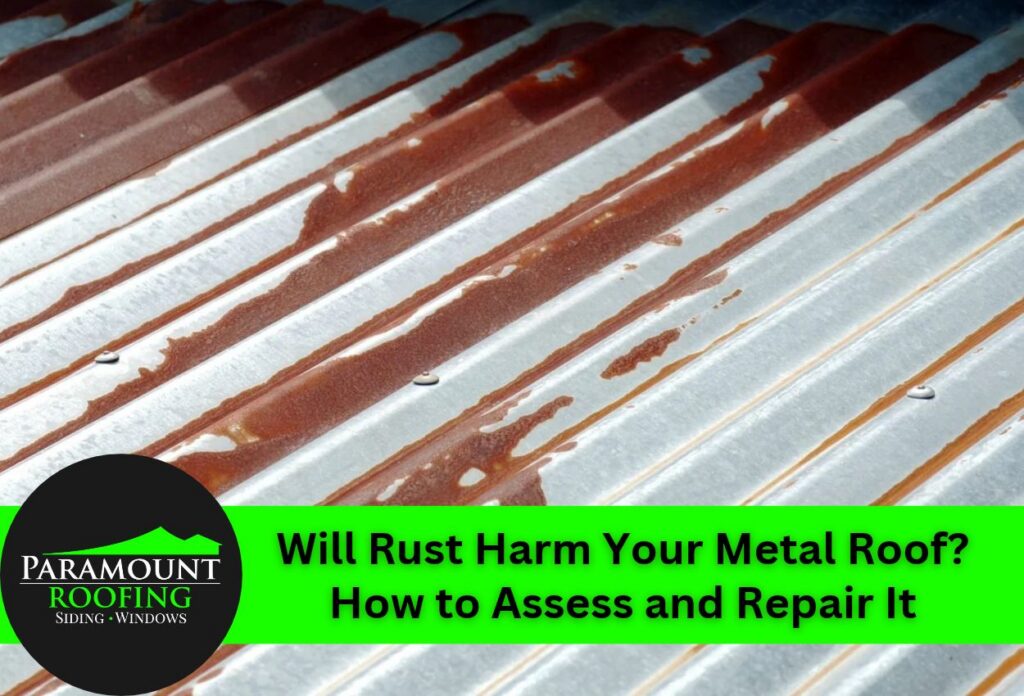

Surface rust limited to the coating layer is cosmetic. Still, rust that reaches bare steel can corrode a standard 26-gauge panel just 0.0179 inches thick within 2 to 5 years without treatment in Detroit’s humid continental climate. That window shrinks fast when you factor in 30 to 38 inches of annual precipitation and repeated temperature changes that crack coatings, open seams, and push moisture into every vulnerable spot on a metal roof.
Detroit’s wet summers, cold winters, and frequent moisture exposure create the conditions where unprotected bare steel deteriorates faster than in drier climates. Once rust penetrates the surface coating, it thins the panel, weakens fastener holes, and can eventually perforate the metal, leading to roof deck damage and much more expensive repairs.
Can Rust Spread and Damage Your Entire Metal Roof, or Does It Stay Localized?
On Detroit metal roofs, corrosion spreads laterally and deepens through three specific, progressively severe stages of structural metal degradation.
Stage 1 is surface oxidation, where iron oxide accumulates on the exterior without breaching the bare steel underneath. This stage looks alarming but causes no structural damage. Left untreated in Detroit’s climate, it typically advances to Stage 2 within 1 to 3 years. Stage 2 is bare metal corrosion; the coating has failed, and the steel panel itself begins thinning. This phase commonly spans 3 to 7 years and weakens fastener holes along the way. Stage 3 is perforation and structural compromise, which can arrive after 7+ years or much sooner when temperature changes drive ice dam moisture under failed seams repeatedly. Once corrosion perforates a panel, water can reach the roof deck and framing, turning a localized repair job into an expensive full replacement.
Five locations on Detroit-area metal roofs see corrosion first: exposed fasteners, panel laps and seams, cut edges, valleys, and areas where leaves and debris pile up and hold moisture against the metal. Pre-1980 detached garages, which make up a large share of Detroit’s housing, are hit hardest because original coatings were thinner and often never updated.
Rust also spreads laterally. Moisture wicks under panel laps and carries oxidation outward from the original damage point. Galvanic corrosion adds another risk when dissimilar metals touch, such as steel panels against copper flashing; the resulting electrochemical reaction can accelerate steel corrosion much faster than isolated exposure to the elements.
How Do You Assess Rust Spots on a Metal Roof to Know How Bad the Damage Actually Is?
A five-step inspection process done in April to May or September to October gives Detroit homeowners the clearest picture of rust severity before summer storms or winter freeze-up cuts off safe roof access.
- Scan from the ground first. Use binoculars to spot rust staining, bubbling paint, or discoloration across all visible panels before setting foot on a ladder. This gives a full overview without risk.
- Photograph every rust location. Take close-up photos of each spot. Photos help track whether rust spreads over time and give a roofer accurate information if you call one in later.
- Probe rust areas with a flathead screwdriver. Once safely on the roof, press the screwdriver tip firmly against each rusted spot using hand pressure only. Soft or flaking metal that compresses or crumbles indicates Stage 2 or worse corrosion reaching the steel beneath the coating.
- Check fastener heads and seams for rust bleeding. Orange or brown streaking running downhill from a screw head or seam line means corrosion has reached the fastener or the panel edge, two of the five highest-risk spots on Detroit metal roofs.
- Inspect the attic directly beneath rust areas. Look for water staining on the roof deck or any daylight visible through the surface of the roof. Either finding confirms active leaks.
If a screwdriver tip breaks through the panel surface with hand pressure, the panel has lost its structural integrity; a coating fix will not hold, and section replacement is required. That is the clearest pass/fail threshold in a DIY inspection. A professional roof inspection can confirm severity and identify damage that isn’t visible from the ground.
What Metal Roof Rust Repair Products Actually Work And Which Ones Are Worth the Money?
Rust converters cost as little as $15 per gallon, while elastomeric roof coatings run $30 to $60 per gallon, but the cheapest product used in the wrong order can cause a repair to fail faster than doing nothing at all.
| Product Category | Typical Cost (per gallon) | Coverage Rate (sq ft/gallon) | Expected Service Life (years) | Best Use Case |
|---|---|---|---|---|
| Rust Converter | $15 to $30 | 100 to 200 sq ft | 1 to 2 (primer step only) | Chemically neutralizing active iron oxide before priming |
| Corrosion-Inhibiting Primer | $25 to $50 | 200 to 300 sq ft | 3 to 5 (as base coat) | Bonding layer over bare or converted metal before topcoat |
| Elastomeric Roof Coating | $30 to $60 | 50 to 100 sq ft | 5 to 10 | Full surface sealing and UV protection over prepared panels |
| Urethane Sealant | $8 to $20 (per cartridge) | Linear seams and spot repairs | 7 to 12 | Sealing seams, fastener heads, cut edges, and gaps |
Rust converters, the phosphoric acid or tannic acid-based products, work by chemically neutralizing iron oxide and turning it into a stable compound. They are not a finish coat. A compatible primer must follow within 24 to 48 hours. Skipping that step is the most common reason DIY repairs fail within 1 to 2 seasons.
On Detroit roofs with existing coating layers, oil-based primers are incompatible with most elastomeric topcoats; applying them together can cause delamination within 6 to 18 months. Verify chemical compatibility across all product layers by consulting the technical data sheets before application.
How Do You Treat Rust Spots on a Metal Roof Before They Get Worse: DIY or Hire a Professional?
Stage 1 rust oxidation confined to the coating layer with no bare metal and no perforation is appropriate for a confident DIY repair, but Stage 2 or Stage 3 damage, or any rust within 12 inches of a seam, fastener field, valley, or gap, should be professionally assessed before any DIY work begins.
- Step 1: Remove loose rust with a wire brush or angle grinder. Work the entire affected spot until no flaking or bubbling material remains. This is the mechanical prep step; nothing applied after this will bond to loose rust.
- Step 2: Clean with a metal prep or degreaser. Wipe the area thoroughly and let it dry completely before moving on. Wipe the area thoroughly and dry it; oils, dust, and residue left on the surface prevent the subsequent chemical layers from bonding correctly.
- Step 3: Apply a rust converter. Use a phosphoric acid or tannic acid-based formula and allow it to fully cure, typically within 24 to 48 hours before the next step.
- Step 4: Spot-prime with a corrosion-inhibiting primer. Apply within 24 to 48 hours of the rust converter. Confirm the primer is compatible with your planned topcoat before opening the can.
- Step 5: Apply a compatible topcoat or elastomeric sealant to protect the prepared panels and provide durable weather resistance.
- Step 6: Seal all fastener heads with a polyurethane caulk to prevent water intrusion at seams, fastener penetrations, and vulnerable cut edges.
Four conditions mean it’s time to call a roofing contractor instead of handling repairs yourself:
- Panel perforation or measurable section loss requires an immediate structural panel replacement.
- Rust affecting more than 10% of total roof area. Spot repairs at that scale are not cost-effective and rarely stop continued corrosion spread.
- Roof pitch steeper than 4:12. Fall protection equipment is required at that slope, a job that goes beyond standard DIY safety.
- Rust at flashing, ridge caps, or valley intersections. Improper repairs at these locations can void the roof’s weather-tightness and create leak paths that are far more expensive to fix later.
When any of these four triggers apply, a professional assessment before starting work will save money and prevent a repair from making things worse. Paramount Roofing’s residential roof repair services cover all four scenarios for Detroit homeowners.
What Does Metal Roof Rust Repair Cost in Detroit And Is It Worth It Versus Full Replacement?
A professionally applied full re-coat on a Stage 1 to Stage 2 metal roof in Detroit costs roughly $0.20 to $0.30 per square foot per year of added life, making it the highest return intervention available before perforation occurs.
| Repair Scenario | Estimated Cost Range (Detroit Market) | Expected Lifespan Added (years) | Cost per Year of Added Life |
|---|---|---|---|
| DIY Spot Treatment | $50 to $150 (materials only) | 2 to 4 | $13 to $75 per year |
| Professional Spot Repair | $300 to $800 per area | 5 to 8 | $38 to $160 per year |
| Professional Full Re-coat | $1.50 to $3.00 per sq ft installed | 10 to 15 | $0.10 to $0.30 per sq ft per year |
| Full Panel Replacement | $5 to $12 per sq ft installed | 20 to 40 | $0.13 to $0.60 per sq ft per year |
The table makes the decision straightforward for most Detroit homeowners with Stage 1 to Stage 2 rust. A full re-coat extends serviceable roof life by 10 to 15 years at a fraction of replacement costs. Contractors in the Detroit market consistently report that ignored Stage 2 rust escalates to panel replacement at 3 to 6 times the cost of coating within just 3 to 5 years.
Delaying treatment through even one additional Detroit winter adds mechanical stress from temperature changes to already-oxidized panels, accelerating that timeline. Acting before perforation is always the lower-cost path. Homeowners who need help covering upfront costs can explore roofing financing options to spread the expense of a professional re-coat or panel replacement.
Ready to Stop Rust Before Detroit’s Next Freeze? Here’s How to Get Expert Help
Intervening before the steel perforates allows for a professional re-coat rather than a mandatory tear-off. The repair window in Detroit closes fast once temperatures drop, and coating work can’t be done safely on frozen or wet surfaces.
Scheduling a professional inspection before October gives contractors enough time to clean, prime, seal, and coat while conditions still support proper adhesion. Paramount Roofing serves Detroit homeowners with metal roof rust assessments and repairs timed to that seasonal window.
Schedule your free roof inspection.
Not ready to schedule? Learn more about metal roof repair and coating services.