 Free Estimate
 Request Service
 Locations
Key Takeaways
- Repair Minor Rot: For small rotted areas, remove all damaged wood, apply wood hardener, then fill with exterior epoxy filler before sanding, priming, and painting.
- Replace Widespread Damage: Opt for full replacement if rot affects over 20% of the fascia board’s length or causes structural compromise like sagging gutters.
- Prevent Future Damage: Inspect fascia boards twice a year, clean gutters 3 times a year, and repaint/reseal every 3 to 5 years to prevent water damage and rot.
Fascia boards serve as an important barrier between your roof edge and the elements, supporting gutters and protecting the underlying structure from water damage. When these boards show signs of wear, rot, or deterioration, homeowners face an important question: Can you repair a fascia board, or does it need complete replacement?
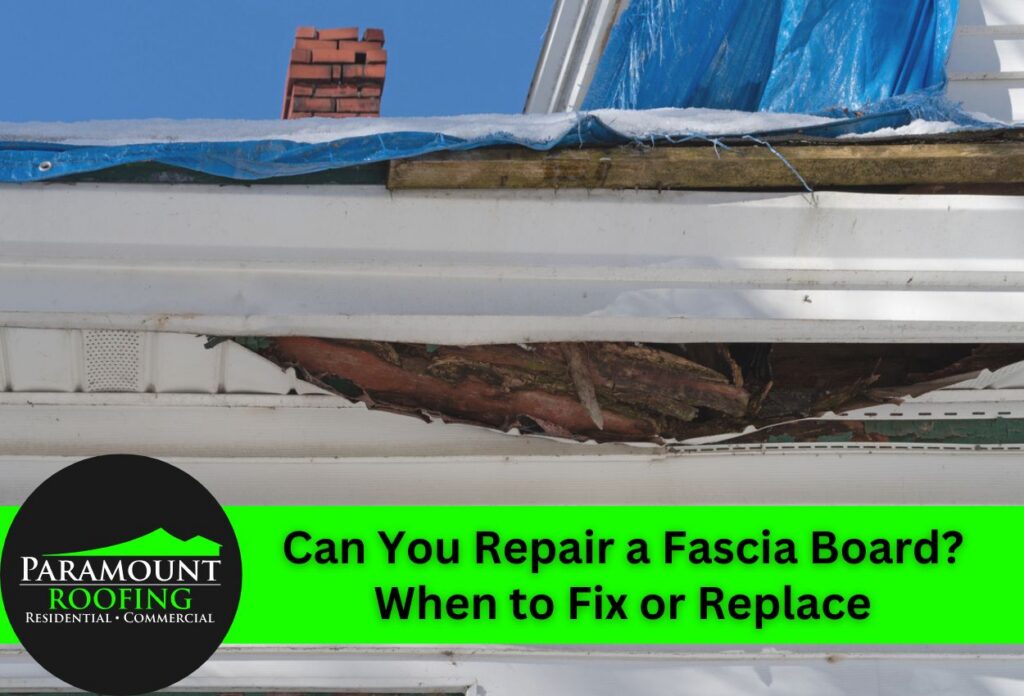
The answer depends entirely on the extent and type of damage present. Minor issues like small cracks, surface rot, or isolated soft spots often respond well to fascia board repair methods. These situations allow for targeted fixes that restore the board’s structural integrity without the expense of full replacement. However, widespread rot, severe water damage, or structural compromise typically means damaged fascia board replacement becomes the only viable option.
Understanding the difference between repairable and irreparable fascia board damage saves both time and money. Signs that fascia boards need repair include peeling paint, small areas of soft wood, minor splitting, or localized discoloration. When damage extends beyond 30% of the board’s length or seeps deeply into the wood, repair attempts usually prove ineffective and temporary at best.
Identifying the Warning Signs Your Fascia Board Needs Attention
Recognizing the early indicators of fascia board damage allows homeowners to address problems before they get worse. Several visual cues signal that fascia boards require inspection and potential repair. Peeling or flaking paint often reveals leaks beneath the surface, while visible cracks indicate the wood has begun splitting due to water exposure or age. Water stains appearing as dark streaks or discoloration point to ongoing moisture problems that compromise the board’s structural integrity.
Conducting a basic assessment helps determine the severity of fascia board damage. Gently pressing on suspected problem areas reveals soft spots that indicate rot beneath the surface. Healthy fascia boards feel solid and firm, while rotted sections give way under light pressure. Inspecting the space behind gutters uncovers hidden damage not visible from ground level. Look for signs of wood decay, mold growth, or separation between the fascia board and the roofline. These checks provide valuable information about whether damaged fascia board replacement or targeted fascia board repair methods will be necessary to restore proper function and prevent further deterioration.
Determining When Fascia Board Repair Makes Sense
Minor fascia board damage often qualifies for repair rather than full replacement. Small rotted sections measuring less than a few inches can be cut out and filled with epoxy wood filler designed for exterior applications. Surface cracks that haven’t gone through the entire board thickness respond well to caulking and sealing. Localized areas of concern, such as a single damaged spot near a downspout or corner, can be addressed through targeted repairs that restore structural integrity without replacing the entire board length.
When assessing whether repair is appropriate, the damage should be limited to less than 20% of the total fascia board length. The surrounding wood must remain solid and structurally sound. Fascia board repair methods work best when the rot hasn’t spread behind the board or into the rafter tails. These repairs typically involve removing damaged material, treating the area with wood preservative, filling with appropriate materials, and repainting to match the existing finish. This approach proves cost-effective for homeowners dealing with isolated problems caught early through regular inspection.
Recognizing When Complete Fascia Board Replacement Becomes Necessary
Certain damage conditions exceed the scale of simple repairs and require full board replacement. Extensive rot affecting more than 20% of the fascia board length compromises structural integrity to a point where repairs won’t provide lasting solutions. When rot has gone through the board thickness or spread to the rafter tails behind the fascia board, replacement becomes the only viable option. Structural compromise that causes sagging gutters, visible warping, or separation from the roofline indicates the board can no longer support its intended load.
Damage spanning multiple board sections signals widespread deterioration that targeted repairs cannot adequately address. If several areas along the fascia board show signs of rot, cracks, or water damage, replacing the entire length prevents ongoing problems and future repair costs. When considering fascia board repair or replacement, the extent and location of damage determine the appropriate solution. Complete replacement ensures uniform structural support, eliminates hidden rot, and provides a fresh foundation for gutter systems while preventing water intrusion into the roof structure.
Methods for Repairing Minor Fascia Board Damage
Repairing small rotted areas begins with removing all deteriorated wood using a chisel or utility knife until only solid material remains. The cleaned cavity receives an application of wood hardener, which seeps in and reinforces the surrounding fibers to prevent further decay. After the hardener dries completely, typically within a few hours, epoxy filler designed for exterior wood repairs fills the void. This two-part mixture bonds to the treated wood and cures into a durable, water-resistant material that restores the board’s original shape and strength without requiring removal of the entire section.
Patching cracks and holes follows a similar preparation process. The damaged section requires thorough cleaning to remove loose paint, debris, and any soft wood that could compromise the repair. Sanding the area with medium-grit sandpaper creates a smooth surface and helps the filler adhere properly. Once the epoxy or wood filler cures completely, additional sanding with fine-grit sandpaper creates a flush finish that blends with the surrounding fascia board. Applying exterior-grade primer seals the repair and prepares the surface for two coats of quality exterior paint that matches the existing color and provides long-term protection against leaks.
Repairing Rotted Fascia Board Sections Without Full Replacement
Removing damaged portions of the fascia board requires precision to preserve the structural integrity of the surrounding material. The repair process begins by marking the boundaries of the rotted section, extending at least 6 inches beyond visible damage to ensure all compromised wood is removed. Using a circular saw set to the board’s depth, careful cuts create clean edges perpendicular to the fascia board length. After removing the damaged section, the exposed rafter tails require inspection for rot. A new piece of matching lumber, cut to fit the gap exactly, gets positioned alongside the existing fascia board in a sistering technique that distributes support across both the new and original material.
Proper sealing prevents the water intrusion that caused the original deterioration. Before installing the replacement piece, applying wood preservative to all cut edges and exposed surfaces creates a moisture barrier. Galvanized or stainless steel fasteners secure the new board without risking rust stains. Flashing installed above the fascia board directs water away from the joint between old and new sections. High-quality exterior caulk seals all seams and nail holes, while two coats of exterior paint provide additional protection. This method addresses how to fix a rotted fascia board effectively while maintaining the board’s function and appearance.
Tools and Materials Needed for Successful Fascia Board Repair
Completing fascia board repairs requires specific equipment that allows for precise cutting, removal, and installation of materials. A circular saw handles cutting through damaged sections and trimming replacement lumber to exact dimensions. Pry bars remove deteriorated wood and separate rotted fascia board from rafter tails without damaging the surrounding structure. Exterior grade lumber matching the original fascia board dimensions provides replacement material that withstands weather exposure. Galvanized fasteners resist corrosion and prevent rust stains that compromise the board’s appearance and structural integrity. A drill with appropriate bits creates pilot holes that prevent wood splitting during installation.
Protective coatings and primers specifically formulated for exterior wood applications extend the lifespan of repair work significantly. Wood hardener gets to damaged fibers to stabilize areas surrounding rot, while two-part epoxy filler creates durable patches for small voids. Exterior-grade primer seals raw wood and repair materials, preventing leaks. Quality exterior paint provides the final barrier against water, UV damage, and temperature fluctuations. Having proper safety equipment, including gloves, safety glasses, and a stable ladder, ensures the repair process proceeds without injury while accessing elevated fascia boards.
Maintaining Your Fascia Boards to Prevent Future Damage
Establishing a consistent inspection routine protects fascia boards from the deterioration that leads to expensive repairs or replacement. Checking fascia boards twice a year, ideally during spring and fall, allows homeowners to identify early warning signs before minor issues escalate into structural problems. These inspections should focus on areas where gutters attach to the fascia board, corners where two boards meet, and sections near downspouts where water concentration occurs most frequently. Cleaning gutters at least 3 times per year prevents overflow that saturates fascia boards with standing water, the primary cause of rot and decay that compromises the wood.
Applying protective coatings creates a moisture barrier that significantly extends the fascia board’s lifespan. Repainting or resealing fascia boards every 3 to 5 years maintains the protective layer that shields wood from leaks and sun damage. Before applying new coats, thoroughly inspect the existing surface for peeling paint, small cracks, or early signs of deterioration that can be addressed during the maintenance process. Using quality exterior paint or sealant specifically formulated for trim work provides superior protection compared to standard products. This proactive approach catches developing problems at the repairable stage, reducing the likelihood of extensive damage that requires complete board replacement.
Get Expert fascia board Repair Services from Paramount Roofing.
If your home’s fascia boards are showing signs of wear and tear, don’t wait for the damage to get worse. Contact Paramount Roofing today to assess whether your fascia boards can be repaired or if they need replacing. Ignoring signs like peeling paint, visible cracks, or soft spots can lead to more significant issues, potentially affecting the structural integrity of your home.
Call us now at (586) 690-0227 for a professional evaluation and to schedule the necessary repairs. Trust Paramount Roofing to restore the beauty and functionality of your home’s exterior efficiently.