 Free Estimate
 Request Service
 Locations
Key Points:
- Is damage from ice dams covered by insurance? Yes, usually for sudden water damage, but not for gradual leaks or ice dam removal.
- Strengthen your claim by immediately documenting damage with photos, maintenance records, and professional roofing assessments.
- Be aware that policy exclusions for poor roof maintenance or gradual damage can often lead to an ice dam claim denial.
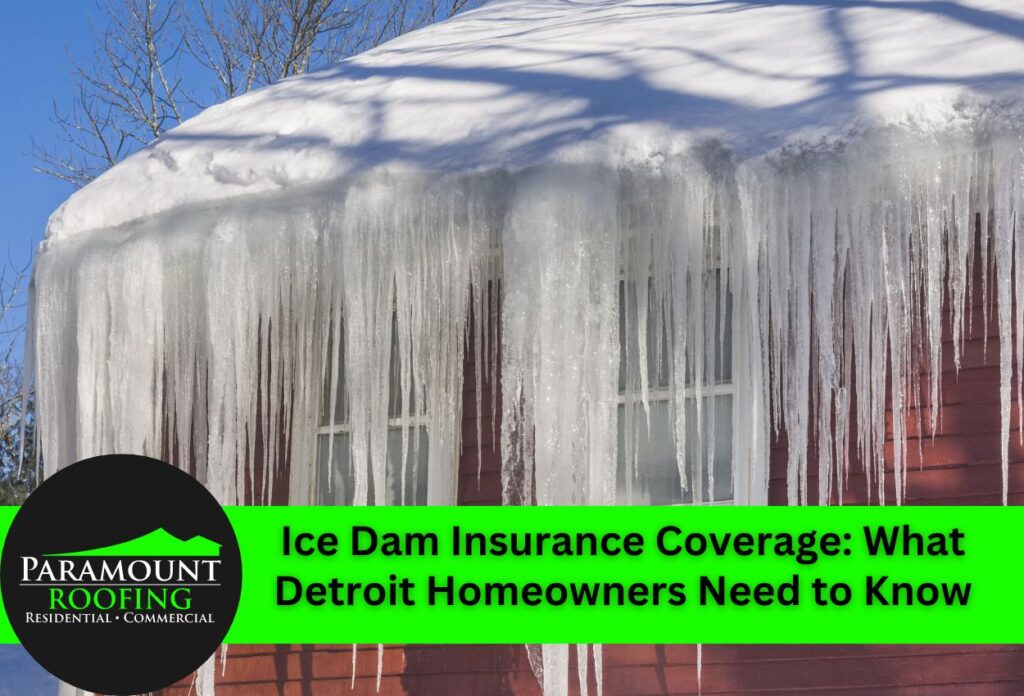
Ice dam coverage under homeowners’ insurance remains one of the most confusing aspects of winter roof damage claims for property owners across Michigan. The answer to whether damage from an ice dam is covered by insurance depends entirely on the specific circumstances of the damage and the language within individual policies. Most standard homeowners’ insurance policies do cover sudden and accidental water damage resulting from ice dams, but they typically exclude coverage for the ice dam removal itself or damage caused by gradual leaks.
Insurance companies evaluate ice dam claims based on whether the damage resulted from a sudden occurrence, long-term neglect, or maintenance issues. Insurance claims for roof damage in the winter often face scrutiny regarding prevention measures and the homeowner’s maintenance history. Understanding policy exclusions becomes important since many homeowners mistakenly believe their coverage automatically extends to all ice dam-related damages. The distinction between covered water damage and excluded maintenance issues can determine the approval of the claim, making it essential for homeowners to understand their policy terms before filing.
How Insurance Companies Evaluate Ice Dam Claims
Insurance companies follow an assessment process to determine if ice dam damage qualifies as a covered peril under standard homeowners policies. Adjusters examine the timeline of damage occurrence, distinguishing between sudden and gradual leaks that developed over time. They review maintenance records, photographs of the roof’s condition, and weather data to establish whether the homeowner took reasonable precautions. Companies also investigate if proper ice dam prevention methods were employed, as this can impact the approval of a claim.
Strong documentation significantly strengthens winter roof damage insurance claims when filing for ice dam-related damages. Homeowners should photograph the ice dam formation, interior damage, and roof conditions before and after the incident. Professional assessments from qualified roofing contractors provide valuable evidence supporting the sudden nature of the damage. Weather reports, utility bills showing unusual heating costs, and receipts for ice dam removal services create a comprehensive claim file.
Policy Exclusions That Could Deny Your Ice Dam Claim
Maintenance-related exclusions represent the most common reason insurance companies deny homeowners’ insurance claims for ice dams. Insurers routinely investigate the history of roof maintenance before approving insurance claims, examining gutters, shingles, and ventilation systems for signs of neglect. Poor attic insulation, clogged gutters, or damaged roofing materials can void coverage entirely if these conditions contributed to ice dam formation. Insurance adjusters look for evidence that homeowners failed to implement basic ice dam prevention methods or ignored known roof vulnerabilities.
Gradual damage clauses create another significant barrier to successful roof leak insurance coverage claims related to ice dams. These policy provisions exclude damage that occurs slowly over time, making timing crucial when reporting incidents to insurers. Water stains, mold growth, or structural damage that developed gradually may not qualify for coverage, even if ice dams caused the initial leak. Homeowners must report damage from ice dams immediately upon discovery to avoid gradual damage. Delayed reporting allows insurance companies to argue that ongoing leaks caused additional damage beyond the original covered incident, potentially reducing or eliminating claim payouts.
Maximizing Your Chances of Coverage Approval
Taking proactive maintenance steps during winter demonstrates reasonable care that insurance companies value when evaluating homeowners’ insurance ice dam coverage claims. Regular gutter cleaning, proper attic insulation, and adequate ventilation show insurers that homeowners actively work to prevent ice dams from forming. Documenting these maintenance activities through photos and receipts creates a paper trail supporting winter roof damage insurance claims. Prompt snow removal from roof edges and monitoring for early ice dam formation help establish that property owners took reasonable precautions to protect their homes.
Professional documentation becomes essential when supporting the sudden nature of ice dam damage for insurance claims. Licensed roofing contractors can provide expert assessments that clearly distinguish between sudden leaks and gradual damage. Professional weather monitoring reports, thermal imaging of ice dam formation, and documented timeline evidence strengthen claim submissions significantly. Having qualified ice dam removal services document the extent of ice buildup and resulting damage provides credible third-party verification. This professional documentation helps insurance adjusters understand that damage resulted from a covered problem rather than maintenance neglect, improving approval chances for legitimate claims.
When Insurance Denies Ice Dam Claims
Insurance denials for ice dam claims frequently stem from specific policy interpretations that homeowners may not fully understand. Common denial reasons include insufficient evidence of sudden damage, pre-existing roof conditions, or maintenance-related exclusions. Adjusters may cite gradual damage clauses when water stains or structural issues appear to have developed over extended periods. Gaps in documentation when listing out the damage timeline often trigger denials, as insurers question whether homeowners reported incidents promptly after occurrence.
Evaluating denial justification requires careful review of the adjuster’s findings against actual policy language and damage. Questionable denials often occur when insurance companies misinterpret sudden leaks as gradual damage or wrongly attribute ice dam formation to maintenance neglect. Homeowners should examine whether the denial letter accurately reflects their specific circumstances and policy terms. Professional roofing assessments can challenge incorrect adjuster conclusions about the cause of the damage or its timing, particularly when technical expertise reveals that proper ice dam prevention methods were used.
The appeals process provides recourse for homeowners facing wrongful claim denials through structured review procedures. Most insurance companies require written appeal letters within specific timeframes, accompanied by additional documentation supporting the claim. Independent professional assessments, detailed photographic evidence, and expert opinions from qualified roofing contractors strengthen appeal submissions significantly.
Prevention Strategies That Protect Your Coverage
Regular roof maintenance practices directly impact insurance claim approval rates while reducing ice dam formation risks throughout Michigan’s harsh winter seasons. Insurance companies expect homeowners to perform basic preventive maintenance, including gutter cleaning, adequate attic insulation, and proper ventilation system upkeep. These ice dam prevention methods demonstrate reasonable care that adjusters look for.
Consistent roof inspections, quick shingle repairs, and snow removal from the edge of the roof show insurers that property owners actively protect their investments against winter damage.
Strategic home improvements provide dual benefits by preventing ice dam formation while strengthening future insurance claim positions. Installing heated gutter systems, improving attic insulation levels, and upgrading ventilation systems reduces ice dam risks significantly. These modifications create documented evidence of proactive care that insurance companies value during claim evaluations.
Professional installation of ice and water barriers, proper flashing around roof gaps, and upgraded roofing materials demonstrate a commitment to preventing roof leak situations. Maintaining detailed records of these improvements helps establish that reasonable precautions were taken, supporting roof leak insurance coverage claims when winter damage occurs despite preventive efforts.
Working with Roofing Professionals for Insurance Claims
Qualified roofing contractors provide essential documentation and technical assessments that significantly strengthen insurance claims. Professional contractors understand how insurance adjusters evaluate winter roof damage and can provide detailed reports distinguishing between sudden ice dam damage and pre-existing conditions. These experts document the extent of ice dam formation, water intrusion patterns, and resulting structural damage using technical language that insurance companies recognize and trust. Their professional assessments carry more weight than homeowner observations alone, particularly when disputes arise over the cause of the damage and its timing.
Choosing restoration services that understand insurance requirements streamlines the claims process and improves the chances of approval for coverage requests. Experienced contractors can document compliance with ice dam prevention methods and maintenance standards that insurers expect from property owners.
Protect Your Home with Paramount Roofing’s Expert Ice Dam Removal Services
If you’re dealing with ice dam damage, it’s important to act quickly to reduce the chance of more damage and maximize the chances of a successful insurance claim. Paramount Roofing specializes in assessing and repairing ice dam damage, ensuring your home remains safe and intact. Don’t wait for leaks to worsen or insulation problems to escalate.
Call us today at (586) 690-0227 for a comprehensive evaluation and expert removal of ice dams. By working with Paramount Roofing, you ensure that all repairs are professionally documented, supporting your insurance claims and helping to streamline the approval process.