
 Free Estimate
 Request Service
 Locations

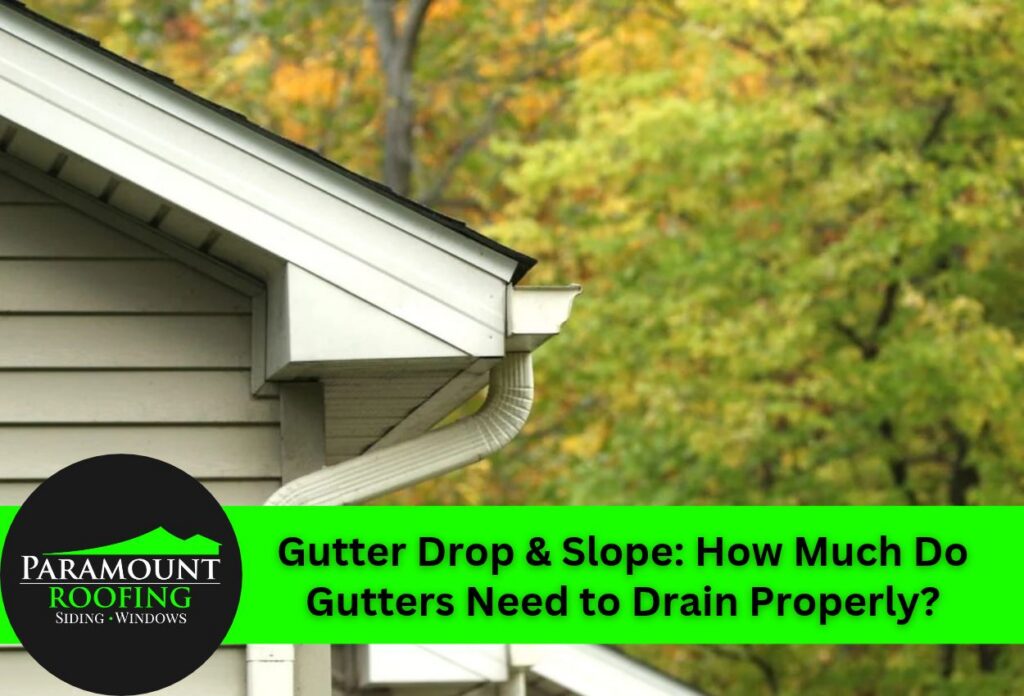

Gutters should drop 1/4 inch per 10 linear feet toward the downspout, though the acceptable range runs from 1/8 inch to 1/2 inch per 10 linear feet depending on how long the gutter run is. Too little slope and water sits and stagnates. Too much and the gutter looks crooked and loses capacity at the high end.
Detroit gets about 35 to 40 inches of precipitation each year. May alone averages close to 3.7 inches. Add the freeze and thaw temperature changes through winter and spring, and flat or near-flat gutter installations will quickly fail under the stress of expanding ice. Sagging, ice buildup, and standing water become real problems fast when the pitch is off even slightly.
What Is the Correct Gutter Slope Per Foot and How Do You Measure It?
The standard installation target is a 1/4 inch drop per 10 feet of gutter run, with an acceptable minimum of 1/16 inch per linear foot. In metric terms, that translates to roughly 2 mm per metre at the minimum and up to 8 mm per metre at the recommended target. Either end of that range keeps water moving without making the gutter look visibly tilted from the street.
Field Measurements
Measuring slope takes a chalk line, a tape measure, and a 4-foot level. Here is how to do it on a standard run:
- Snap a chalk line from the high end of the gutter to the downspout outlet.
- Hold a level along that chalk line at the high end and measure the vertical gap between the line and the level’s bubble-center mark at the low end.
- Calculate the drop: multiply the run length by the required pitch. For a 40-foot run, the minimum recommended total drop is 1 inch, while a steeper 2-inch drop may be required for older settled rooflines.
Quick-Reference Slope Table
| Gutter Run Length | Slope per 10 Feet | Slope per Linear Foot | Total Recommended Drop |
|---|---|---|---|
| 20 ft | 1/4 inch | 1/40 inch | 1/2 inch |
| 30 ft | 1/4 inch | 1/40 inch | 3/4 inch |
| 40 ft | 1/4 inch | 1/40 inch | 1 inch |
| 50 ft | 1/4 inch | 1/40 inch | 1-1/4 inches |
If your measurement falls below the minimum for your run length, water will pool, a serious issue during Detroit’s spring rainfall peaks and winter temperature changes. Recalculate before re-hanging any section of gutter rather than guessing by eye.
What Are the Signs Your Gutters Don’t Have Enough Slope?
Six observable problems tell you that gutter slope has dropped below the 1/16-inch-per-foot minimum, and most are visible from the ground or during a simple walk-around after a rain.
- Standing water after 48 hours: Water sitting in the gutter trough more than 48 hours after a rainstorm means the slope has likely fallen below the 1/16-inch-per-foot minimum threshold. Stagnant water breeds mosquitoes and accelerates corrosion.
- Visible sag or belly in the gutter profile: A mid-run dip you can see from the ground means hangers have pulled loose or the fascia board behind them has softened, both of which break the intended drainage angle.
- Rust staining or algae streaking along the gutter bottom: These marks indicate water has been sitting in the same low spot repeatedly, not draining toward the downspout the way it should.
- Fascia board rot or paint bubbling behind the gutter: Overflow from a poorly sloped gutter runs directly behind the gutter lip and soaks the fascia board, causing wood decay and paint failure within one to two seasons.
- Ice buildup at low points during winter: When Detroit temperatures cycle between 20 degrees and 35 degrees Fahrenheit, standing water in low-slope sections freezes, expands, and pulls hangers away from the fascia board, making the slope problem worse with every temperature swing.
- Overflow at mid-run rather than at the downspout end: Water spilling over the front edge halfway down the run, not at the far end, points to a belly or reverse pitch forcing water to the wrong low point.
Detroit’s older housing, with many homes dating to the late 1930s, sees rooflines and rafter tails settle over decades, making slope drift far more common than in newer construction. The most practical time to inspect is after the first heavy spring rain in May, when 3.7 inches of average monthly rainfall will expose any drainage failure quickly and clearly. A residential roof inspection can catch slope problems and related roofline issues before they add to more expensive repairs.
How Do Detroit Home Conditions Affect the Slope You Need?
A single gutter run longer than 40 feet should be split into two drainage runs or fitted with an additional downspout, and on Detroit’s older one-to-one-and-a-half-story brick homes, that threshold gets crossed more often than most homeowners expect. Multiple roof planes, valleys, and long eave lines all feed water into the same gutter section at once. When that volume concentrates into one run, even a correctly pitched gutter can overflow during Detroit’s summer thunderstorms if it hasn’t been sized and divided properly.
Why Settled Fascia Board Changes Everything
Many Detroit homes date to the late 1930s, and decades of settling mean the fascia boards on these houses are rarely level. Installers cannot simply follow the fascia board line and expect correct slope; the fascia board itself may be off by more than the target drop requires. Adjustable hangers set to a deliberate pitch are the only reliable way to achieve the 1/4-inch-per-10-foot target when the backing surface has shifted over time. Fascia board slope alone cannot substitute for hanger-set pitch, and assuming it can is one of the most common installation mistakes on pre-World War II Detroit housing.
5-Inch vs. 6-Inch K-Style Gutters and Flow Capacity
Gutter size directly affects how much roof area a single run can drain before it reaches its limit. A standard 5-inch K-style gutter handles about 5,520 square feet of roof drainage at typical Detroit rainfall intensity, while a 6-inch K-style handles about 7,960 square feet. Detroit’s summer thunderstorms can push flow toward the upper end of both limits fast. When that happens, correct slope becomes the difference between water moving toward the downspout and water spilling over the front edge mid-run.
What Happens When Slope Is Wrong and What Does It Cost to Fix?
Ignoring a slope problem costs far more than fixing it early. A simple hanger adjustment runs $75 to $200, while waiting until fascia boards rot or gutters fail pushes costs to $300 to $2,500 or more depending on how far the damage spreads.
| Scenario | Typical Detroit-Area Cost | Expected Gutter Lifespan | Notes |
|---|---|---|---|
| Correct slope maintained | $0 (no repair needed) | 20 to 30 years | Aluminum gutters draining properly: hangers intact |
| Slope re-adjustment only (hanger repositioning) | $75 to $200 | Restored to 20 to 30 years if caught early | No fascia board damage present: adjustment only |
| Fascia board replacement from improper drainage | $300 to $800 per section | 8 to 12 years if underlying slope issue remains uncorrected | Wood decay from repeated overflow behind gutter lip |
| Full aluminum gutter replacement | $1,000 to $2,500 | 20 to 30 years with correct slope reinstalled | Typical Detroit single-family home: includes new hangers |
Improperly sloped gutters with standing water last only 8 to 12 years, less than half the 20 to 30 year lifespan of a correctly pitched aluminum installation. Detroit’s winter temperatures, ranging from about 20 degrees to 35 degrees, make that gap even wider. Standing water in a low-slope section freezes, expands, and pries hangers away from the fascia board with every temperature swing, accelerating joint separation in ways that warmer-climate homeowners simply don’t face at the same rate.
Re-securing hangers before ice damage sets in is the most effective preventative maintenance for a local gutter system. Waiting one or two winters typically turns a minor adjustment into a fascia board repair or full replacement job. When water damage from failed gutters reaches the roof deck, residential roof repair may also become necessary to address any resulting structural damage.
Should You Adjust Gutter Slope Yourself or Hire a Detroit Contractor?
DIY slope adjustment makes sense for gutter runs under 20 feet with a sound fascia board and accessible hangers, but hire a contractor when runs exceed 40 feet, the home is two stories or higher, or seamless gutters need on-site fabrication.
- DIY: Run is under 20 feet: Short runs with a total slope adjustment of less than 1/2 inch are manageable for a careful homeowner with a ladder, level, and basic hand tools, provided the fascia board is solid and existing hangers are reachable without scaffolding.
- DIY: Fascia board is sound, and hangers are intact: If no wood decay is present and hangers simply need repositioning, the repair stays straightforward. Rotted fascia board or missing hangers change the job entirely and call for a professional.
- Hire out: Run exceeds 40 feet or fascia board needs replacement: Longer runs require precise hanger spacing across more anchor points, and fascia board replacement adds structural work that raises both fall risk and the chance of a slope error along the run.
- Hire out: Home is two stories or higher: Gutter work on older Detroit homes with deteriorated rafter tails carries real fall and structural risk at height. Michigan does not issue a statewide residential gutter license, but any contractor hired should carry general liability and workers’ compensation insurance; verify both before work begins.
- Hire out: Seamless gutters are needed: Seamless aluminum gutters require a roll-forming machine brought to the job site. That equipment and the skill to set slope correctly across a long run are not DIY options.
- Permits: Confirm before starting larger work: Standard slope adjustment and gutter replacement are generally not permitted activities in Detroit, but work tied to broader roofing or exterior renovation or projects in a Historical District may require a permit. Confirm with the City of Detroit Buildings, Safety Engineering and Environmental Department before beginning anything beyond a simple repair. If your project involves broader exterior work, exploring financing options for roofing and exterior projects can help manage the total cost.
For most Detroit homeowners, the two-story threshold is the clearest dividing line: below it, a short DIY adjustment on a sound fascia board is reasonable; above it, the combination of fall risk, structural variables, and insurance exposure makes hiring a reputable contractor the right call.
Ready to Get Your Gutters Draining Correctly in Detroit?
Prompt hanger adjustments made before winter arrives are highly cost-effective compared to structural repairs following a season of standing water and rot. Paramount Roofing works with Detroit homeowners on older housing, including the pre-World War II brick homes common across the city where settled fascia boards and long eave lines make correct slope harder to achieve and easier to get wrong.
Spring rainfall peaks in May, and fall debris fills gutters quickly. Both seasons expose slope problems quickly. Scheduling an inspection before either season hits is the most cost-effective step a Detroit homeowner can take.
Get your free gutter estimate.
Not ready to schedule? Learn more about our gutter installation and slope correction services.