
 Free Estimate
 Request Service
 Locations
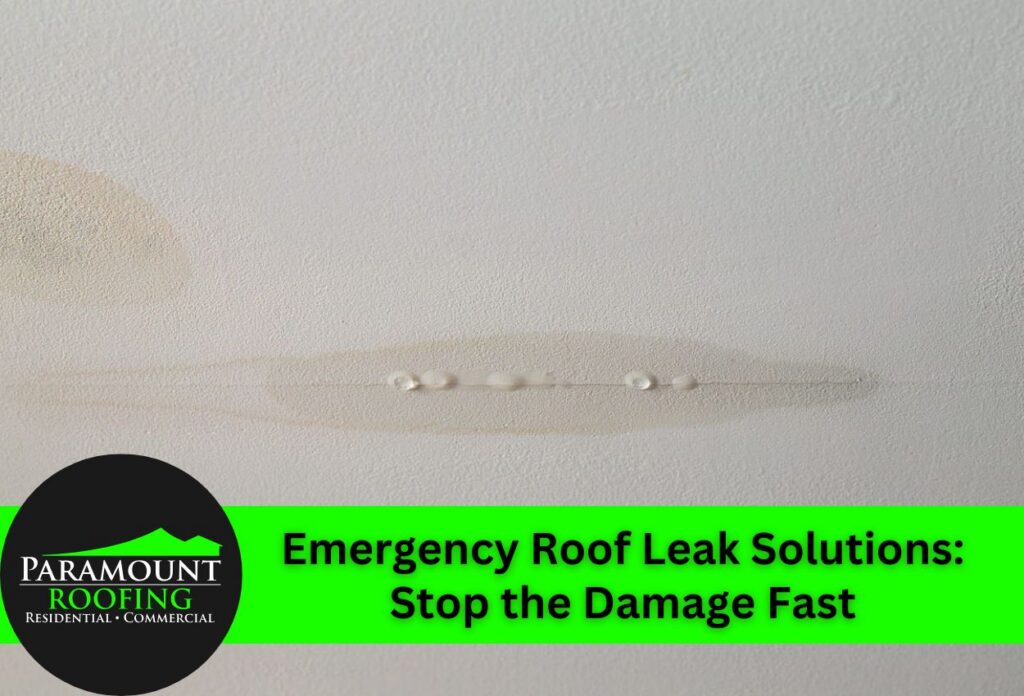

When water is actively coming through your roof, the fastest fix is a heavy-duty tarp secured over the damaged area. Most homeowners can have one in place within 30 to 60 minutes while they arrange professional repair. Detroit receives 30 to 35 inches of precipitation each year, with multiple severe storms rolling through southeast Michigan every season. That combination makes emergency roof leaks one of the most common crises local homeowners face. (Detroit Annual Precipitation Data)
There are two paths forward when water is coming in. The first is a quick DIY response with tarps, patch kits, and interior containment buckets that stops the bleeding fast. The second is a same-day professional emergency roof repair service, available throughout the Detroit metro area for situations where damage goes beyond a simple patch.
Most Detroit homes are single-family properties built between 1920 and 1960 with asphalt shingle roofs. Decades of wind-driven rain, ice dams, and storm debris have left many of these older systems vulnerable to sudden leaks. This article covers both immediate actions and longer-term repair options to help you protect your home fast.
*Please note, price ranges listed in this article may not reflect the final cost of your project. Prices are subject to change based on various factors such as local labor rates, material quality, and more. All costs established in this article are rough estimates based on average industry rates.
How Do You Stop a Roof Leak From Inside During Heavy Rain?
Follow these six steps in order the entire interior response sequence takes 30 to 45 minutes and can prevent hundreds of dollars in ceiling and drywall damage while you wait for professional repair.
- Locate the entry point (0 to 15 minutes): Go to your attic first. In Detroit’s older wood-frame homes, water most often enters at attic joists, pipe collars, and skylight frames. Look for wet wood, dripping water, or daylight showing through.
- Place containment below the leak (minutes 5 to 10): Set buckets directly under the drip. Lay plastic sheeting at least 4 mil thickness over flooring and furniture within a 6-foot radius to catch splatter and runoff.
- Relieve ceiling bulges (minutes 10 to 15): If the ceiling is sagging or bubbling, carefully poke a small hole at the lowest point with a screwdriver. This lets pooled water drain in a controlled stream instead of causing a larger collapse.
- Dry the target area (minutes 15 to 20): Use towels or a dry cloth to wipe down the interior surface where you plan to apply sealant. Sealant bonds poorly to wet surfaces and will fail faster without this step.
- Apply temporary interior sealant (minutes 20 to 30): Roofing caulk or hydraulic cement, both available at Detroit-area hardware stores for $8 to $20, can slow an active leak at pipe collars, skylight frames, and exposed attic joists. These products are rated to hold for 24 to 72 hours under continued rain.
- Monitor and document (ongoing): Check containers every 30 minutes during heavy rain. Take photos of all water damage for your homeowners’ insurance claim.
These are temporary measures only, roofing caulk and hydraulic cement buy time, not a lasting repair. Schedule a professional inspection within 24 hours of any active leak to assess the full extent of the damage.
Which Emergency Roof Repair Materials Work Best: Tarps, Patch Kits, or Sealants?
Polyethylene tarps cover the most area at the lowest cost, making them the best first response for large or unknown damage zones, but rubberized patch kits outperform them for pinpoint leaks that need to hold for weeks or months.
| Material Type | Coverage Area | Effective Duration | Approximate Cost |
|---|---|---|---|
| Polyethylene tarp (6 mil minimum) | 100 to 400 sq ft | 3 to 14 days | $15 to $45 |
| Quick roof patch kit (peel-and-stick) | 1 to 9 sq ft | 1 to 6 months | $20 to $60 |
| Rubberized flashing tape | 1 to 15 linear ft | 3 to 12 months | $12 to $35 |
| Polyurethane roof sealant | Spot application only | 6 to 18 months | $10 to $30 |
6-mil polyethylene tarps are stocked at Home Depot and Menards locations throughout the Detroit metro area and can be installed over a ridge in under 45 minutes using 2×4 lumber as anchor boards, making same-day coverage realistic even for homeowners with no roofing experience.
For active leaks with a clear source, peel-and-stick rubberized patch kits rated for wet-surface application, such as Flex Seal or Henry Tropic Seal, bond in temperatures as low as 20 degrees Fahrenheit, which makes them a workable option during Detroit’s cold-season storms when surfaces are damp or near freezing. Rubberized patch kits last up to 6 months, giving homeowners the most time to schedule permanent repairs without risking repeated interior water damage.
Should You DIY the Temporary Fix or Call an Emergency Roof Repair Service Right Away?
Call a professional immediately if your ceiling is sagging, your leak covers more than 10 sq ft, or storm debris is visible on the roof. Those three conditions alone put most Detroit homeowners firmly in the “call now” category.
- Roof pitch steeper than 4:12: A 4:12 pitch means the roof rises 4 inches for every 12 inches of horizontal run, steep enough that walking on it without safety equipment is dangerous. Professional repair is strongly recommended at this slope or greater.
- Leak covering more than 10 sq ft: Damage this size typically points to structural failure beyond surface shingles. A professional emergency roof repair service should be called the same day water is detected across an area this large.
- Interior ceiling sagging or discolored: This signals active water pooling above the ceiling, a condition that can collapse drywall within hours. A professional response is required immediately, not after a DIY attempt.
- Storm debris visible on the roof: Branches and debris puncture underlayment and shift flashing in ways that aren’t visible from the ground. A professional assessment within 24 hours is recommended.
- Single missing shingle with attic access available: This is the one scenario where a careful DIY patch is viable. A peel-and-stick rubberized patch or replacement shingle can hold for 30 to 90 days if applied to a dry surface.
- Repair costs likely to exceed $600: Michigan law requires any roofing contractor performing repairs over $600 to hold a Residential Builder license issued by the Department of Licensing and Regulatory Affairs (LARA). Before hiring any emergency contractor in Detroit, verify their license status through LARA’s online licensing lookup or by calling LARA directly.
When searching for a roof leak emergency service near you, look for Detroit-area contractors who specifically advertise 24/7 emergency tarping and same-day response. Emergency roofing services in southeast Michigan typically arrive within 1 to 4 hours during business hours and 2 to 6 hours after hours, so calling early in the day makes a real difference in how fast water stops entering your home.
What Does Emergency Roof Repair Cost in Detroit, and Is a Temporary Fix Worth It?
A $15 tarp or a $400 emergency tarping service can prevent $1,000 to $4,000 in interior water damage, making temporary fixes one of the highest-return actions a Detroit homeowner can take after storm damage.
| Repair Type | Average Cost in Detroit | Effective Lifespan | Best Used When |
|---|---|---|---|
| DIY tarp installation | $15 to $60 | 3 to 14 days | An active storm is ongoing |
| Professional emergency tarping | $150 to $400 | 7 to 30 days | Immediate storm damage, unsafe roof pitch |
| Professional patch repair | $200 to $600 | 1 to 5 years | Localized shingle or flashing damage |
| Full roof replacement | $7,000 to $15,000 | 20 to 30 years | Widespread failure or aging of the roof deck |
Leaving an active leak unaddressed for just 24 to 48 hours can lead to drywall replacement, insulation damage, and mold remediation costs totaling $1,000 to $4,000, far more than any temporary fix on this list. Spending $15 to $400 on same-day tarping or patching is the clearest ROI-positive decision a homeowner can make after storm damage. Detroit homeowners with active homeowners insurance policies should photograph the damage with a date-stamped image and contact their insurer within 24 hours.
Most policies cover sudden storm damage but exclude damage tied to long-term neglect, so fast documentation protects the claim. Paramount Roofing provides same-day emergency response throughout the Detroit metro area and can help document damage for insurance purposes during the initial roof inspection.
When Is It Too Dangerous to Attempt Emergency Roof Repairs in Detroit’s Weather Conditions?
Roof access becomes unsafe at wind speeds above 25 mph, temperatures below 20 degrees with ice present, active lightning within 10 miles, or snow accumulation exceeding 2 inches on the roof’s surface, and all four of these conditions occur regularly in Detroit between November and March.
Ice dams add another layer of danger specific to southeast Michigan. They form when heat escaping from the attic melts snow at the ridge, sending water down toward the eave, where colder temperatures refreeze it into a solid ice barrier. That cycle repeats across roughly 30 to 40 temperature-change days each winter in this region. Water then backs up behind the dam and forces its way under shingles and into the home. Attempting to break an ice dam without professional equipment risks both personal injury from falls on frozen surfaces and shingle damage that turns a manageable leak into a full replacement job. Homeowners who chip at ice dams with shovels or hammers frequently tear away granule-coated shingles in the process, cutting years off the roof’s remaining life.
When exterior conditions match any of the four unsafe thresholds above, the right move is interior containment following the bucket-and-sheeting steps covered earlier, combined with an immediate call to a licensed emergency roofing contractor. Getting water under control inside buys time while a professional handles the roof itself safely.
Ready to Stop the Leak Today? Contact Detroit’s Emergency Roof Repair Experts
Spending $150 to $400 on same-day emergency tarping can prevent $4,000 in interior damage, and Paramount Roofing is available 24/7 to get that protection in place fast. Licensed under Michigan’s Residential Builder requirements and serving Detroit and southeast Michigan communities, Paramount Roofing’s emergency crews aim to be on-site within 2 hours of your call.
Schedule your emergency roof inspection.
Not ready to schedule? Learn more about emergency roof repair services.