 Free Estimate
 Request Service
 Locations
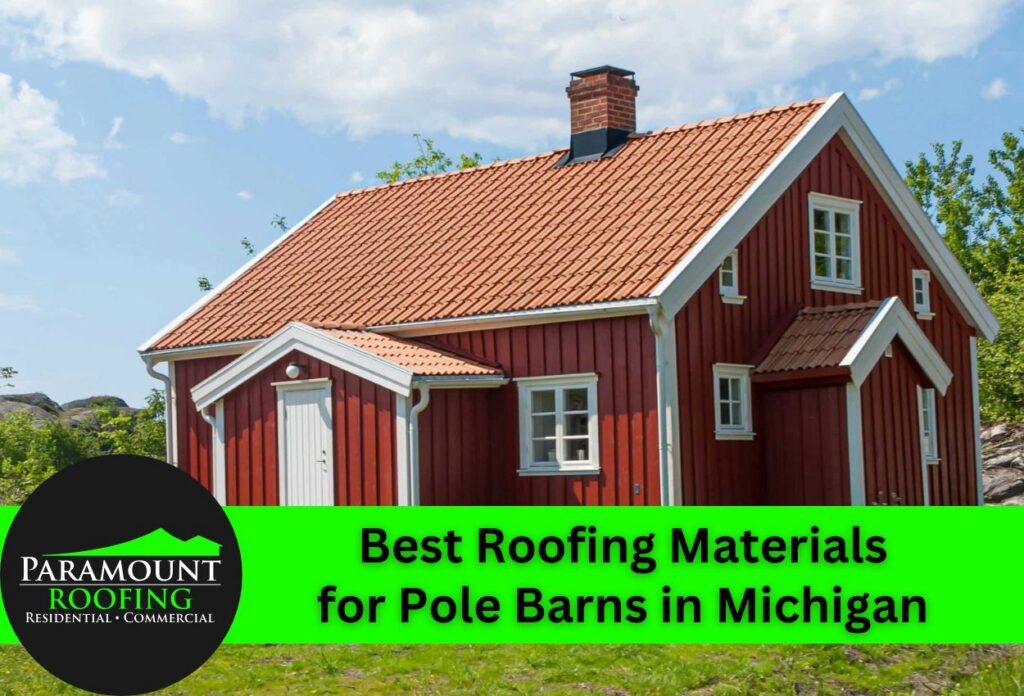

Metal roofing, specifically 26-gauge or 29-gauge galvanized steel panels, is the most widely recommended material for Michigan pole barns, thanks to southeast Michigan’s approximately 42 to 45 inches of annual snowfall and approximately 60 to 80 temperature cycles crossing 32 degrees Fahrenheit per year. Those repeated cycles of freezing and thawing are hard on roofing materials, and metal handles them better than most alternatives.
Most Michigan pole barn owners face one core decision: standing-seam metal panels versus corrugated or exposed-fastener metal panels. Both work well in snow, rain, and wind, but they differ in cost, installation, and long-term maintenance. Asphalt shingles are used on some pole barns, but they tend to underperform in heavy snow and ice environments where metal holds up more reliably.
*Please note, price ranges listed in this article may not reflect the final cost of your project. Prices are subject to change based on various factors such as local labor rates, material quality, and more. All costs established in this article are rough estimates based on average industry rates.
How Do Standing Seam and Corrugated Metal Roofing Compare for Michigan Pole Barns?
Standing seam metal roofing lasts 40 to 60 years on Michigan pole barns, compared to 25 to 40 years for corrugated panels, a difference that matters when southeast Michigan’s snow weight, wind events, and temperature changes put roofing systems under stress year after year.
| Panel Type | Gauge Range | Typical Lifespan (years) | Snow/Ice Performance | Wind Uplift Rating | Exposed Fasteners | Best Use Case |
|---|---|---|---|---|---|---|
| Standing Seam | 24 to 26 gauge | 40 to 60 years | Excellent continuous seam sheds snow and water cleanly | Rated to 120+ mph | No | Long-term, low-maintenance builds: workshops: permanent structures |
| Corrugated (Exposed Fastener) | 26 to 29 gauge | 25 to 40 years | A good 4:12 pitch or greater is recommended for Michigan snow | Rated to 90 to 110 mph | Yes | Budget agricultural builds: storage barns: utility structures |
The most important factor for southeast Michigan pole barn owners choosing between these two systems is fastener exposure. Temperature changes, which can occur 40 to 60 times per year in the Detroit metro region, cause metal panels to expand and contract repeatedly, and that movement gradually works exposed fasteners loose. Exposed fastener panels may need re-fastening or resealing every 10 to 15 years, while standing seam systems require minimal mechanical maintenance across their entire lifespan. For pole barns in this region, dealing with both heavy snow and strong spring thunderstorm winds, standing seam vs corrugated metal roofing for pole barns in Michigan comes down to budget now versus reduced maintenance costs over the long run.
Which Roofing Materials Hold Up Best Against Michigan’s Snow, Ice, and Wind?
Metal roofing with a minimum 4:12 pitch handles Michigan’s snow and ice loads better than any other common material, and a 6:12 pitch is preferred for maximum snow shedding in southeast Michigan’s climate. Detroit-area roofs sit in a snow weight zone of approximately 20 psf under the Michigan building code. That weight, combined with winter relative humidity levels of 70% to 80%, puts serious stress on roofing systems every single year.
Not all metal coatings perform equally under those conditions. The coating on your metal panels directly affects how long the roof resists rust, UV damage, and moisture, and the warranty ranges vary widely by type:
| Coating Type | Composition | Typical Corrosion/Finish Warranty |
|---|---|---|
| Galvanized (G90) | Zinc coating over steel | 20 to 30 years |
| Galvalume | Aluminum-zinc alloy over steel | 30 to 40 years |
| Kynar 500 / PVDF Paint | Premium fluoropolymer finish | 40+ years |
Ice dams are a separate but related risk in southeast Michigan. High winter humidity regularly in the 70% to 80% range means moisture is constantly available to refreeze at roof edges when attic heat escapes. Self-adhering ice-and-water shield underlayment installed at the eaves covering a minimum of 24 to 36 inches is the strongest defense against ice dam damage, and Michigan Residential Code requires this underlayment for new construction in most jurisdictions. That means choosing the right underlayment isn’t just good practice, it’s often a permit compliance requirement.
For pole barn owners in the Detroit area, pairing a Galvalume or Kynar 500 panel with a 6:12 pitch and proper ice-and-water shield at the eaves gives the best combination of weight performance, corrosion resistance, and code compliance. Paramount Roofing can confirm which coating and pitch combination fits your specific build.
What Does Pole Barn Roof Replacement Cost in Michigan?
Corrugated 29-gauge steel is the most budget-accessible metal option for pole barn roofing in Michigan, with installed costs ranging from $3.50 to $5.50 per square foot, but standing seam systems deliver a longer lifespan and lower long-term maintenance costs for owners planning to keep their structure for decades.
| Roofing System | Material Cost per Sq Ft | Labor Cost per Sq Ft (Michigan) | Total Installed Cost per Sq Ft | Estimated Cost for 2,400 Sq Ft Pole Barn Roof | Expected Lifespan |
|---|---|---|---|---|---|
| 29-gauge Corrugated Steel (Exposed Fastener) | $1.50 to $2.50 | $2.00 to $3.00 | $3.50 to $5.50 | $8,400 to $13,200 | 25 to 40 years |
| 26-gauge Standing Seam Steel | $3.00 to $5.00 | $3.00 to $5.00 | $6.00 to $10.00 | $14,400 to $24,000 | 40 to 60 years |
| Galvalume Standing Seam | $3.50 to $5.50 | $3.00 to $5.00 | $6.50 to $10.50 | $15,600 to $25,200 | 40 to 60 years |
| Asphalt Shingles (Comparison) | $1.25 to $2.50 | $1.75 to $2.50 | $3.00 to $5.00 | $7,200 to $12,000 | 20 to 30 years |
Pole barn roof replacement costs in Michigan can vary by 15% to 25% based on roof complexity, pitch steepness, tear-off of existing material, and current steel pricing, so getting at least 3 quotes from local Michigan pole barn roofing contractors is strongly recommended. For owners looking at affordable metal roofing for pole barns in Michigan, 29-gauge corrugated steel delivers the lowest upfront cost, but its exposed fasteners require re-fastening or resealing every 10 to 15 years, which adds to the total cost over time. Galvalume standing seam costs more to install but pairs the longest lifespan with the best corrosion resistance, making it the strongest value for permanent structures in southeast Michigan’s climate. Owners who need help managing project costs can explore roofing financing options to spread the investment over time.
What Roofing System Is Right for Your Michigan Pole Barn Storage, Agricultural, or Workshop?
The right roofing system depends on how the building is used, and the three most common pole barn use cases each call for a different panel type, pitch, and budget range.
- Open agricultural storage or equipment shed: 29-gauge corrugated steel with a G90 galvanized coating is the right fit here, with a 4:12 pitch minimum to shed Michigan’s snow weights. Installed costs run $3.50 to $5.50 per square foot. For the best steel roofing panels for agricultural buildings in MI, panels should carry a minimum 40-year panel warranty and be rated for at least 90 mph wind uplift to hold up against southeast Michigan’s spring and summer storm conditions.
- Livestock or climate-sensitive agricultural building: Step up to 26-gauge Galvalume or standing seam with a ventilation ridge cap and a 6:12 pitch minimum. Better ventilation and a tighter seam system reduce moisture buildup inside, which matters when animals or temperature-sensitive materials are stored year-round. Installed costs range from $6.00 to $9.00 per square foot.
- Workshop, hobby barn, or residential-adjacent structure: Standing seam with a PVDF painted finish, such as a Kynar 500 coat, delivers both long-term durability and strong curb appeal when the structure sits near a home. Budget $8.00 to $10.00 per square foot installed for this option, which also carries the longest finish warranty of the three categories. Explore Paramount’s residential metal roofing services to see how these systems are installed on structures adjacent to homes.
Detroit-area property owners should know that municipal permits are required for roof replacement and new accessory structures in Michigan. The Detroit Buildings, Safety Engineering, and Environmental Department (BSEED) is the local authority having jurisdiction over roofing contractors, who should pull the permits, and property owners should verify zoning setbacks before breaking ground. Paramount Roofing can walk Detroit-area owners through the permit process from start to finish.
Does Metal Roofing Actually Save Michigan Pole Barn Owners Money Over Time?
Over 40 years, metal roofing costs roughly $7,000 less than asphalt shingles on a typical pole barn, and that gap grows wider when energy savings and insurance discounts are factored in. The comparison starts with upfront costs but doesn’t end there.
Here’s how the numbers stack up on the total cost of ownership over 40 years. Corrugated steel runs about $11,000 installed. Around year 15, exposed fasteners will need re-fastening or resealing, with a maintenance cost of roughly $800 to $1,200. Total 40-year cost: approximately $12,000. Asphalt shingles cost around $9,500 installed, but most asphalt roofs on pole barns need a full replacement somewhere between years 20 and 25. That means a second installation at roughly $9,500, again bringing the 40-year total to approximately $19,000. That’s a difference of around $7,000 over the life of the structure, even after accounting for metal’s maintenance costs.
Energy savings add another layer to that comparison. In conditioned pole barn spaces, workshops, hobby barns, climate-controlled storage, metal roofing with reflective coatings, and reduced thermal bridging can cut heating and cooling costs by 10% to 25%. ENERGY STAR-rated steel panels achieve this through high solar reflectance values that reduce heat gain in summer and limit heat loss in winter.
Insurance costs can also shift in favor of metal. Some Michigan insurers offer premium discounts of 5% to 15% on agricultural and accessory structures with metal roofing, based on Class A fire ratings carried by most steel panels and their strong wind and hail performance ratings. Ask an insurer about available discounts before selecting a roofing system: that conversation could change the math on a borderline decision. If your existing roof has already suffered storm damage, Paramount’s residential storm damage roofing services can assess the extent of the damage before you commit to a full replacement.
Ready to Roof Your Michigan Pole Barn? Here’s How to Get Started
Getting 3 quotes at least 6 to 8 weeks before your target start date is the single best way to lock in the right contractor, the right system, and the right costs because the best installation window in metro Detroit runs May through September, and fall scheduling fills fast.
Any qualified Michigan pole barn roofing contractor should carry a Michigan Builder’s License, general liability insurance, and working knowledge of local permit requirements through BSEED or your municipal equivalent. Skipping that verification step is where most roofing projects in the Detroit area run into problems. Paramount Roofing works with Detroit-area and southeast Michigan property owners on pole barn roofing from permit pull to final inspection.
When searching for Michigan pole barn roofing contractors, look for a contractor who can confirm the right panel type, pitch, and coating for your specific use case.
Get your free roofing estimate.
Not ready to schedule? Learn more about Michigan pole barn roofing services.