 Free Estimate
 Request Service
 Locations
Choosing the Right Metal Roof Gauge for Your Home’s Long-Term Protection
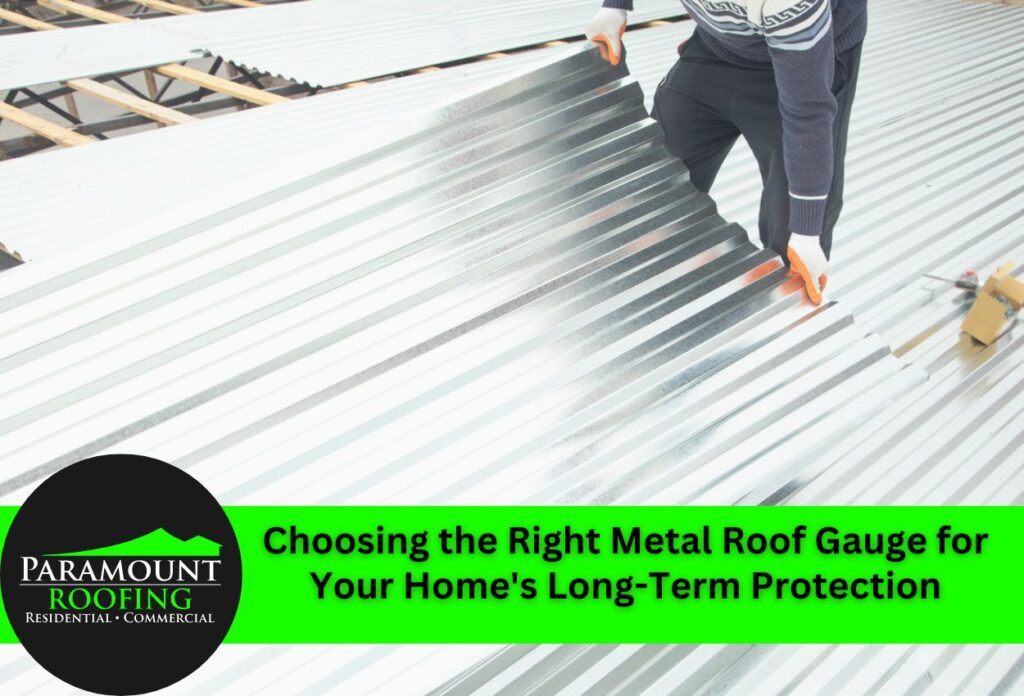
The gauge of a metal roof refers to its thickness measurement, with lower numbers indicating thicker materials. This measurement directly determines how well your roofing system will withstand environmental stresses and provide lasting protection for your home.
Understanding metal roof gauge specifications is essential when evaluating different roofing material options. Most residential applications utilize gauges ranging from 22 to 29, with each thickness level offering advantages for specific installations. Thicker gauges provide enhanced structural integrity and better resistance to denting, while thinner options may offer installation flexibility and lower costs.
The best metal roof gauge for residential homes depends on a few factors, including local weather conditions, structural load requirements, and long-term performance expectations. Local snow accumulation, wind resistance, and temperature fluctuations all influence the ideal thickness selection for residential metal roofs. Selecting the appropriate gauge impacts structural considerations, installation methods, and overall roofing system performance, making this decision fundamental to successful residential metal roofing projects.
Understanding Metal Roof Gauge Measurements and Industry Standards
Metal roof gauge measurements are an inverse scale, where lower numbers indicate thicker metal materials. A 22-gauge roof is thicker than a 29-gauge roof, offering differences in structural performance and durability. This system helps contractors and homeowners evaluate metal roofing options to determine appropriate thickness levels for specific applications.
Standard residential gauge options are 22 to 29 gauge, each with distinct characteristics. The best metal roof gauge for residential homes often falls within the 24 to 26 gauge range, providing a balance between structural strength and ease of installation. Thicker gauges like 22 or 24 deliver superior durability, while thinner options such as 28 or 29 gauge may suit specific budget or structural requirements.
Industry specifications and building code requirements establish acceptable metal roof thickness based on climate zones and weather conditions. These regulations consider factors including snow loads, wind resistance requirements, and seismic activity levels to determine minimum thickness standards. Building codes ensure that the selected gauge provides adequate structural performance for the local weather patterns and environmental stresses.
Metal roof gauge affects long-term performance, installation requirements, and structural capabilities, making the right choice essential for successful residential roofing projects.
Characteristics of Different Metal Roof Gauge Options
The 24-gauge and 26-gauge metal roofing options represent the optimal balance between durability and weight for most residential applications. These mid-range thicknesses offer superior protection from weather damage compared to thinner alternatives without the excessive weight of premium gauges.
Performance differences become clear when comparing thicker 22-gauge materials against thinner 29-gauge options. The highest metal roofing material thickness, 22 gauge, delivers premium-level structural integrity and exceptional durability, making it ideal for areas with severe weather conditions or heavy snow. This thickness resists thermal expansion stresses and maintains its stability throughout temperature fluctuations.
Budget-conscious homeowners often consider 29-gauge options, which provide adequate protection for moderate climate conditions. However, this thinner gauge is more susceptible to denting and may require additional structural support. In general, 29-gauge materials work effectively in areas with minimal hail activity and moderate wind speeds.
The best metal roof gauge for residential homes ultimately depends on the local environmental conditions and the homeowner’s performance expectations. Thicker gauges deliver enhanced longevity and weather resistance, while thinner options offer basic protection in less demanding climates.
Climate and Environmental Factors That Influence Gauge Selection
Regional weather patterns significantly impact which metal roof gauge is best, with snow loads creating substantial stresses that typically need thicker gauge materials. Areas with heavy snowfall require enhanced structural support from 24-gauge or thicker options to prevent roof deflection and potential damage. Along the same lines, wind speeds exceeding 90 mph necessitate robust metal roofing materials to resist uplift forces and stay securely attached to roof decking systems.
The frequency of hailstorms directly influences the best metal roof gauge for residential homes, as impact resistance increases substantially with thicker materials. Most 24-gauge and 22-gauge options provide superior dent resistance compared to thinner alternatives when subjected to large hailstones. Additionally, temperature fluctuations create expansion and contraction cycles that stress thinner materials, making adequate thickness selection crucial for dimensional stability.
Coastal environments often require upgraded gauges due to salt air corrosion and hurricane-force winds. These conditions accelerate metal deterioration and create extreme uplift pressures that exceed standard thickness requirements. High-wind zones benefit from 24-gauge or thicker materials to ensure structural integrity during severe storms.
Overall, thicker materials better accommodate thermal movement while maintaining their integrity throughout the year, ensuring consistent protection in different climate conditions.
Benefits of Choosing the Right Gauge: Durability and Longevity
Metal roof thickness directly correlates to enhanced resistance against thermal expansion stresses that can compromise a roofing system over time. Thicker gauge materials accommodate temperature fluctuations more effectively, reducing stress concentrations at fastener locations and seam connections. For example, typically 24-gauge and thicker options maintain their stability during extreme temperature cycles, preventing premature failure of critical connection points.
Impact resistance increases substantially with higher metal roofing material thickness, which is especially important in regions prone to hail storms and falling debris. Thicker gauges absorb impact energy without permanent deformation, maintaining weather-tight protection throughout their service life. Structural stress resistance also improves dramatically as gauge thickness increases, allowing roofing systems to handle more snow and wind pressures without deflection or fastener pullout issues.
Additionally, thicker panels tend to last longer than thinner options, resulting in lower replacement costs over the duration of homeownership. Metal roof gauge also maximizes manufacturer warranty coverage, as many premium warranties require minimum thickness specifications for extended protection periods.
Installation Complexity and Structural Support Requirements
Different metal roof thicknesses have installation challenges that impact the project complexity and contractor requirements. Thicker gauge materials like 22 and 24-gauge may require specialized handling equipment and enhanced safety protocols due to increased weight per panel. These heavier materials need stronger roof decking systems and additional structural reinforcement to accommodate load distribution requirements.
Fastener selection is critical when working with different metal roofing material thickness options, as thicker gauges require longer screws and enhanced penetration depths for proper holding power. Installation crews must adjust drilling techniques and fastener spacing patterns based on gauge specifications to prevent over-penetration or inadequate attachment strength. The metal roof gauge chosen also determines whether standard installation methods suffice or if specialized techniques are necessary.
Structural support modifications frequently accompany thicker gauge installations, particularly when upgrading from lighter materials to premium metal roofing systems. Building frameworks may require additional bracing or reinforced connection points to handle increased dead loads and wind uplift resistance. Professional installers evaluate the existing structural capacity against proposed gauge specifications to determine if reinforcement is needed before beginning installation work.
Making the Final Decision Based on Your Home’s Specific Needs
Determining the optimal metal roof thickness requires balancing durability requirements against structural limitations and performance expectations. The evaluation should begin with assessing existing roof structure capacity, local climate demands, and long-term protection goals. Each property has unique features that influence the best metal roof gauge for residential homes, making an individualized assessment essential.
Professional roofing consultations can help homeowners make a final decision based on a property evaluation. Experienced contractors analyze structural load capabilities, existing decking conditions, and architectural requirements to recommend the best metal roof gauge for a home. These assessments identify potential installation challenges and determine whether structural modifications are necessary to accommodate preferred thickness options.
Budget considerations must align with performance expectations when selecting metal roofing materials. Higher gauge materials typically require a higher initial investment but deliver superior durability and extended service life. The evaluation process weighs upfront costs against projected maintenance savings and replacement intervals to establish total ownership expenses.
Building code compliance ensures that the selected gauge meets local requirements for snow loads, wind resistance, and seismic activity standards. Understanding regulatory standards prevents installation delays and ensures proper permitting approvals, facilitating smooth project completion and long-term structural integrity. By working with a roofing professional and evaluating all your options, homeowners can choose the best metal roof gauge that will provide decades of protection at a reasonable cost.
Discover the Best Metal Roof Gauge for Your Home with Paramount Roofing
Choosing the right metal roof gauge is crucial for ensuring your home withstands Michigan’s challenging weather conditions. At Paramount Roofing, we specialize in guiding homeowners through the selection process to ensure your roof offers maximum protection and longevity. Whether you’re considering the durability of a 24-gauge or the affordability of a 29-gauge, our experts are here to help you make the right decision.
Let Paramount Roofing help you select the metal roof gauge that best meets your home’s needs and local building standards. For a detailed consultation and more information on how different gauges perform under Michigan’s extreme weather conditions, call us today at (586) 690-0227. Keep your home protected with the perfect balance of strength and efficiency. Your roof is a critical investment — make it count with expert advice from Paramount Roofing.