
 Free Estimate
 Request Service
 Locations

What Does Apartment Roof Replacement Actually Involve and How Long Does It Take?
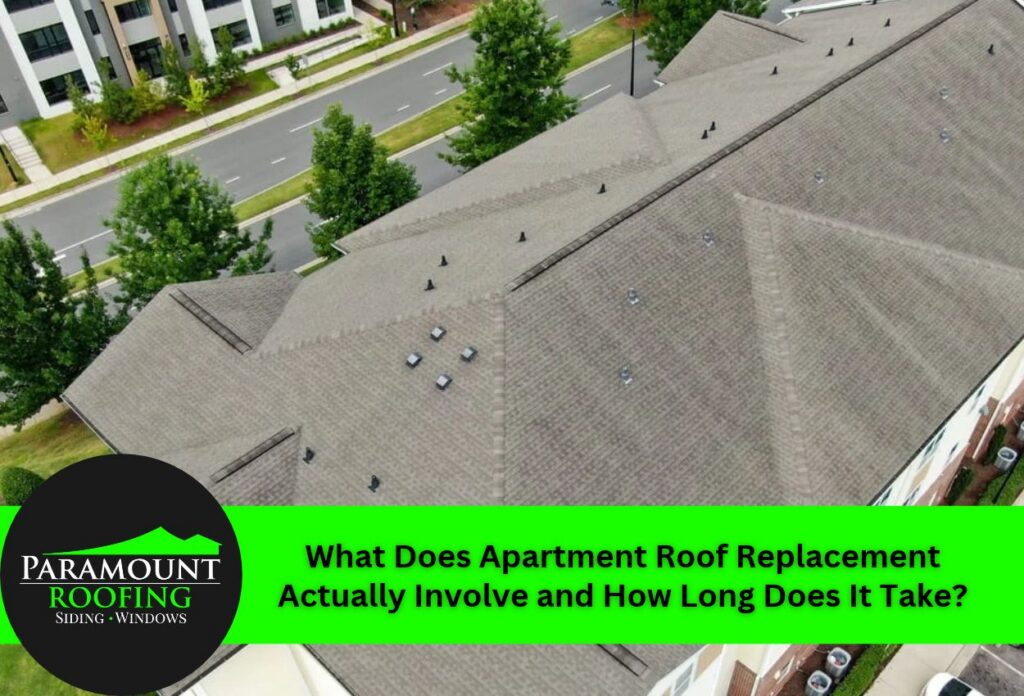

Apartment roof replacements demand strict logistical coordination, tenant management, and phased material staging across massive commercial footprints. Property owners and managers must consider the condition of the existing roof, the materials being installed, tenant access, weather conditions, and the overall project schedule.
For apartment buildings throughout Metro Detroit, Michigan’s changing seasons add another consideration. Heavy rain, snow, ice, and temperature fluctuations degrade roofing materials over time, allowing minor flashing gaps to quickly become extensive interior leaks.
Paramount Roofing provides roofing services for multi-family apartment buildings. Mapping out the pitched-roof replacement timeline allows owners to stage materials safely and minimize disruptions for their tenants.
How Do You Know When an Apartment Building Needs a Roof Replacement?
Isolated material failures often require only localized patching rather than tearing off the entire structural roof decking. However, when damage is widespread, or the roofing system is approaching the end of its useful life, replacement may be the more practical long-term solution.
Common signs that an apartment roof may need professional attention include:
- Recurring roof leaks: Water entering multiple areas of the building may indicate problems with the existing roofing system.
- Missing or damaged shingles: Cracked, curling, loose, or missing shingles can leave portions of the roof vulnerable to moisture.
- Deteriorating flashing: Damaged flashing around chimneys, vents, roof valleys, and other transitions can allow leaks to form.
- Excessive granule loss: Significant granule loss from asphalt shingles may indicate aging or deterioration.
- Sagging roof areas: Visible changes in the roofline may indicate underlying structural concerns that require professional evaluation.
- Interior water damage: Ceiling stains, active dripping, and bubbling drywall indicate water is actively breaching the underlayment.
Before deciding whether to repair or replace the roof, the property managers should schedule a professional inspection.
Evaluating the core structure reveals if localized patching will hold or if the entire roofing system is compromised.
What Does the Apartment Roof Replacement Process Involve?
An apartment roof replacement generally follows several stages, beginning with an assessment of the existing pitched roof and ending with a review of the completed installation.
1. Initial Roof Inspection and Assessment
The first step is evaluating the condition of the existing roofing system.
During an inspection, roofing professionals may examine shingles, flashing, roof valleys, ventilation components, and other areas for signs of deterioration or damage.
They may also look for evidence of leaks or underlying concerns that could affect the replacement.
This assessment helps determine whether a full replacement is necessary and identifies conditions that should be addressed during the project.
Identifying rotten roof decking and compromised ventilation during the initial inspection prevents expensive change orders during the actual installation.
2. Selecting the Appropriate Roofing Materials
Apartment buildings with pitched roofs commonly use asphalt shingles because they offer a combination of weather protection, design flexibility, and practical maintenance considerations.
The appropriate shingle system depends on the building’s roof design, slope, existing construction, and property owner’s preferences.
Important considerations include:
- Shingle type: Architectural asphalt shingles are a common option for pitched roofs and are available in different styles.
- Weather resistance: Roofing materials should be selected with Michigan’s rain, snow, wind, and seasonal temperature changes in mind.
- Color and appearance: Shingle colors and profiles can complement the exterior appearance of an apartment complex.
- Underlayment: Properly selected underlayment provides an additional layer of protection beneath the shingles.
- Ventilation: Appropriate attic ventilation can help manage heat and moisture in roof assemblies designed for ventilation.
- Flashing: Proper flashing installation helps protect vulnerable areas around roof gaps and transitions.
Choosing the right materials requires evaluating the building’s existing roof, the local weather exposure, and long-term maintenance considerations.
3. Planning the Project and Coordinating With Residents
Unlike a single-family home, an apartment building may have multiple households affected by roofing work.
Before installation begins, property managers should coordinate with the roofing contractor to establish a schedule and identify areas where work could affect residents.
Planning considerations may include:
- Notifying tenants about the expected project schedule.
- Communicating potential noise and temporary disruptions.
- Identifying areas where equipment and materials will be stored.
- Coordinating parking and building access when necessary.
- Establishing a point of contact for resident questions.
- Planning around weather conditions and building operations.
Distributing staging maps and noise schedules prevents tenant complaints and keeps access lanes clear for heavy delivery trucks.
4. Removing Existing Shingles and Inspecting the Roof Deck
Depending on the condition of the existing roof and applicable installation requirements, the project may require removing old shingles and underlayment before installing the new roofing system.
Once existing materials are removed, roofing professionals can evaluate the exposed roof decking for signs of deterioration, moisture damage, or other concerns.
If damaged roof decking is discovered, repairs may be necessary before new roofing materials can be installed.
Property managers should discuss how unexpected conditions will be documented and communicated before approving additional work.
5. Installing the New Pitched Roofing System
Once the roof has been prepared, the installation team can begin installing the new roofing components.
For an asphalt shingle roof, the process generally includes installing appropriate underlayment, starter shingles, flashing, field shingles, and ridge components.
Additional attention may be required around roof valleys, vents, chimneys, and other gaps where leaks can occur if roofing components are not installed correctly.
The roofing system must be installed according to applicable building codes and manufacturer requirements.
Precise flashing integration ensures gravity pulls water safely into the gutters rather than allowing it to pool and seep into the structural joints.
6. Final Inspection and Project Completion
After the new shingles and roofing components have been installed, the completed work should be reviewed to confirm that the project meets the agreed-upon job and applicable requirements.
The final review may include examining shingles, flashing, roof valleys, ventilation components, and other installation details.
Property managers should also request applicable warranty information, maintenance recommendations, and documentation related to the completed project.
Keeping these records organized can make future maintenance planning and property management easier.
How Long Does an Apartment Roof Replacement Take?
The time required to replace an apartment roof varies based on the building’s size, roof design, number of roof sections, weather conditions, and any repairs needed beneath the existing shingles.
Smaller apartment buildings with straightforward pitched roofs may require less installation time than larger complexes with multiple roof sections, valleys, dormers, or other architectural features.
Timelines scale based on square footage, roof pitch, and underlying roof deck conditions.
Several factors can influence the schedule.
Building Size and Roof Complexity
Larger buildings generally require more roofing materials and labor. Roofs with multiple slopes, valleys, dormers, or other architectural features may require additional installation time.
Existing Roof Condition
If the existing shingles can be removed without uncovering significant damage, the project may proceed more efficiently. When damaged roof decking or other underlying problems are discovered, additional repairs may be necessary.
Shingle Selection and Material Availability
The roofing materials selected for the project can affect scheduling, particularly when specific shingle styles or colors must be ordered.
Michigan Weather Conditions
Rain, snow, ice, and unfavorable temperatures can affect roofing schedules. Contractors must consider weather conditions when planning removal and installation.
Tenant and Property Access
Apartment buildings may require additional coordination for equipment placement, material deliveries, parking, and access to work areas.
Property managers should request a project-specific timeline during the estimate process and discuss how potential delays will be communicated.
How Much Does An Apartment Roof Replacement Cost?
The cost of replacing an apartment building’s pitched roof depends on several factors, and a reliable estimate requires evaluating the specific property.
Important cost considerations include:
- Roof size: Larger roofing areas generally require more materials and labor.
- Shingle selection: Different asphalt shingle products have different material costs and installation requirements.
- Existing roof condition: Removing deteriorated shingles or repairing damaged roof decking may increase the project’s scale.
- Roof complexity: Multiple roof sections, steep slopes, valleys, dormers, and flashing details can affect installation requirements.
- Building accessibility: Equipment placement, roof access, and material handling can influence labor needs.
- Permits and local requirements: Applicable building codes and permitting requirements may affect the project.
Rather than relying on general pricing estimates, apartment owners should request a detailed proposal based on an inspection of their property.
A written estimate can help clarify the materials being recommended, the expected scale of work, and any conditions that may require additional attention.
How Can Property Managers Minimize Tenant Disruption During a Roof Replacement?
Tenant communication is an important part of apartment roof replacement planning.
Roofing work can involve noise, equipment movement, deliveries, and temporary restrictions around certain parts of the property. While some disruption may be unavoidable, planning can help property managers maintain better communication with residents.
Before the project begins, property managers should discuss the work schedule with the roofing contractor and identify areas that may be affected.
Residents should receive clear information about when work is expected to begin, where crews will be operating, and whether any parking or access changes are anticipated.
It’s also helpful to provide updates if weather conditions or unexpected repairs affect the schedule.
For larger apartment complexes, coordinating work across different buildings or sections may help organize the project while accounting for daily property operations.
What Are the Benefits of Replacing an Aging Apartment Roof?
A properly installed pitched-roof replacement can provide several benefits for apartment owners and property managers.
Improved Protection Against Weather
A new asphalt shingle roofing system can help protect the building from rain, snow, ice, and other weather conditions common throughout Michigan.
Reduced Risk of Recurring Leaks
Replacing deteriorated shingles, damaged flashing, and other compromised roofing components can address problems that may continue despite repeated repairs.
Improved Building Appearance
New shingles can improve the exterior appearance of an apartment building, particularly when the existing roof shows visible signs of aging.
Long-Term Maintenance Planning
Replacing an aging roof allows property managers to establish a maintenance schedule for the new roofing system.
Protection of the Property Investment
Maintaining a functional roofing system helps protect the building, interior spaces, and occupants from problems associated with leaks and roofing deterioration.
The specific benefits depend on the roofing materials selected, the quality of installation, and ongoing maintenance.
How Do You Choose the Right Contractor for an Apartment Roof Replacement?
Choosing a roofing contractor for an apartment building requires considering more than the initial estimate.
Property managers should look for a contractor with experience working on multi-family properties and installing pitched asphalt shingle roofing systems.
Before selecting a contractor, consider the following:
- Multi-family roofing experience: Ask whether the contractor has experience working on apartment buildings or similar properties.
- Pitched-roof expertise: Confirm that the contractor has experience installing asphalt shingles on buildings with comparable roof designs.
- Detailed project estimates: Request a clear explanation of the proposed work, materials, and potential additional costs.
- Insurance and qualifications: Verify applicable licensing, insurance, and qualifications for the work.
- Project communication: Discuss how scheduling changes, unexpected repairs, and resident concerns will be handled.
- Warranty information: Review the applicable manufacturer and workmanship warranty terms before work begins.
When Is the Best Time to Schedule an Apartment Roof Replacement in Michigan?
Apartment roof replacement should be scheduled based on the roof’s condition, the urgency of existing problems, and weather conditions suitable for asphalt shingle installation.
Spring, summer, and fall may provide opportunities for planned roofing work, although installation conditions vary throughout the year.
For Michigan property owners, it’s particularly important to identify existing roofing problems before winter weather creates additional challenges.
Scheduling an inspection ahead of time can help property managers determine whether repairs are sufficient or whether a replacement should be considered.
If an apartment roof has recurring leaks, extensive shingle deterioration, or other problems, delaying an inspection may allow additional damage to develop.
A professional assessment can help establish the appropriate next steps.
Schedule an Apartment Roof Replacement Consultation With Paramount Roofing
Apartment roof replacement involves more than installing new shingles. From the initial inspection and material selection to project planning, installation, and final review, each stage contributes to the overall success of the project.
Understanding these steps can help apartment owners and property managers plan, communicate with tenants, and make informed decisions about their roofing investment.
Paramount Roofing provides roofing services for apartment buildings and multi-family properties throughout Metro Detroit.
Whether your apartment building needs roofing repairs or a complete pitched-roof replacement, the first step is understanding the condition of the existing roofing system.
Contact Paramount Roofing to schedule a consultation or request an estimate.