
 Free Estimate
 Request Service
 Locations
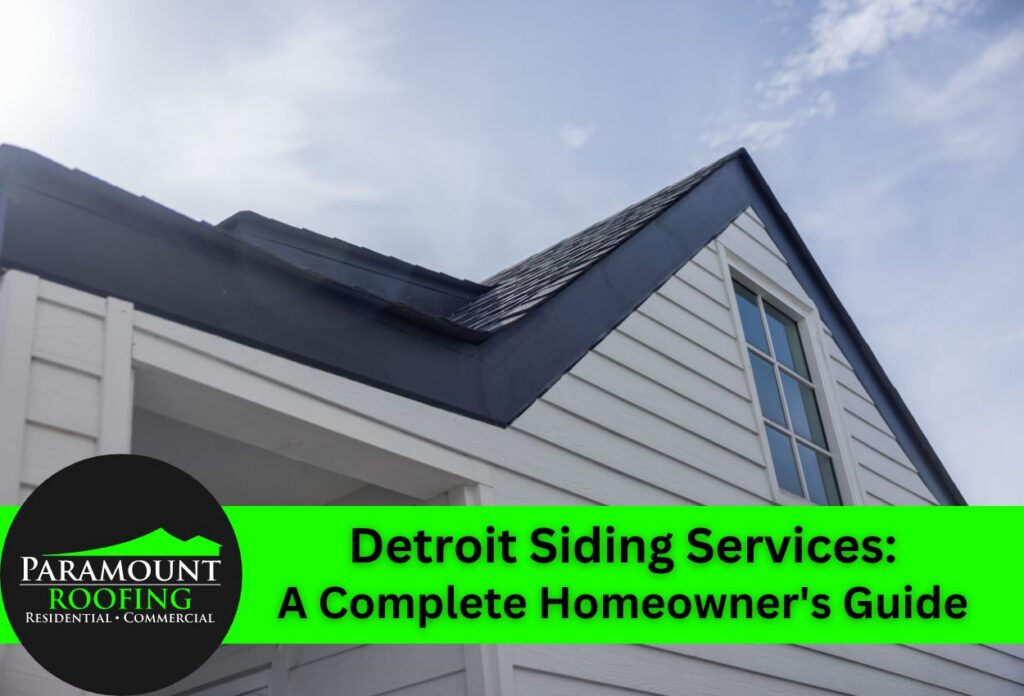
Detroit homeowners replacing siding on an older home should expect to review material options, installation timing, permit requirements, and contractor qualifications before the first panel goes up. Getting any one of those wrong in this climate can lead to moisture damage, cracked panels, or failed seams within just a few years.
Detroit’s combination of cold winters averaging 18 to 35 degrees Fahrenheit, humid summers pushing 82 to 85 degrees Fahrenheit, and roughly 45 inches of annual snowfall puts serious stress on exterior siding. Add in the city’s large amount of pre-1960s bungalows, Colonials, and brick-and-wood frame homes, many of which were built before modern moisture-control standards, and you have a situation where the wrong siding choice or a rushed installation can cause problems fast.
Why Does Detroit’s Climate Make Siding Such an Important Home Investment?
Detroit’s climate hits exterior siding with at least four distinct stress factors that milder markets rarely combine: deep winter cold, heavy snowfall, high summer humidity, and strong seasonal temperature swings that push and pull every panel on a home’s exterior. Winter lows averaging 18 to 35 degrees Fahrenheit, paired with roughly 45 inches of annual snowfall, create repeated cycles of freezing and thawing that work ice into any gap, crack, or poorly sealed joint. That process slowly forces fasteners loose, opens seams between panels, and weakens trim transitions season after season.
Summer highs reach 82 to 85 degrees Fahrenheit, meaning the same panel that contracts in January must expand again by July. Vinyl and engineered wood both move with temperature changes, and a panel installed too tight or with undersized fastener slots can buckle, crack, or pull away from the wall. Detroit homes face this stress every single year.
Humidity and Moisture
Humidity levels in Detroit commonly run around 70% through much of the year, and heavy spring rain and summer thunderstorms push water against every joint, corner post, and window transition. When flashing is missing, or housewrap is improperly lapped, that moisture gets behind the siding. Trapped moisture in Detroit’s climate is a direct path to mold growth and structural rot. Older homes built before modern air-sealing standards are especially exposed because existing gaps in the wall assembly give moisture even more ways in.
Material choice matters here more than most homeowners realize. How well a product seals, flexes, and resists moisture absorption under repeated temperature changes varies widely by type, a difference that is worth understanding before selecting any product for a Detroit home.
What Are the Most Common Siding Materials Available in Detroit, Michigan?
Vinyl siding dominates the Detroit replacement market, but fiber-cement siding is quickly gaining ground in older neighborhoods. Ultimately, the right choice depends on your home’s age, structure, and how much maintenance you’re willing to do. There are seven siding materials commonly installed on homes in and around Detroit, each with differences in lifespan, cost, and how well they hold up against the city’s temperature swings and moisture.
- Vinyl: Lightweight, low maintenance, and widely available. The most common replacement material in Detroit.
- Insulated vinyl: Vinyl with a foam backer bonded to the panel. Improves energy performance on homes that lack adequate wall insulation.
- Fiber cement: A mix of cement, sand, and cellulose. Resists moisture well and holds paint longer than wood.
- Engineered wood: Wood fiber and resin composite. Suits older Colonial and Cape Cod-style homes in Detroit’s established neighborhoods.
- Natural wood: Classic appearance, high maintenance. Still found on historical homes but rarely chosen for new installations.
- Aluminum: Lightweight and rust-resistant. Common on mid-century ranch homes throughout the metro area.
- Steel: Handles impact and temperature changes well but costs more than aluminum.
| Material Type | Average Lifespan | Climate Performance in Detroit | Maintenance Level | Approx. Cost Per Sq. Ft. Installed | Best Fit Home Type |
|---|---|---|---|---|---|
| Vinyl | 20 to 40 years | Expands and contracts with temperature changes; requires proper fastener spacing | Low | $4.00 to $8.00 | Ranch, bungalow, Colonial |
| Insulated Vinyl | 20 to 40 years | Foam backer reduces wall movement and improves thermal resistance on older frames | Low | $4.50 to $10.00 | Pre-1960s homes with minimal wall insulation |
| Fiber Cement | 30 to 50 years | Resists moisture absorption and holds up well through repeated temperature swings | Medium; repaint every 10 to 15 years | $6.00 to $13.00 | Historical homes, older Colonials, brick-and-wood frame |
| Engineered Wood | 20 to 30 years | Good when properly sealed | Medium; inspect caulk and paint every 5 to 7 years | $5.00 to $10.00 | Cape Cod, Colonial, craftsman bungalow |
| Natural Wood | 10 to 30 years | Absorbs moisture; requires consistent sealing in Detroit’s humid climate | High; repaint or restain every 3 to 7 years | $6.00 to $14.00 | Historical or restoration projects |
| Aluminum | 30 to 40 years | Rust-resistant; dents on impact but handles temperature changes without cracking | Low to medium | $3.00 to $7.00 | Mid-century ranch, split-level |
| Steel | 30 to 50 years | Highest impact resistance; performs well through Detroit’s freeze-and-thaw cycles | Low | $7.00 to $14.00 | Any home type; strong value on exposed or high-wind lots |
Vinyl siding replacement services lead the Detroit market because vinyl keeps installed costs low, requires almost no upkeep, and is available through dozens of local contractors. Fiber-cement siding is the fastest-growing alternative, especially in Detroit’s older, historical neighborhoods, because it handles moisture and temperature changes better than vinyl while matching the detailed styles of early-20th-century homes. Engineered wood is a strong middle-ground option for Colonial and Cape Cod-style homes where woodgrain appearance matters but natural wood’s maintenance and upkeep are too high.
How Much Does Siding Installation Cost in Detroit, Michigan?
Siding installation in Detroit typically costs between $4,500 and $20,000 or more for a full replacement on an average single-family home, depending on material choice, home size, and project complexity. For premium materials such as natural wood and steel, the costs can reach $28,000 or more for a complete installation. That range is wide because a straightforward vinyl replacement on a 1,500 square foot ranch and a fiber-cement job on a two-story Colonial with masonry transitions are two very different projects. The table below breaks down installation costs by material so you can see where your home is likely to land.
| Material Type | Low-End Cost Per Sq Ft Installed | Mid-Range Cost Per Sq Ft Installed | High-End Cost Per Sq Ft Installed | Typical Total Project Cost (1,500 to 2,000 Sq Ft Siding Surface) |
|---|---|---|---|---|
| Vinyl | $4.00 | $5.00 | $8.00 | $6,000 to $16,000 |
| Insulated Vinyl | $4.50 | $7.00 | $10.00 | $6,750 to $20,000 |
| Fiber Cement | $6.00 | $9.00 | $13.00 | $9,000 to $26,000 |
| Engineered Wood | $5.00 | $7.50 | $10.00 | $7,500 to $20,000 |
| Natural Wood | $6.00 | $10.00 | $14.00 | $9,000 to $28,000 |
| Aluminum | $3.00 | $5.00 | $7.00 | $4,500 to $14,000 |
| Steel | $7.00 | $10.00 | $14.00 | $10,500 to $28,000 |
Material cost is only part of the number. Several factors specific to Detroit homes push final costs higher. Old siding removal on pre-1960s homes is a common example, as many of these houses have two or even three layers of old siding on top of the original substrate, and disposal fees add to labor time. Substrate rot repair, which is common after years of moisture leaks on older wood-frame homes, adds cost that is only discovered once old panels come off. Custom trim work at transitions, windows, and soffits on Colonials and bungalows requires more labor time than a straightforward installation. Permit fees vary by municipality, and labor rates differ across Wayne, Oakland, and Macomb counties, sometimes by $1.00 to $3.00 per square foot for the same material.
Getting at least three quotes from licensed Michigan residential contractors is the most reliable way to find an accurate number for your specific home, because two contractors quoting the same material on the same house can come back with bids that differ by thousands of dollars based on labor rates and material sourcing alone. Financing options, including home improvement loans and payment plans, are available through many local contractors if upfront costs are a concern.
What Are the Most Common Siding Problems Found on Homes in Detroit?
Detroit’s older homes, especially those built before 1960, mean siding problems rarely show up alone. Original wood or aluminum siding is often buried under layers of newer siding, and the real damage to framing or moisture barriers only becomes visible during tear-off. Catching these problems before a full replacement can save homeowners thousands of dollars.
- Panel cracking from temperature changes: Detroit’s winter lows average 18 to 35 degrees Fahrenheit and summer highs can reach 82 to 85 degrees Fahrenheit, a swing that causes vinyl and older aluminum panels to crack or split at the seams. This problem typically warrants spot repair if caught in fewer than 2 to 3 panels; wider cracking across a wall usually means it’s time for replacement.
- Moisture leaks at window and door flashings: Failing or missing flashing around openings is one of the most common defects found on pre-1960s Detroit homes. Water enters the wall and causes rot that is invisible until old siding is removed. Repair is possible if damage is contained to the flashing; substrate rot requires more extensive work.
- Ice dam-related edge damage: Ice dams push water back under siding at the roofline, causing separation, warping, and hidden moisture buildup. Detroit’s repeated thaw-and-freeze cycles through late winter make this especially common on homes without adequate soffit ventilation or ice-and-water protection.
- Warped or buckled panels from thermal cycling: Panels nailed too tightly, a common installation error on older projects, have no room to expand and contract. On Detroit homes seeing drastic temperature swings seasonally, this results in visible buckling. Minor buckling in a single area may be repaired; widespread distortion typically means replacement is needed.
- Wood rot at trim and corner boards: Corner boards, window casings, and band boards on older Detroit Colonials and bungalows absorb moisture over decades. Rot can be addressed with targeted repairs or selective board replacement if the surrounding substrate is sound, but advanced decay requires full replacement of the affected section.
- Failing caulk and sealants: Caulk at trim joints, windows, and panels typically lasts 5 to 10 years before cracking. On homes that have gone 15 or 20 years between exterior updates, failed sealant is a direct path for water entry. This can be repaired when addressed quickly.
- Hail damage: Detroit’s warm-season thunderstorms produce hail that dents aluminum, cracks vinyl, and chips fiber-cement panels. Any hailstorm with stones larger than 1 inch warrants a full exterior inspection within 48 hours. Localized damage may qualify for repair; widespread impact across multiple elevations often leads to an insurance claim and full replacement.
- Foundation-level moisture wicking on older brick-frame hybrids: Many Detroit homes use brick veneer on the lower courses with wood-frame siding above. Moisture moves upward into the wood where the two materials meet, causing rot and mold that can travel several feet up the wall before it is visible. This almost always requires replacement of the lower panel areas that were affected, as well as substrate repair.
Most of these problems are repairable at a lower cost when caught early, but what looks like a surface problem on older Detroit homes often has a deeper issue underneath. A thorough inspection before any siding work begins is the only way to know whether repair or full replacement is the right call.
Siding Repair vs. Full Replacement
The decision to repair or replace your siding depends on four factors: how much of the siding is damaged, how old the material is, how much energy loss is happening through the walls, and what your project budget allows. For Detroit homeowners, many of whom own pre-1960s homes with layers of siding and aging substrates, making the wrong decision in either direction costs real money. Repairing siding that is too far gone wastes the repair budget, and replacing siding that only needed spot work means spending $4,500 to $20,000 or more unnecessarily.
When You Should Repair
- Panel damage is isolated: If fewer than 2 to 3 panels are cracked, warped, or broken, repair is almost always the right starting point. Replacing a handful of panels costs a fraction of a full installation.
- Your home is under 15 years old: Siding on a home built within the last 15 years is likely still in the middle of its service life. A targeted repair preserves the remaining lifespan without the disruption of a full project.
- Cosmetic issues only: Fading, minor surface chalking, or small caulk failures along trim lines are maintenance-level repairs. Failed caulk at windows, which typically lasts only 5 to 10 years, can be addressed quickly before water entry begins.
When You Should Replace
- Siding is over 20 to 25 years old: Most siding materials have service lives that run out in this window, especially under Detroit’s seasonal temperature swings.
- Widespread moisture damage: Substrate rot, mold behind panels, or moisture moving up from foundation-level courses almost always mean the damage has spread beyond what spot repairs can address. This is especially common on older Detroit homes where water has had decades to work into wood framing.
- Multiple failed areas across walls: When cracking, buckling, or separation appears on two or more walls, the material itself has likely reached the end of its service life. Patching multiple walls separately costs more over time than a single replacement project.
- You’re planning to sell: New siding delivers a measurable boost to curb appeal and inspections. Buyers and inspectors flag aging or visibly failing siding, and deferred replacement is often used as a negotiating point at closing.
- Current material is discontinued: On older Detroit homes, original siding materials are often no longer manufactured. If matching panels cannot be sourced, even a small repair area will look mismatched, making replacement the cleaner solution.
There is also a middle-ground option worth considering in Detroit’s older neighborhoods. Replacing the siding on a single weather-exposed area can be a cost-effective strategy when the rest of the home’s siding is still performing. This only works when materials can be matched closely enough to avoid a visible line between the old siding and the new siding. A professional siding inspection from a licensed Michigan contractor is the most reliable way to assess the full range of the project, since substrate damage behind panels is rarely visible without removal.
What Siding Materials Perform Best in Detroit’s Freeze-Thaw Climate?
Fiber cement and insulated vinyl are the two strongest performers for Detroit homes facing wide seasonal temperature swings between winter lows and summer highs. Both resist moisture absorption and hold up through repeated temperature changes better than standard wood or aluminum. Installation quality matters as much as material choice, as even the best siding fails early if cut edges aren’t sealed or expansion gaps aren’t set correctly.
| Material | Top Durability Reason for Detroit | Approximate Cost Premium vs. Standard Vinyl |
|---|---|---|
| Fiber Cement | Dimensionally stable, noncombustible, holds paint well, resists moisture if all cut edges and joints are properly sealed | 50% to 100%+ more per square foot installed |
| Insulated Vinyl | Built-in foam backer reduces panel flex during temperature changes, adds R-value, and reduces brittleness in extreme cold | 15% to 30% more per square foot installed |
| Engineered Wood | Treated to resist moisture and rot, more impact resistant than standard vinyl, handles Michigan temperature swings without warping | 30% to 60% more per square foot installed |
Standard vinyl still holds a dominant share of Detroit’s siding market because it doesn’t rot and it sheds moisture well. The tradeoff is that cheaper grades become brittle in extreme cold and are more vulnerable to hail impact, a real concern given Detroit’s thunderstorms. Spending more on insulated vinyl or upgrading to fiber cement addresses both weak points without the maintenance requirements of wood.
For older Detroit homes where the substrate condition is unknown, pairing a durable outer material with a proper moisture barrier during installation protects the investment in the long term. A qualified Michigan contractor can assess which material fits both the home’s structure and the project budget before any work begins.
What Does the Siding Installation Process Look Like From Start to Finish in Detroit?
A full siding installation in Detroit runs 6 to 11 weeks from first call to permit close-out when you factor in planning, ordering, and scheduling. The actual hands-on installation on an average home takes 3 to 7 days. Installations on older Detroit homes can take longer because tear-off often reveals rotted substrate, outdated insulation, or uneven framing that has to be corrected before new siding goes on.
| Project Phase | Typical Duration in Detroit | Notes |
|---|---|---|
| Initial consultation and measurement | 1 to 3 weeks | Includes material selection; schedule varies by contractor availability |
| Permit application and processing | 1 to 3 weeks | Processing time varies by jurisdiction across Detroit |
| Material lead time and ordering | 1 to 4 weeks | Fiber cement and specialty materials run longer than standard vinyl |
| Installation on an average home | 3 to 7 days | Weather-dependent; substrate repairs add days if discovered at tear-off |
Housewrap and Flashing
Detroit’s heavy rain and constant humidity make the housewrap and flashing stage one of the most important parts of the job. Shortcuts at this stage are a leading cause of long-term moisture damage complaints. A contractor who rushes past proper flashing at windows, doors, and other vulnerable areas is setting up the wall for water entry long before the siding itself wears out. Ask any contractor you are considering to walk you through exactly how they handle this stage, and the answer will tell you a lot about their overall quality standards.
When Is the Best Time of Year to Schedule Siding Work in Detroit?
April through May and September through October are the best windows for siding installation in Detroit, with mild temperatures that support proper material handling, correct expansion gap spacing, and full caulk and sealant cure times. Spring and fall give both materials and crews the conditions they need to do the job right. Most Detroit homeowners who want a spring installation slot should contact contractors in late winter because spring schedules fill fast with demand from winter storm damage repairs.
December through February is the wrong time for exterior siding work in Detroit. Frozen substrates, snow and ice, and shortened daylight hours all create problems. Most siding manufacturers specify minimum installation temperatures for adhesives and sealants, and winters in Detroit regularly fall below those thresholds. Scheduling your installation in those months risks improper seals, poor panel adhesion, and callbacks.
Summer Installation
July and August are workable but require experienced crews. Detroit’s midsummer heat and humidity, with average afternoon highs reaching 85 degrees Fahrenheit, cause vinyl panels to expand noticeably during installation. If installers do not account for proper gap spacing in hot conditions, panels can buckle once temperatures drop. This is not a reason to avoid summer scheduling entirely, but it is a reason to confirm that any contractor you hire has experience managing panel expansion in warm-weather conditions.
Why Booking Early Protects the Project
Fiber cement and specialty siding materials can take 1 to 4 weeks to arrive after ordering; getting on a contractor’s schedule early improves material lead-time management. Spring demand in Detroit consistently outpaces contractor availability after a long winter, so homeowners who wait until April to start calling often find that the best crews are already booked out 4 to 6 weeks. Booking in late winter locks in a slot and gives the contractor time to order materials before the busy season peaks.
What Permits and Regulations Apply to Siding Projects in Detroit, MI?
Most Detroit-area jurisdictions, including the City of Detroit, Wayne County municipalities, and surrounding metro communities, require a building permit for siding replacement or exterior wall alterations. Skipping that step is not a minor oversight. Unpermitted siding work can create problems when selling your home, trigger issues with homeowners’ insurance claims, and may void the manufacturer’s material warranty entirely.
Michigan regulates contractors who perform siding work on residential homes through the Michigan Residential Builders and Maintenance and Alteration Contractors licensing system. Any contractor you hire for a full siding replacement should hold a valid license under that framework. Verifying license status before signing a contract takes only a few minutes through the Michigan Department of Licensing and Regulatory Affairs, and it protects the homeowner if disputes or defective work come up later.
Historical Districts
Detroit and many surrounding communities have designated historical neighborhoods where exterior material changes are not solely up to the homeowner. Local historical preservation commissions or neighborhood-specific design review boards may need to approve material choices before work begins. This applies to exterior siding type, color, and profile in some areas. Homeowners in these districts should verify requirements before selecting materials or signing any contract, as getting approval after the fact is far harder than getting it upfront.
What to Ask Every Contractor Before Hiring
Ask any contractor that you’re considering directly whether they will pull the permit, manage inspections, and provide close-out documentation once the project is complete. A contractor who refuses to pull permits, or who suggests the homeowner pull them instead, is a red flag worth taking seriously. Reputable siding contractors in the Detroit metro handle permit requirements as a standard part of the job.
How Does New Siding Affect Home Value and Energy Efficiency in Detroit?
Siding replacement consistently ranks among the top exterior remodeling projects for resale return, with national cost-versus-value benchmarks showing fiber-cement siding replacement recouping roughly 114% of project costs at resale. Detroit’s large number of older homes means buyers are more likely to be sensitive to exterior condition, and worn or deteriorating siding signals a lack of maintenance before a buyer even steps inside. New siding on older homes improves resale positioning and addresses energy loss from walls that predate modern insulation codes.
| Siding Material | Energy Performance | Notes |
|---|---|---|
| Standard vinyl | Low | No added insulation value; improves appearance but does not reduce heat loss through older wood-frame walls |
| Insulated vinyl | Medium to High | Continuous foam backing reduces thermal bridging; measurable utility savings in Detroit’s cold-season heating needs |
| Fiber cement | Medium (with continuous insulation) | Pairs well with added insulation boards |
| Engineered wood | Low to Medium | Higher curb appeal than vinyl in historical and older neighborhoods; performs best with a proper moisture barrier on Detroit’s older substrates |
Detroit’s older wood-frame homes, many of which were built before modern energy codes existed, lose heat through walls in ways that new insulation behind siding can directly address. Insulated vinyl and fiber-cement siding installed with continuous insulation boards both reduce thermal bridging, which means lower heating costs in winter. Across much of the Detroit metro, new siding is also part of a broader equity-building push in growing neighborhoods, making it a well-timed investment for homeowners who plan to stay and build value alongside those reinvesting in the area around them.
How Do You Find the Best Siding Contractors in Detroit, MI?
Contractor quality matters just as much as material choice in Detroit, because missed flashing, improper expansion gaps, and skipped installation steps cause damage that goes unnoticed for years before it becomes an expensive repair. Detroit’s temperature swings and moisture levels leave no room for shortcuts. Use this checklist before signing any contract.
- Verify Michigan contractor license status: Any contractor performing residential siding work should hold a valid Michigan Residential Builders or Maintenance and Alteration Contractors license. Check a contractor’s status through the Michigan Department of Licensing and Regulatory Affairs before any other conversation happens.
- Confirm they pull permits and manage inspections: A reputable contractor handles the permit application, coordinates required inspections, and delivers close-out documentation when the job is done. If they suggest that you pull your own permit, treat that as a warning sign.
- Check both types of insurance: Ask for proof of general liability and workers’ compensation coverage. Any injury or accidental property damage without coverage becomes the homeowner’s problem.
- Ask for recent Detroit-specific references: Local references matter here. A contractor with recent projects in the area has dealt with the region’s specific substrate conditions, older home irregularities, and moisture challenges firsthand.
- Confirm manufacturer certification for your material: Programs like the James Hardie™ preferred contractor network often tie directly to extended product warranties. Hiring a certified installer can add 5 to 15 years of additional warranty coverage, depending on the program.
- Review written warranty terms for both product and workmanship: Get the manufacturer’s product warranty in writing and ask for a separate contractor workmanship warranty. These are two different documents covering two different failure types, both of which matter.
- Get at least three itemized written quotes: Materials, labor, permit costs, disposal, and trim work need to be listed separately. A single lump-sum number tells you almost nothing about where the money goes.
Red Flags to Watch For
- Door-to-door solicitation after severe storms: Storm chasers show up fast after a severe storm that could have caused hail or wind damage. Most are not licensed in Michigan and move on before any warranty issues surface.
- Pressure to sign the same day: Any contractor who tells you the quote expires tonight or tomorrow is removing your ability to compare bids properly. Walk away.
- A quote well below all competitors: A bid that comes in 30% to 40% lower than every other quote usually signals material substitution, unlicensed labor, or skipped steps.
- Refusal to provide a written contract or permit documentation: Verbal agreements are not enforceable. No written contract means no recourse if the work falls short.
Full Replacement vs. Repair-Focused Firms
Home siding repair companies near Detroit are a legitimate category and may be the right fit for limited work, like a damaged section, a single wall, or isolated panel replacement after impact. For a full siding replacement on an older Detroit home, the higher vetting standard above applies without exception, because the entire wall assembly, including the substrate, moisture barrier, flashing, and panels, is being rebuilt from the outside in. Smaller repair firms may not carry the licensing, insurance, or manufacturer certifications that a complete replacement requires. Match the contractor type to the needs of the job.
What Are the Most Cost-Effective Ways to Maximize Your Siding Investment in Detroit?
Getting the most from a siding project comes down to smart planning before work starts. These six steps can reduce total costs and improve long-term value.
- Bundle siding with window or trim work: Scheduling window replacement or trim updates at the same time as siding cuts mobilization costs. Contractors charge for each trip to the job site, so combining your needs into one visit can save hundreds of dollars in setup and labor overhead.
- Schedule in spring or fall: These seasons typically have better contractor availability and fewer rush premiums than summer, when demand is at its peak. Booking between March and May or September and October often leaves more room for negotiation on scheduling and labor rates.
- Choose materials by lifetime cost, not upfront cost: In Detroit’s climate, choosing the cheapest vinyl grade can ultimately be more expensive in the long run. Mid-grade and premium vinyl products offer better cold-weather impact resistance and carry longer warranties than entry-level options. A product that costs 15% more upfront but lasts 10 years longer almost always wins on total cost.
- Fix substrate problems during installation: Rotted substrate found during tear-off should be addressed immediately, not patched and covered. Re-opening a wall later costs far more than correcting issues while the wall assembly is already exposed.
- Ask about manufacturer rebates and co-op programs: Certified installers for brands like James Hardie sometimes have access to manufacturer rebate programs or promotional pricing. Ask every contractor directly whether they participate in any co-op or incentive programs before signing.
- Get at least three itemized quotes: A line-by-line quote separates labor costs from material costs, permit fees, and disposal. Comparing itemized quotes reveals where bids actually differ, rather than hiding substitutions inside a single total number.
The biggest budget mistake on any siding project is focusing on upfront costs while ignoring 20-year performance. Addressing substrate issues, choosing durable materials, and stacking rebates where available consistently delivers better total value than choosing the lowest opening bid.
Ready to Start Your Detroit Siding Project? Here’s How to Take the Next Step
Choosing the right material, hiring a licensed contractor, and addressing substrate issues before they become expensive repairs are the decisions that determine whether a siding project holds up through decades of Michigan winters and temperature swings. Paramount Roofing serves Detroit and the surrounding metro area, working with homeowners to install siding on older homes and newer builds alike, handling permits, inspections, and installation from start to finish.
The team at Paramount Roofing understands Michigan’s climate and the installation details that older Detroit homes require. Get an on-site assessment and itemized estimate before committing to any work or material.
Not ready to schedule? Learn more about siding services here.
Roofing FAQs
Got questions about your roof? We’ve got answers. From maintenance tips to insurance claims and repair timelines, our FAQ section covers the most common concerns homeowners have. Get informed and make confident decisions about protecting your home.
People Also Ask
Can I add siding over my existing siding, or does the old material need to come off first?
Michigan building codes and most manufacturer warranties require a proper substrate inspection before covering existing layers, and Detroit’s older homes frequently have hidden rot that makes tear-off the safer choice. Installing over compromised material traps moisture and voids most product warranties.
Do Detroit homeowners need to notify their insurance company before starting a siding project?
Informing your insurer before major exterior work begins is advisable because new siding can affect your home’s replacement cost value and may trigger a policy review. Some insurers also require documentation of completed improvements to update coverage limits accurately.
Before choosing a color, should I be aware of any neighborhood-specific siding color restrictions in Detroit?
Detroit’s historical districts and some planned communities have design guidelines that restrict exterior color palettes or require approval from preservation boards before installation begins. Homeowners should check with their local municipality or neighborhood association before finalizing any color selection.
How does Detroit's lake-effect moisture from Lake St. Clair and Lake Erie affect siding?
Detroit’s proximity to Lake St. Clair and Lake Erie increases moisture exposure, particularly on north and west-facing elevations. This makes proper housewrap lapping and sealed panel joints more important on Detroit homes than on homes in drier inland Michigan.
What details are commonly missing on pre-1960s Detroit homes that contractors should address during re-siding?
Homes from this era frequently lack continuous housewrap, proper window flashing, and adequate soffit ventilation, all of which should be installed or corrected during a full siding replacement. Skipping these details on older Detroit homes leaves the same moisture vulnerabilities the original builders left behind.
Can new siding installation affect my Detroit home's fire insurance rating or eligibility?
Upgrading from wood or aged aluminum siding to noncombustible fiber cement or steel siding can improve a home’s fire-resistance profile, which some insurers recognize during underwriting reviews. It is worth contacting your insurance provider after installation to request a reassessment based on the new exterior material.
How do I know if my Detroit home's siding warranty is still valid after purchasing the home from a previous owner?
Many manufacturer warranties on siding products are transferable within a specified window, but transfer typically requires formal registration with the manufacturer within 30 to 90 days of the property sale. Reviewing the original warranty documentation and contacting the manufacturer directly is the most reliable way to confirm transferability and current coverage status.
Are there any Michigan utility rebate programs specifically tied to exterior insulation improvements made during siding replacement?
While there are no rebates for siding installation alone, DTE Energy and Consumers Energy both offer residential energy-efficiency programs that sometimes include rebates for continuous insulation upgrades applied during exterior siding replacements on qualifying Michigan homes. Program availability and eligibility requirements change periodically, so checking directly with your utility provider before installation is the best approach.
When hiring a Detroit contractor, what questions should I ask to ensure my landscaping and foundation plantings are protected during installation?
Ask contractors specifically how they stage material drops, manage debris disposal near foundation beds, and protect plants around your home from falling panels and fastener debris during tear-off. Reputable contractors will outline their site protection process upfront rather than treating it as an afterthought once work begins.
Does the direction a wall faces on a Detroit home influence which siding material or installation detail I should prioritize?
North and west-facing elevations in Detroit receive the highest exposure to winter winds, heavy rainfall, and ice accumulation, making enhanced flashing details and impact-resistant materials especially worthwhile on those walls. South and east elevations experience more UV exposure and thermal cycling, which affects paint retention and panel expansion behavior over time.
Related Articles
-
 June 3, 2026Pole Barn Roof Installation: A Complete Guide for Your ProjectPlanning a pole barn roof? Get expert guidance on materials, pitch, spacing, costs, and installation to build with confidence.
 -
 August 12, 2026Everything You Need to Know About Residential Roofing in Detroit: A Complete Homeowner’s GuideDetroit homeowners deal with one of the harder roofing environments in the Midwest: temperature swings of 50+ degrees Fahrenheit between seasons, heavy snow loads averaging 40 to 50 inches per year, lake-effect moisture, and a housing market where many homes are 70 to 100+ years old. Those conditions combine to create real roofing problems: ice […]
 -
 July 7, 2026Blown-In Attic Insulation in Detroit, MI: Costs, Materials & What Michigan Homeowners Need to KnowIs your attic raising heating bills? Learn the best insulation, Michigan R-values, and costs.
Protect Your Home with Expert Roofing
Don’t wait for leaks or storm damage to cause costly repairs. Our experienced roofing team provides fast, reliable service, high-quality materials, and lasting results. Ensure your home stays safe, secure, and looking great—contact us today for a free estimate.