 Free Estimate
 Request Service
 Locations
Key Points:
- and interior leaks, to prevent expensive issues.
- Pay attention to unique flat roof vulnerabilities, specific hail damage patterns, and distinguish functional from cosmetic roof damage.
- Quickly document all damage for insurance claims and seek professional assessment to ensure effective repairs and restoration.
Storm damage to commercial roofing systems can compromise the building’s structural integrity and lead to expensive repairs if left undetected. Property managers must quickly identify signs of commercial roof storm damage following severe weather to protect their investments and ensure tenant safety. Commercial buildings face unique vulnerabilities during storms, particularly flat roofing systems common in industrial and retail properties.
Hail damage commercial roofing presents distinct indicators, while wind and rain create different patterns of destruction that require immediate attention. Understanding these damage signs enables property managers to prioritize emergency roof repair for commercial property needs and prevent secondary issues like leaks and structural compromise.
A systematic commercial roof inspection after storms reveals damage that might otherwise go unnoticed. Flat roof storm damage indicators differ significantly from pitched roof problems, making specialized knowledge essential for accurate assessment. Early detection of roof leaks and commercial building issues prevents minor storm damage from escalating into major structural problems that disrupt business operations and create liability concerns.
Exterior Warning Signs That Indicate Storm Damage
Visual inspection from ground level reveals several signs of damage that property managers can identify without specialized equipment. Missing or displaced roofing materials, cracked membrane surfaces, and standing water accumulation signal potential compromise to the roofing system. Damaged or shifted flashing around gaps, vents, and roof edges creates vulnerable points where leaks can occur during future bad weather.
Hail damage to commercial roofing often presents as punctures, tears, or granule loss on modified bitumen and EPDM surfaces. Commercial roof inspection after storms should focus on HVAC units, exhaust fans, and other roof-mounted equipment that may have shifted or sustained impact damage. Blocked or damaged drainage systems create immediate concerns for flat roof structures, as proper water evacuation prevents ponding and structural stress.
Emergency roof repair for commercial property needs become apparent when examining gutters, downspouts, and scuppers for debris accumulation or physical damage. Roof leak detection commercial building efforts should target areas around equipment curbs, skylights, and parapet walls where storm forces typically cause separation or cracking in weatherproofing materials.
Interior Damage Indicators You Cannot Ignore
Water stains on ceilings and walls represent the most visible signs of commercial roof storm damage. These discolored patches often appear days or weeks after severe weather, indicating that the roof membrane has sustained damage, allowing moisture intrusion. Active leaks during subsequent rainfall confirm thatan immediate roof leak detection commercial building assessment is necessary to prevent extensive property damage.
Peeling paint, warped ceiling tiles, and sagging drywall materials signal ongoing leaks that require emergency roof repair and commercial property intervention. Property managers should document these interior indicators during commercial roof inspection after storm protocols, as they provide important evidence of membrane compromise that may not be visible from exterior examination alone.
Changes in indoor air quality frequently accompany flat roof storm damage indicators when moisture reaches insulation materials beneath the roofing system. Musty odors, increased humidity levels, and temperature fluctuations suggest that storm damage has affected the building’s thermal barrier. Hail damage to commercial roofing can create small punctures that allow gradual moisture accumulation, leading to mold growth and deteriorated insulation performance that impacts energy efficiency and occupant comfort throughout the affected areas.
Flat Roof Storm Damage: Unique Challenges and Detection Methods
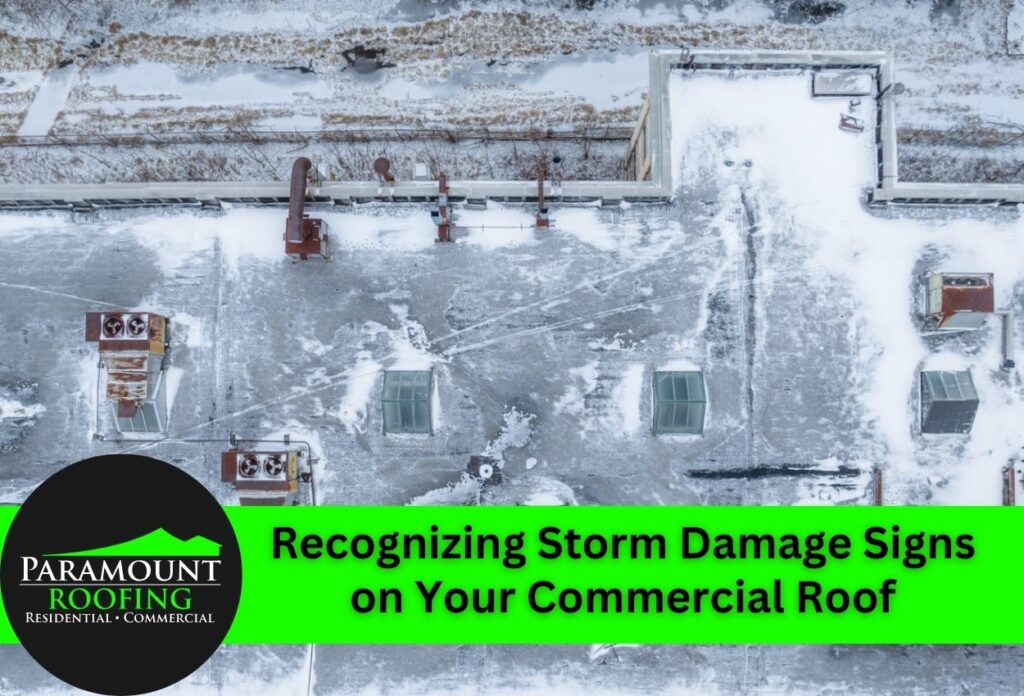
Flat and low-slope roofing systems present distinct vulnerabilities during storms that require specialized assessment techniques. Membrane tears along seams create weak points where leaks occur, while ballast displacement on gravel-surfaced roofs exposes underlying materials to weather damage. Standing water accumulation becomes particularly problematic when drainage systems become blocked by debris, creating additional stress on structural components.
Commercial roof inspection after storms must focus on gaps where HVAC equipment, vents, and electrical conduits create stress concentrations during high winds. These areas typically show the first signs of commercial roof storm damage as membrane materials separate from flashing or equipment curbs. Flat roof storm damage indicators include bubbling or blistering in membrane surfaces, which suggests moisture has infiltrated beneath the roofing system.
Ballasted roofing systems require a close look at the gravel or stone displacement patterns that reveal wind direction and intensity during storms. Exposed membrane areas become vulnerable to UV damage and thermal cycling, accelerating deterioration processes. Emergency roof repair commercial property needs often emerge around roof drains and scuppers where debris accumulation prevents proper water evacuation, leading to ponding conditions that exceed design load capacities and compromise structural integrity.
Recognizing Hail Impact Damage on Commercial Roofing Materials
Hail damage to commercial roofing presents distinct patterns depending on the specific membrane material protecting the building. EPDM rubber roofing systems typically show circular punctures or tears when struck by large hailstones, while TPO membranes may develop stress cracks radiating outward from impact points. Modified bitumen surfaces often display granule loss, exposed roof deck areas, or split seams where hail impacts have exceeded the material’s flexibility limits.
Metal roofing systems reveal hail damage through visible dents, coating removal, or edge deformation that compromises weatherproofing capabilities. The severity of these signs of commercial roof storm damage depends on hailstone size, wind velocity, and the age of the roofing materials. Fresh installations typically resist minor hail better than weathered systems that have lost flexibility over time.
Distinguishing between functional and cosmetic damage requires understanding which impacts actually compromise the roof’s protective performance. Cosmetic damage affects appearance without creating leak pathways, while functional damage gets past the membrane or creates stress points that will fail during future bad weather. Commercial roof inspection after storm protocols must identify functional damage requiring immediate emergency roof repair, commercial property attention, and cosmetic issues that can be addressed during scheduled maintenance cycles without compromising building protection.
Emergency Repairs or Professional Inspection: Making Important Decisions
Distinguishing between emergencies requiring immediate action and damage that warrants scheduled professional assessment determines appropriate response protocols following storms. Property managers must evaluate signs of commercial roof storm damage severity to protect building occupants while avoiding unnecessary emergency service costs. Active water intrusion, structural compromise, or safety hazards require immediate emergency roof repair for commercial property response regardless of time or weather conditions.
Temporary protective measures can prevent further damage while professional contractors arrive for an evaluation. Installing tarps over exposed membrane areas, clearing blocked drainage systems, and placing collection containers under active leaks provide short-term protection. However, these stopgap solutions should never replace proper repairs performed by qualified roofing professionals who understand commercial roofing system complexities.
Hail damage commercial roofing assessment, membrane evaluation, and equipment inspection can wait for normal business hours when contractor availability and weather conditions allow thorough examination. Property managers should document all observed flat roof storm damage indicators and roof leak detection commercial building concerns to provide information during professional evaluations.
Post-Storm Documentation and Next Steps for Commercial Property Owners
Proper documentation following a storm forms the foundation for successful insurance claims and restoration planning. Property owners must systematically photograph and record all signs of commercial roof storm damage to support claim processing and contractor evaluations. Digital photography should capture wide-angle views of affected areas along with detailed close-ups showing specific damage patterns, membrane tears, and equipment displacement.
Written documentation should include damage discovery dates, weather conditions during inspection, and detailed descriptions of observed problems. Commercial roof inspection after storm protocols require maintaining organized records that correlate interior water damage with exterior membrane compromise. This documentation becomes essential when working with insurance adjusters and contractors to establish the scale of the damage and repair priorities.
Qualified roofing contractors provide professional assessment capabilities that identify both obvious and hidden damage throughout commercial roofing systems. These professionals develop repair strategies that address immediate flat roof storm damage indicators while planning long-term restoration approaches. Contractor selection should prioritize experience with specific roofing materials and familiarity with insurance claim documentation requirements.
Repair timelines balance urgency with practical considerations like material availability, weather windows, and business operations. Emergency roof repair for commercial property needs receive immediate attention, while restoration occurs during planned phases that minimize operational disruption. Professional contractors coordinate with property managers to schedule work during low-impact periods while ensuring the building maintains its structural integrity.
Need Immediate Storm Damage Assistance for Your Commercial Roof?
If you’ve noticed any signs of storm damage on your commercial roof, it’s important to act swiftly to prevent further damage and expensive repairs. At Paramount Roofing, we specialize in identifying and repairing storm damage to ensure your property remains safe and secure. Whether it’s leaks, hail impacts, or structural issues, our expert team is equipped to handle all your roofing needs efficiently.
Don’t wait for minor damage to become a major problem. Call us today at (586) 690-0227 for a professional roof inspection and immediate repair services. Trust Paramount Roofing to restore your roof and protect your investment.