 Free Estimate
 Request Service
 Locations
Blown-In Attic Insulation in Detroit, MI: Costs, Materials & What Michigan Homeowners Need to Know
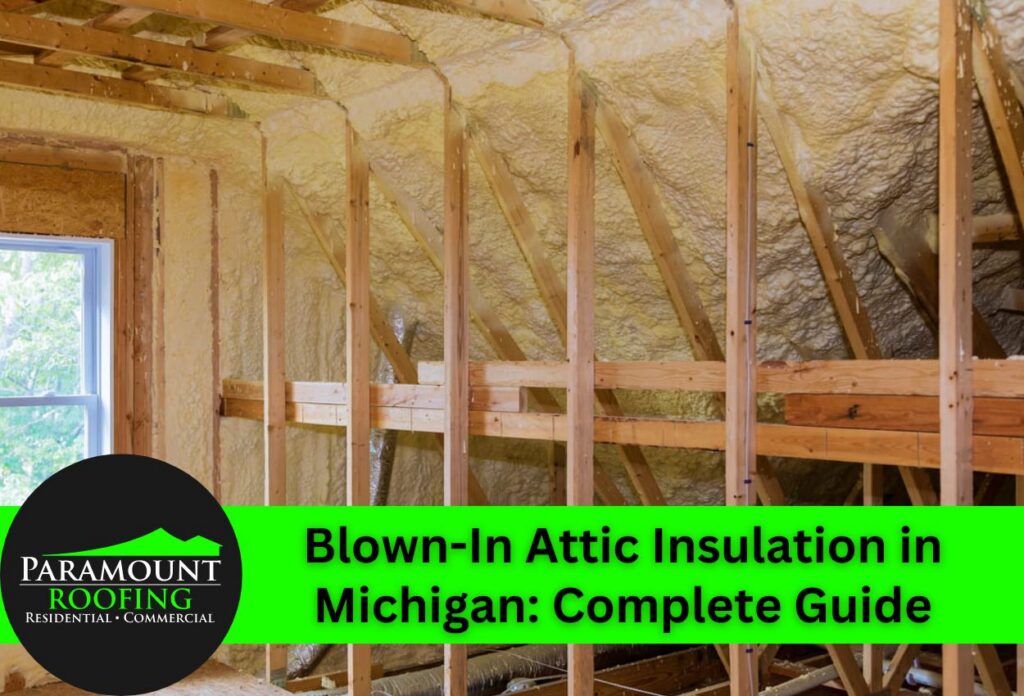

Blown-in attic insulation is a loose-fill insulation method where cellulose or fiberglass material is blown into attic spaces using a pneumatic blower machine, and for Detroit homeowners, it’s one of the most effective upgrades available for cutting heat loss and reducing high energy bills. Detroit winters are no small challenge. January average lows hit 21 degrees Fahrenheit, and older homes built between 1920 and 1960, which make up a large share of Detroit’s housing market, were never built to modern insulation standards. Many still have fiberglass batts that have settled over decades, or no insulation at all.
That gap between what’s in the attic and what Michigan building codes now require, a minimum of R-30 to R-38 for climate zone 5, means heat escapes fast every winter. Blown-in insulation fills that gap by spreading uniformly across the attic floor, reaching into corners and around obstructions that batts simply can’t cover.
This guide covers everything needed before making a decision: material options, R-value requirements, realistic cost estimates, DIY versus professional tradeoffs, and how to take the next step with a qualified contractor in the Detroit area.
*Please note, price ranges listed in this article may not reflect the final cost of your project. Prices are subject to change based on various factors such as local labor rates, material quality, and more. All costs established in this article are rough estimates based on average industry rates.
How Does Blown-In Attic Insulation Work and What Makes It Different From Batts?
Blown-in insulation works by loading loose-fill material, either cellulose or fiberglass, into a pneumatic blower machine, then feeding it through a flexible hose to distribute it evenly across the attic floor. The material fills gaps, voids, and irregular joist bays that pre-cut batt insulation simply cannot reach. This matters most in Detroit’s older housing stock, where homes built before 1960 often have irregular framing, added wiring, and plumbing gaps that leave batts full of gaps and heat loss full of opportunity.
Before any insulation goes in, air sealing comes first. In pre-1960s Detroit homes, gaps around wiring, plumbing gaps, and top plates must be sealed with caulk or spray foam. Without that step, warm air bypasses the insulation entirely, and the upgrade underperforms no matter how much material goes in.
| Attribute | Blown-In Insulation | Batt Insulation |
|---|---|---|
| Coverage of irregular spaces | Fills corners, voids, and odd-shaped bays fully | Leaves gaps around obstructions and irregular framing |
| Air leak reduction | Higher-density fill reduces air movement | Lower gaps and edges allow air to pass through |
| Installation speed | Most attics are completed in 2 to 4 hours | The slower cut-and-fit process takes longer in tight spaces |
| DIY feasibility | Moderate blower rentals are available, but technique matters | Higher, no equipment needed for basic installation |
| Long-term settling behavior | Settles 10% to 20% over time: designed-for-depth accounts for this | Compresses over decades, lowering R-value without replacement |
For Detroit homeowners trying to meet the R-30 to R-38 minimum required for climate zone 5, blown-in insulation is better suited to the irregular attic conditions found in most older homes than pre-cut batts.
What Are the Best Blown-In Insulation Materials for Michigan Winters?
Cellulose and fiberglass loose-fill are the two primary blown-in insulation materials used in Michigan attics, and cellulose delivers a higher R-value per inch, making it the more efficient choice for meeting Detroit’s R-30 to R-38 climate zone 5 requirement in less depth.
| Attribute | Cellulose | Fiberglass Loose-Fill |
|---|---|---|
| R-value per inch | 3.2 to 3.8 | 2.2 to 2.7 |
| Moisture resistance | Lower absorbs moisture if wet: requires good attic ventilation | Higher does not absorb moisture: it dries more readily |
| Fire resistance | Good treated with borate fire retardants | Good, naturally non-combustible glass fibers |
| Pest resistance | Good borate treatment deters insects and rodents | Moderate no chemical deterrent |
| Recycled content | 75% to 85% post-consumer recycled paper | 20% to 30% recycled glass content |
| Typical installed cost per square foot | $1.00 to $1.50 | $1.00 to $2.00 |
| Suitability for Detroit’s humid continental climate | Good with proper ventilation and air sealing | Better in attics with moisture management concerns |
Cellulose is often the preferred choice for Detroit homes because its higher R-value per inch means less depth is needed to hit the R-30 to R-38 target, and its dense-pack nature reduces air leak better than fiberglass loose-fill.
However, many Detroit homes built between 1920 and 1960 have poor attic ventilation, and in those conditions, cellulose’s lower moisture resistance becomes a real concern. In attics with ventilation problems or a history of roof leaks, fiberglass loose-fill is the safer material choice because it resists moisture absorption and dries faster. Mineral wool (rock wool) also exists as a premium blown-in option, but it sees limited use in Detroit residential attics due to higher costs and less widespread installer availability.
For a deeper look at how these two materials compare across Detroit’s specific housing and climate conditions, a full cellulose versus fiberglass blown-in insulation comparison covers the details worth knowing before making a final call.
What R-Value Do You Need for Blown-In Attic Insulation in Michigan?
Michigan’s building code, based on the 2015 International Residential Code for Climate Zone 5, requires a minimum of R-38 for attics with existing insulation and up to R-60 for completely uninsulated attics, depending on your starting point. The distinction matters because the code treats a bare attic differently from one that already has some insulation in place. Many Detroit homes built before 1960 have only 3 to 4 inches of original fiberglass batt or loose fill, delivering R-11 to R-13, far below the R-38 minimum, making an upgrade not just recommended but code-required.
| Scenario | R-Value Target | Cellulose Depth Needed | Fiberglass Depth Needed |
|---|---|---|---|
| Uninsulated attic (new construction) | R-60 | 16 to 19 inches | 22 to 27 inches |
| Adding to existing insulation (currently R-11 or less) | R-38 to R-49 | 8 to 12 inches added | 11 to 17 inches added |
| Topping up existing insulation (currently R-12 to R-25) | R-38 | 4 to 8 inches added | 6 to 11 inches added |
To figure out how much blown-in insulation an attic needs, follow this formula. First, measure the attic’s square footage. Second, check the current insulation depth and estimate its R-value. 3 to 4 inches of older fiberglass typically delivers R-11 to R-13. Third, subtract that number from the target R-value. Fourth, divide the gap by the R-value per inch of the chosen material: cellulose runs 3.2 to 3.8 per inch, while fiberglass loose-fill runs 2.2 to 2.7 per inch. The result is the additional depth required.
For a Detroit home sitting at R-13 and targeting R-38, that’s a gap of 25 R-value points requiring roughly 7 to 8 inches of added cellulose or 10 to 11 inches of added fiberglass. Getting that measurement right before ordering materials saves both money and a second trip up the ladder.
How Much Does Blown-In Attic Insulation Cost in Michigan?
Most Michigan homeowners pay between $1,500 and $3,500 for a professionally installed blown-in attic insulation project, though Detroit-specific variables like knob-and-tube wiring, low-pitch bungalow attics, and municipal permit requirements can push that range higher.
| Cost Item | DIY Estimate | Professional Estimate |
|---|---|---|
| Cellulose material cost per bag | $30 to $45 per bag | Included in labor rate |
| Fiberglass loose-fill material cost per bag | $35 to $55 per bag | Included in labor rate |
| Labor cost per square foot | Not applicable | $1.00 to $2.00 per sq ft |
| Typical attic-sized Detroit single-family homes | 800 to 1,500 sq ft | 800 to 1,500 sq ft |
| Blower equipment rental (DIY) | $75 to $150 per day | Not applicable |
| Air sealing add-on cost | $50 to $150 in materials | $200 to $500 added to project |
| Total estimated project cost | $500 to $1,200 | $1,500 to $3,500 |
Several factors specific to the Detroit market affect where a project lands in that range. Bungalow attics common throughout Detroit neighborhoods have low roof pitches that make maneuvering a blower hose slower and harder, which adds labor time. Homes with knob-and-tube wiring require isolation before any insulation can be installed around it, adding both time and cost. Some Detroit-area municipalities require permits for insulation upgrades: permit fees typically run $50 to $150 but vary by jurisdiction. If existing insulation needs to be removed before new material goes in, expect an additional $1 to $2 per square foot in removal costs.
Homeowners who qualify for both a DTE Energy or Consumers Energy rebate and the federal 25C tax credit under the Inflation Reduction Act, which covers up to 30% of insulation project costs, can reduce out-of-pocket spending by several hundred dollars or more. A dedicated article covering Michigan insulation rebates and tax credits breaks down eligibility and how to claim both incentives together. Homeowners interested in spreading the upfront cost over time can also explore financing options for home improvement projects.
DIY vs. Professional Blown-In Attic Insulation in Michigan: Which Is Right for You?
Before renting a blower or calling a contractor, evaluate 5 specific factors about your attic because the wrong choice can cost more than the insulation itself.
Choose DIY If…
- Your attic is open and accessible: A simple, unobstructed attic with standard joist spacing and a usable access hatch allows a first-time DIYer to complete the job in a single day.
- No hazardous materials are present: Homes built after 1980 are unlikely to contain asbestos-based insulation. If your Detroit home predates 1980 and has unknown gray or crumbly material in the attic, get it tested before touching anything.
- No knob-and-tube wiring runs through the attic: Knob-and-tube wiring requires professional isolation before insulation can be installed around it. Skip DIY entirely if those old ceramic knobs are visible.
- You want to save on labor costs: DIY projects typically run $500 to $1,200 total versus $1,500 to $3,500 for professional installation, a gap of $1,000 or more on a mid-sized Detroit attic.
- Big-box store blower rentals make equipment costs low: Home Depot and Menards locations in the Detroit metro offer free blower machine rentals when you purchase a minimum number of insulation bags, eliminating the $75 to $150 daily rental cost.
Choose a Professional If…
- Your home was built before 1960: Older Detroit homes may contain asbestos, knob-and-tube wiring, or both conditions that require licensed contractors to handle safely and legally.
- Moisture or ventilation problems exist: Any sign of staining, mold, or condensation in the attic means the underlying issue must be diagnosed first. Installing insulation over an active moisture problem traps damage and voids most material warranties.
- Attic access is poor, or the roof pitch is low: Bungalow-style homes common across Detroit neighborhoods have tight attic spaces that make maneuvering a blower hose difficult and physically demanding.
- You want permit handling and warranty coverage: Michigan law requires contractors performing insulation work exceeding $600 to hold a residential builder license or a residential maintenance and alteration contractor license. Homeowners doing their own work are exempt, but this credential matters when vetting any contractor, and professionals handle permit filings as part of the job.
If your Detroit home was built before 1960, hiring a licensed professional is the lower-risk path. The combination of aging materials, knob-and-tube wiring, and poor attic ventilation makes DIY errors far more expensive than the labor savings. For newer homes with clean, accessible attics, DIY is a reasonable choice if the big-box blower rental option keeps equipment costs near zero.
What Should You Do Before Installing Blown-In Attic Insulation in Detroit Homes?
Air sealing must happen before any insulation goes in: skipping it is the single most common mistake Detroit homeowners make, and it guarantees heat loss even at high R-values. Insulation slows conductive heat transfer, but it does not stop air movement. An unsealed attic in a Detroit winter will keep losing heat through convection, no matter how many inches of cellulose or fiberglass sit on the attic floor. Work through this checklist first.
- Inspect for active roof leaks: Check the attic deck and rafters for staining, soft spots, or mold before scheduling any installation. Installing blown-in insulation over an active leak traps moisture inside the material and accelerates structural damage. A residential roof inspection can identify any active leaks or moisture issues before insulation work begins.
- Check attic ventilation, soffit and ridge vents: Michigan code requires a minimum 1:150 ventilation ratio, or 1:300 with balanced intake and exhaust. Before blowing in insulation, install rafter baffles (also called ventilation baffles) at every eave to maintain open airflow channels from soffit to ridge. Blocked soffit vents are a leading cause of ice dams in Detroit winters.
- Seal all air bypasses: Top plates, recessed light fixtures, plumbing chases, and wiring gaps are the biggest sources of air leakage in older homes. Use caulk for gaps under 1/4 inch and spray foam for larger openings. These bypasses account for the majority of heat loss that insulation alone cannot fix.
- Identify knob-and-tube wiring before touching anything: Knob-and-tube wiring cannot be covered by insulation without professional isolation first. It is a fire hazard and a code violation. Look for old ceramic knobs and tubes along the joists. If present, stop and call a licensed electrician.
- Check for existing asbestos insulation: Detroit homes built before 1978 may contain asbestos-based insulation materials. If the attic has gray, crumbly, or vermiculite-like material of unknown origin, have it tested by a licensed inspector before disturbing it.
Completing this pre-installation checklist, especially air sealing and ventilation baffle installation, determines whether blown-in insulation actually performs at its rated R-value or simply adds material without solving the heat loss problem. A full attic inspection before insulation is the step most homeowners skip and most often regret.
How Is Blown-In Attic Insulation Actually Installed Step-by-Step?
A professional blown-in attic insulation job follows 7 defined steps, and skipping any one of them can reduce the final R-value or create ventilation problems down the road. Most installations on a Detroit single-family home take 4 to 8 hours from setup to cleanup. Here is exactly what happens.
- Install rafter baffles at every eave: Cardboard or foam baffles are stapled between rafters at the eaves to keep a clear air channel open from the soffit vents to the ridge. Without them, blown material blocks airflow and triggers ice dams during Detroit winters.
- Seal all attic bypasses: Every gap around top plates, plumbing chases, recessed lights, and wiring gaps gets sealed with expanding spray foam or caulk before a single bag of insulation opens. This step is what separates a high-performing installation from one that looks right but still loses heat.
- Set up the blower machine: The machine sits in the attic hatch or outside at a window opening. A long flexible hose connects the machine to the attic interior.
- Run the hose to the far end of the attic: The installer places the hose tip at the farthest point from the hatch so material fills the attic evenly as work progresses toward the exit.
- Blow material while walking backward: The installer moves from the far end toward the hatch, keeping the hose low and distributing material at a consistent rate to avoid thin spots or clumping.
- Verify depth using depth gauges placed throughout the attic: Plastic depth rulers, also called depth markers, are staked into the attic floor before blowing starts. In Michigan, these markers are a code-required element: they must remain in the attic permanently so future inspectors or homeowners can confirm the R-value is still maintained over time. Installers check every marker before wrapping up.
- Seal the attic hatch: Weatherstripping seals the hatch frame, and an insulated cover goes on top. An unsealed hatch can account for a measurable share of total attic heat loss: it is the last gap to close.
Detroit bungalows built in the 1920s through the 1940s present a real physical challenge here. Their low-pitch attics, often with less than 24 inches of clearance, make maneuvering a standard blower hose slow and difficult. Professional contractors carry smaller-diameter hose equipment designed for tight spaces. Most rental blowers from big-box stores are not built for those configurations, which is one reason DIY installations in bungalow attics frequently result in uneven depth and missed coverage near the eaves.
How Does Michigan’s Climate Affect Blown-In Insulation Performance Over Time?
Detroit’s January lows averaging 21 degrees, combined with 40 inches of annual snowfall and moisture from the nearby Great Lakes, create conditions that work against attic insulation year after year. Climate does not just determine which R-value to install. It determines how fast insulation settles, how moisture moves through the attic, and how much a homeowner needs to maintain what was installed.
Ice Dams and Heat Loss Through the Attic Floor
Poor attic insulation is a leading cause of ice dams in Detroit. When heat escapes through an under-insulated attic, it warms the roof deck, melts the bottom layer of accumulated snow, and sends water running toward the cold eaves where it refreezes. That cycle, repeated dozens of times each winter, forces water under shingles and into the structure. Blowing insulation to R-49 or R-60 across the attic floor reduces heat transfer through that surface and dramatically lowers ice dam risk. The attic stays closer to outdoor temperatures, which means the roof deck stays consistently cold and snow melts from the top down rather than from underneath.
Settling, Moisture, and Long-Term Maintenance
Cellulose insulation settles by about 15% to 20% over the first few years after installation. Installers account for this by blowing material to a slightly greater depth than the finished R-value target requires, so the settled depth still meets the minimum. Even so, homeowners should check attic insulation depth every 10 to 15 years and add material if the depth has dropped below the target markers left by the installer.
Moisture management matters just as much as R-value. Fall precipitation in Detroit has increased 40% between 1951 and 2014, and wetter conditions raise the risk of condensation and slow roof leaks going unnoticed.
Any active roof leak or ongoing condensation issue must be fully resolved before blown-in insulation is installed. Moisture trapped inside cellulose degrades its performance and can promote mold growth within weeks. Detroit’s proximity to the Great Lakes adds persistent humidity to this equation, making attic ventilation and a dry roof deck non-negotiable prerequisites. With temperatures in the region projected to rise 3 to 5 degrees by mid-century, heat management in summer will also become a growing factor in insulation performance, not just cold-weather protection.
What Are the Energy Savings and ROI of Blown-In Attic Insulation in Michigan?
The U.S. Department of Energy estimates that properly air sealing and insulating an attic can reduce heating and cooling costs by 10% to 50%, depending on the starting condition of the home. For Detroit homeowners with older, under-insulated houses, the savings potential sits at the higher end of that range. That makes blown-in attic insulation a financial investment, not just a comfort upgrade. The table below breaks down what that investment actually looks like in real numbers.
| Factor | Estimated Range |
|---|---|
| Average project cost (Detroit-area home) | $1,500 to $3,500 |
| Estimated annual energy savings | $200 to $600 per year |
| Typical payback period | 3 to 7 years |
| Estimated 20-year net savings | $4,000 to $12,000+ |
Several programs reduce the upfront cost further. DTE Energy and Consumers Energy both offer rebate programs for qualifying insulation upgrades. Check each utility’s current program page for amounts, since rebate levels are updated periodically. On top of that, the federal Inflation Reduction Act Section 25C tax credit covers 30% of insulation project costs, capped at $1,200 per year. That credit alone can offset a meaningful portion of the total project cost in the year it is installed.
At resale, attic insulation upgrades rank among the highest-ROI home improvement projects available. Studies consistently place them near the top of the list compared to kitchen remodels or bathroom additions. Combined with utility rebates, the federal tax credit, and long-term energy savings, blown-in attic insulation typically pays for itself well before the 7-year mark for most Detroit homeowners.
The savings are not limited to winter heating bills either. Detroit’s July average high of 83 degrees puts real stress on air conditioners. A well-insulated attic reduces the cooling stress on your AC system during the spring and summer, cutting runtime and lowering summer electric bills, adding value across all four seasons.
When Is the Best Time to Schedule Blown-In Attic Insulation in Michigan?
May through September is the best window to schedule blown-in attic insulation in Michigan. Attics are dry, contractors have available slots, and the work gets done before heating season drives up both energy costs and contractor backlogs. That 5-month stretch gives homeowners the most flexibility on scheduling, pricing, and lead time.
Winter installation is not ideal for Detroit homes. Attic temperatures drop well below freezing during January lows of 21 degrees, which can affect how blown material settles and performs during the job. Cold-weather attics also carry real moisture risks: condensation buildup and ice dam activity can leave standing moisture on the attic floor or deck. On top of that, insulation and HVAC contractors face peak demand in winter from homeowners dealing with heating failures, which stretches lead times and reduces scheduling options.
Fall, specifically September and October, is a strong second choice and often the most financially motivated timing. Heating costs are visibly rising, and the first cold snap is weeks away. That combination creates real urgency. Homeowners who schedule in this window still catch dry attic conditions while also locking in work before winter backlogs begin. Scheduling in September or October means the insulation is in place and performing before the coldest seasons arrive, when the savings actually show up on the gas bill.
Emergencies do happen. Burst pipes caused by inadequate insulation or severe ice damming can force off-season installation when conditions are far from ideal. Professional contractors can accommodate these jobs, but homeowners should expect higher-demand pricing and potentially longer lead times during the winter. Off-season installation is always the right call in an emergency: just plan for the tradeoffs ahead of time. Homeowners dealing with ice dam damage or winter roof emergencies can also reach out for emergency roofing services to address structural issues before insulation work begins.
How Long Does Blown-In Attic Insulation Last and What Maintenance Does It Need?
Professionally installed blown-in cellulose insulation lasts 20 to 30+ years with minimal maintenance, while blown-in fiberglass can last the lifetime of the home under normal conditions. Neither material requires routine servicing if the attic stays dry and undisturbed. That is a strong durability track record for a one-time installation cost, but three specific conditions can cut that lifespan short.
What Shortens Insulation Lifespan
Moisture is the biggest threat. Roof leaks or attic condensation can wet cellulose insulation and destroy its ability to resist heat transfer. Wet cellulose also creates conditions where mold can develop. Pest activity is the second problem, particularly rodents that nest in cellulose. Treated cellulose contains a borate-based pest deterrent that reduces but does not eliminate this risk. The third threat is physical disturbance. HVAC contractors, electricians, or homeowners doing DIY attic work can displace or compress insulation during a single visit, leaving gaps in coverage that undermine the R-value without any visible sign from below.
How Often to Check Your Attic
A simple visual inspection every 5 to 7 years or after any significant roof work is enough to catch problems early. Look for wet spots, compressed areas, uneven coverage, or signs of pest activity. Depth gauges left by the installer make it easy to confirm whether settling has dropped the insulation below the target R-value. If the gauges show the insulation has settled below the target depth, topping up the material restores performance and extends the effective life of the installation. A quick visual check takes less than 15 minutes and can prevent years of energy loss from going unnoticed.
How Do You Choose a Qualified Blown-In Insulation Contractor in the Detroit Area?
Start by confirming the contractor holds a Michigan Residential Builder License or a Residential Maintenance and Alteration Contractor License. Any insulation job exceeding $600 requires a license under Michigan law. That single check filters out a large portion of unlicensed operators before you ever get to a price discussion.
- Verify state licensing: Ask for the license number and confirm it is current with the Michigan Department of Licensing and Regulatory Affairs. Unlicensed contractors cannot legally pull permits or provide enforceable warranty documentation.
- Confirm insurance coverage: The contractor must carry both general liability and workers’ compensation insurance. Request certificates before any work begins, not after.
- Ask about permits: Some Detroit-area municipalities require permits for insulation upgrades. A qualified contractor knows when permits apply and will pull them without being pushed.
- Request local references: Ask specifically for projects on older Detroit-area homes, bungalows, four-squares, or vernacular brick structures built between 1920 and 1960, which carry moisture and wiring challenges that newer construction does not.
- Ask whether they air seal first: Any proposal that skips air sealing before insulation will leave gaps around wiring and plumbing that undermine performance. Walk away from contractors who do not address this step.
- Ask how they handle knob-and-tube wiring: Many older Detroit homes still have it. Blown-in insulation cannot legally be placed in direct contact with knob-and-tube wiring without specific clearance. A qualified contractor will know exactly how to address this.
- Confirm target depth and verification method: Ask what depth they will blow to, what R-value that achieves, and how they verify coverage. Depth gauge markers are standard on legitimate jobs.
- Ask about rafter baffles and warranties: Baffles protect ventilation channels along the eaves. Any contractor who skips them risks condensation and ice dam buildup. Get labor and materials warranty terms in writing.
Red flags include contractors who quote without physically inspecting the attic, proposals with no mention of air sealing, and bids that come in well below the typical $1,500 to $3,500 project range. Low pricing often means inadequate depth or skipped prep work.
Roofing contractors in Detroit who also offer insulation services carry a real advantage for older homes: they can identify and resolve active roof moisture issues before installation begins, rather than sealing problems inside the attic. Homeowners can review Paramount Roofing’s residential insulation services to understand what a qualified contractor should bring to a Detroit attic project.
Ready to Upgrade Your Attic Insulation? Here’s How to Get Started in Detroit
Blown-in attic insulation is one of the highest-ROI home improvements available to Detroit homeowners, cutting energy bills across all 4 seasons, reducing ice dam risk, and bringing older homes up to current code standards, all while paying for itself well before the 7-year mark for most households.
Paramount Roofing works with Detroit-area homeowners on exactly this kind of project, combining Michigan licensing, hands-on experience with older bungalows and 4-squares, and the roofing knowledge to catch moisture problems before they get sealed inside an attic.
Get your free attic assessment.
Not ready to schedule? Learn more about blown-in attic insulation.