Request Service
 Locations


- 100+ Years Of Combined Experience
- BBB Accredited With A+ Rating
- Award-Winning Roofing Company In Metro Detroit


 Free Estimate
Detroit winters are no joke. Temperatures drop into the low 30s and stay there for months, putting real pressure on your home to hold heat. If your attic insulation is thin, outdated, or uneven, that heat escapes right through the ceiling while your furnace works overtime to keep up. Older Detroit homes, especially those built before or just after World War II, often have attic insulation levels well below what current energy codes recommend for this region. In a climate zone like ours, attics are commonly targeted to around R-49, and many homes here fall well short of that mark. The effects show up quickly: drafty second-floor rooms, high heating bills, and in some cases, ice dams forming at the eaves when warm air leaks into the attic and melts roof snow that refreezes along the edges.
Good attic insulation is not just about adding more material. In Detroit homes, the job typically starts with air sealing around plumbing stacks, attic hatches, recessed lights, and other gaps where conditioned air sneaks out. Without that step, even a thick layer of insulation leaves money on the table. Ventilation matters too, keeping soffit airflow clear so moisture does not build up and cause problems down the road.
Paramount Roofing works with Detroit homeowners every day on exactly these kinds of upgrades, bringing a complete approach to attic insulation that addresses air sealing, ventilation balance, and full coverage from the top plates to the center of the attic floor.
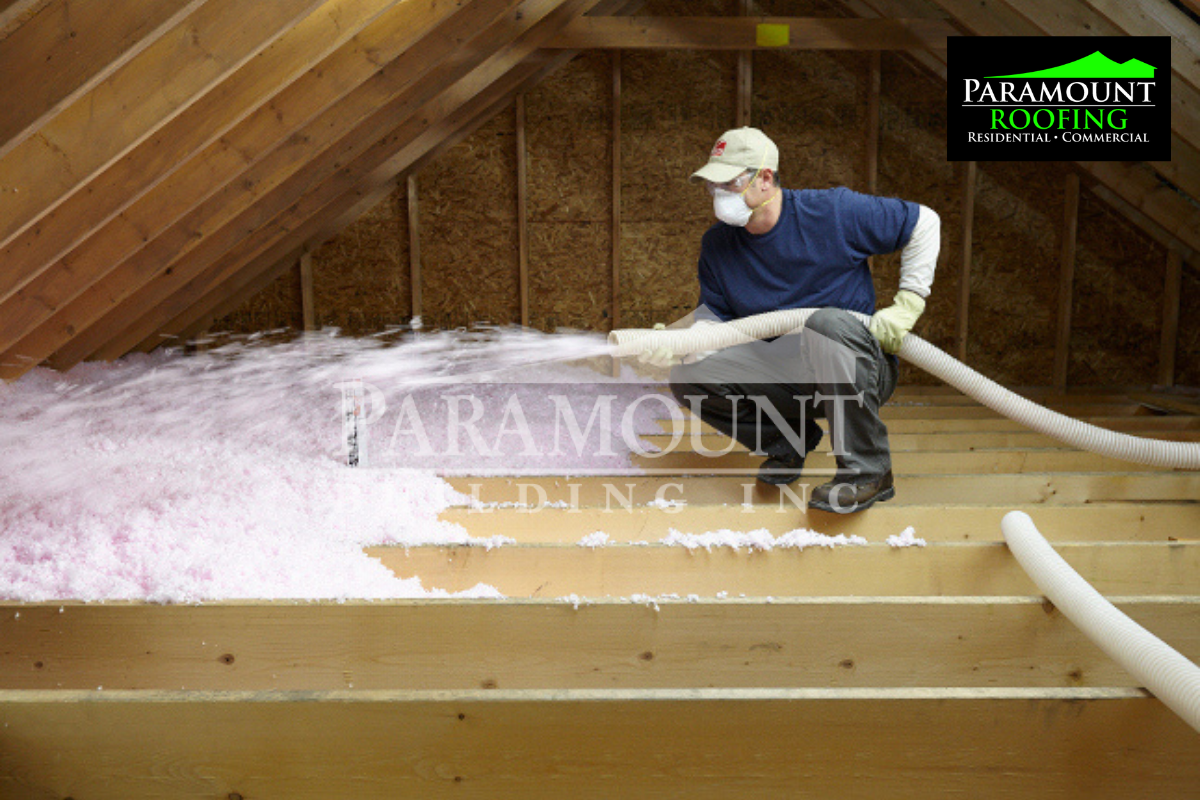
Attic insulation work starts with figuring out why the existing setup is falling short and what the space can support. Paramount Roofing evaluates the attic in Detroit, explains what needs to be addressed, and carries the work through insulation installation and the final inspection.
Not every attic calls for the same material, and Detroit homes cover a wide range of ages, layouts, and conditions. The right choice depends on what your attic looks like, how accessible it’s, and what the existing insulation situation already looks like when we get up there.
| Material Type | Best Fit for Detroit Homes | Key Consideration |
|---|---|---|
| Blown-in cellulose | Older attics with uneven existing insulation, tight spaces, or hard-to-reach areas around irregular framing | Settles into gaps and covers top plates well, making it a strong choice for retrofit work in pre-war and postwar homes |
| Fiberglass batts | Attics with open, accessible floors where straightforward coverage is achievable | Must be installed without compression; compressed batts lose R-value and leave gaps around framing members |
Both materials can reach the R-49 depth commonly targeted in this region, but installation quality matters as much as the material itself. Detroit attics often have raised-heel trusses, knee-wall areas, and irregular framing near the eaves that make full perimeter coverage tricky regardless of what is being installed. Getting the depth right at the edges, not just the center of the attic floor, is where many older homes fall short. A proper job accounts for those details so your insulation performs the way it should through Detroit's wide seasonal temperature changes.
Gaps around plumbing stacks, recessed lights, attic hatches, and knee-wall areas let conditioned air slip out before insulation ever gets the chance to do its job. Sealing these openings is included as part of the work so your insulation performs to its full potential rather than compensating for losses underneath it.
Insulation depth at the edges of your attic floor, where the ceiling meets the outer walls, is one of the most commonly missed areas in older Detroit homes. We extend coverage over the top plates and into the eave areas while keeping soffit vents clear, which helps protect against ice dams and keeps your home's thermal layer tight where it matters most.
Adding insulation without checking airflow can trap moisture in your attic, leading to condensation issues and long-term damage to the roof structure. We verify that soffit and ridge ventilation stays balanced after installation so your attic breathes the way it should through Detroit's cold winters and humid summers.
Michigan's energy code for Climate Zone 6a sets attic insulation targets that many older Detroit homes have never reached. We install to meet those depth requirements across the full attic floor, not just in the easy-to-reach center areas, so your home is in line with current standards and ready for whatever the season brings.
Detroit's winters take a real toll on homes that are not properly insulated, and summers can make upper floors feel unbearable when attic coverage is thin. Upgrading your attic insulation is one of the most practical improvements you can make for your home's comfort and your heating and cooling costs year-round. Spring and fall are popular times to schedule this kind of work, giving you a chance to get ahead of peak heating or cooling demand before it hits.
If your home has drafty rooms, high energy bills, or insulation that has never been looked at since the house was built, Paramount Roofing is ready to help. We serve homeowners throughout the Detroit area and are happy to schedule an inspection so you can find out what your attic actually needs.
Got questions about your roof? We’ve got answers. From maintenance tips to insurance claims and repair timelines, our FAQ section covers the most common concerns homeowners have. Get informed and make confident decisions about protecting your home.
Yes, and the connection is more direct than most homeowners expect. When warm air leaks from living spaces into a poorly insulated attic, it warms the roof deck and melts snow from underneath. That snowmelt runs down to the cold eaves and refreezes, forming ice dams that can back water up under shingles. Sealing air leaks and bringing insulation depth up to where it should be keeps your attic closer to outdoor temperatures, which stops that uneven melting from happening in the first place.
In most Detroit homes, yes. Topping up insulation over existing material without addressing air leaks underneath it gives you diminishing returns. Old insulation also settles over time, and gaps around plumbing stacks, attic hatches, and recessed lights are still letting conditioned air escape no matter how much material sits above them. A quick look at what is already up there tells us whether the base is solid enough to build on or whether air sealing needs to come first.
It comes down to how those homes were framed. Pre-war and postwar construction in this area used traditional rafter framing where the attic floor gets shallower as it meets the outer walls, leaving very little room to pack in insulation at the perimeter. Raised-heel trusses, which are more common in newer builds, create space for full-depth coverage right out to the eaves. In older homes without that framing, getting adequate depth at the edges takes more care, and many past insulation jobs simply stopped where it got tight rather than working through it properly.

#1 Top Rated
100% Satisfaction Guarantee
2100+ Projects Completed
Your Local Roofing Experts in Romeo, MI